The following is an interview with Kaede, Lamp’s Someya Taiyo, and Uwanosora’s Kadoya Hirohide about Kaede’s 2020 mini-album Stardust in Blue (otherwise known as Aki no Wakusei, Heart wa Night Blue). A neat little interview about a neat little album. Enjoy!
Text & interview: Namba Kazumi (Japanese text)
English translation: Henkka
Kaede: Website, Twitter, Instagram
Lamp: Linktree
Uwanosora: Linktree
Note: You can buy Stardust in Blue on CDJapan.
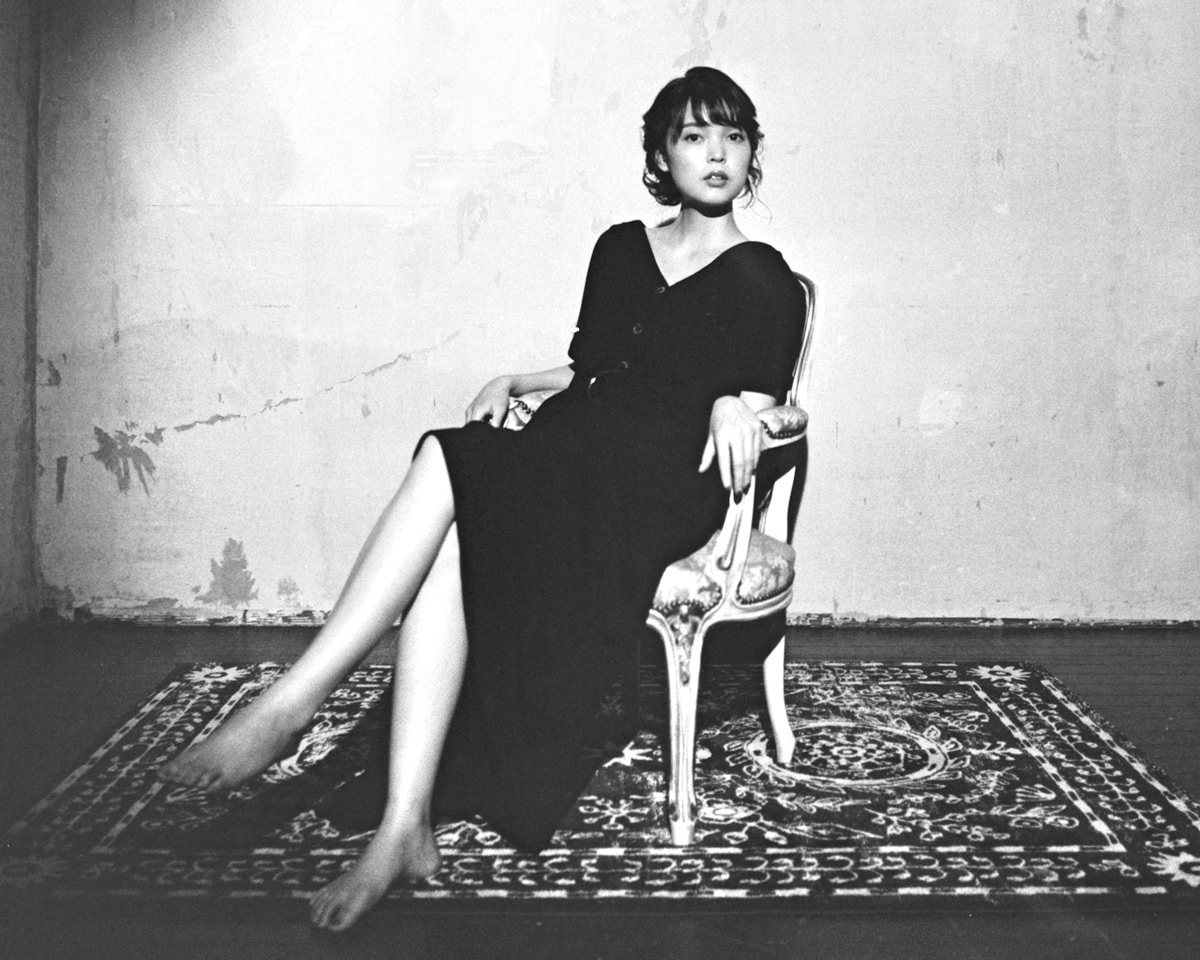
Nine months after the release of Ima no Watashi wa Kawaritsuzukete Ano Koro no Watashi de Irareteru, the first solo album of Negicco’s Kaede, she is releasing a new mini-album, Stardust in Blue, on September 8th.
A first-time experiment, this conceptual album welcomes Lamp’s Someya Taiyo and Uwanosora’s Kadoya Hirohide as its producers, along with a lavish cast of musicians including Nagai Yusuke (Lamp), Sakakibara Kaori (Lamp), Iemoto Megumi (Uwanosora), and Tanaka Jacob (Yanushi).
We conducted a remote interview with Kaede, Someya, and Kadoya to ask them about the album.
— First, I would like to ask: how did the two of you—Someya and Kadoya—come to produce this album as a team?
Someya Taiyo: I had written a song for Kaede on her first mini-album (“Anata wa Tooku” from the album Shinya. Anata wa Kyou wo Furikaeri, Mata Atarashii Asa da ne), and we recorded her vocals for it at Kadoya’s house. Yukita Masafumi (Director of EH Creations) was also present at the time, and my guess is that when he saw how me and Kadoya worked together, he had the idea of us two working on this project together.
— Kadoya, too, had previously written the song “Doyou no Yoru wa” for Negicco.
Kadoya Hirohide: Yes. Kaede and connie came to our (Uwanosora) show last year, and I think when they read the conversation Someya and I had in our pamphlet, they got a feel for what our relationship was like and they thought it would be fun to have us do the project.
— But this time around, the offer was not just for a song for two—it was to produce an entire mini-album.
Someya: Right. We later ended up adding the two short songs in the beginning and end of it, but initially the deal was that they wanted us to make a five-song mini-album.
From me and Kadoya’s point of view, we went, “Wow, they’re really throwing all caution to the wind, asking us to handle the whole thing.” (laughs) Because if me and Kadoya were going to do it, we weren’t going to treat it like work—the two of us don’t really like that sort of thinking to begin with. If we were going to do it, we wanted to really leave a mark.
— What were your thoughts, Kaede, when you recorded “Anata wa Tooku,” the song that sparked this project?
Kaede: When we made that mini-album, “Anata wa Tooku” was the most difficult song for me. It was my first time recording with both of them, so I was nervous and I really struggled with it. I just remember it being very tough to record that song. Out of all my solo songs so far, I think recording that one took the longest time.
— Did you feel anxious, then, when it was time to record this mini-album with the same line-up?
Kaede: No no, I didn’t have to like brace myself or anything. I was just very excited to do it.
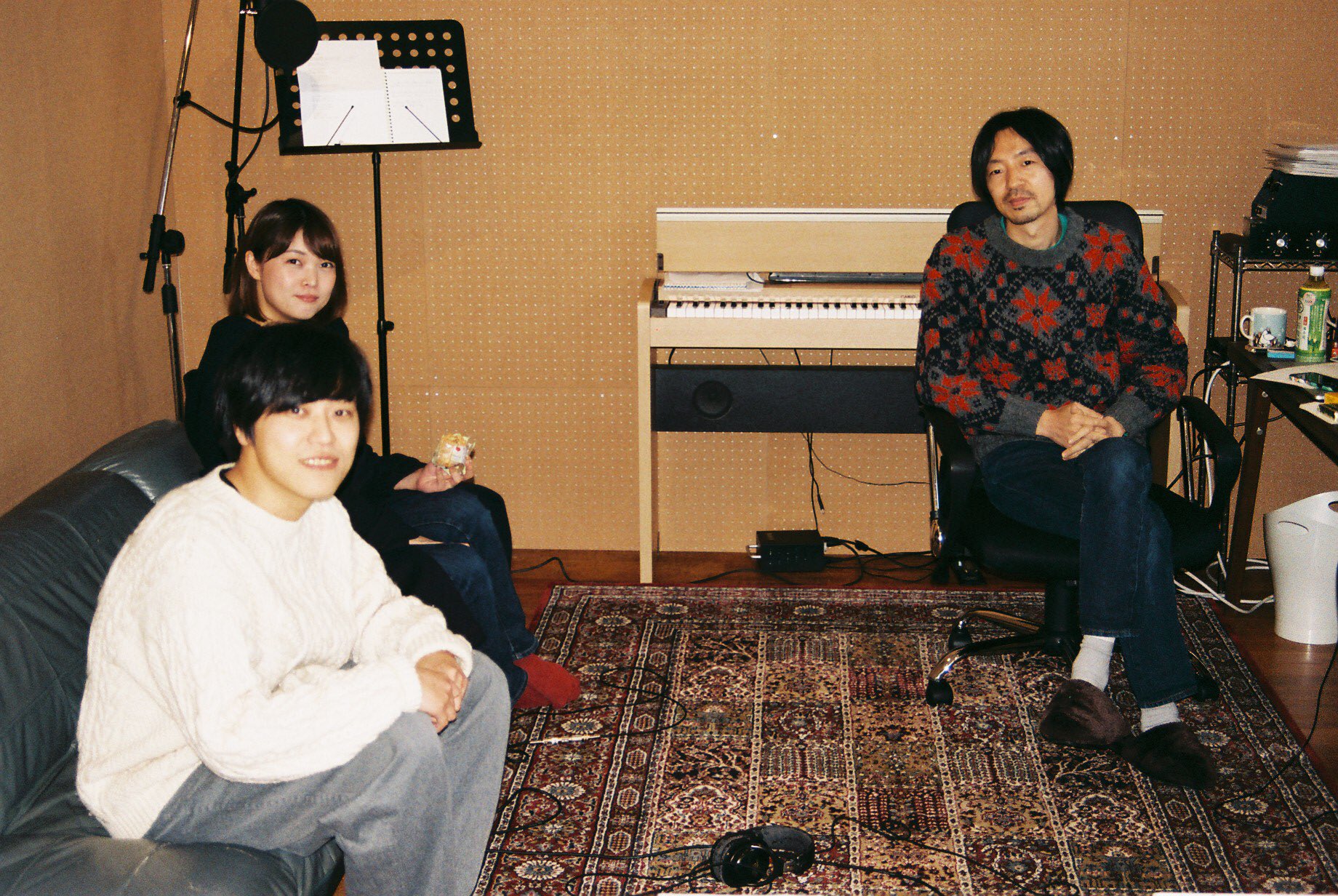
Kaede, Kadoya Hirohide, Someya Taiyo
— How did you go about deciding on a direction for this release?
Someya: Me and Kadoya listened to Kaede’s earlier works, looking at their overall trajectory, and had almost daily, long phone calls about what might be interesting for her to do. We were pushing forward with the mindset that since they were leaving it all up to us, then we wanted to do something a bit different.
On her previous works, each musician had contributed only a song or two, and each album was a collection of those songs. But because this time it was just us doing all five songs, we thought about all the possibilities that would allow us. I don’t mean this as a criticism of her other albums, but one of our initial goals with this project was that when we would listen to it ourselves, we didn’t want it to feel like it was just a mishmash of random songs.
Kadoya: I get the sense that there would be little point in us trying to write for her the sort of music that’s popular right now—even if, of course, I do enjoy listening to music like that myself. It might not be a very “flashy” sort of album, but hopefully, it’s something that you might still want to occasionally listen to even 10 or 20 years from now. I mean, that’s how Lamp and how I feel when we’re making our own music, so we wanted to make something for Kaede with that same intention.
— Had the two of you ever worked together in this manner before?
Someya: No, not at all. I hardly have any interaction with other musicians, so doing this sort of full-on group work was a first for me. We both wrote the songs on our own though, so we didn’t poke our noses into each others’ songwriting process. But we recorded the basic tracks on the same day with all the same supporting musicians, and that part of the process—like deciding on the musicians together—was inspiring for me.
— How did you choose which musicians to use for the project? It’s mostly supporting musicians for each band, right?
Someya: It ended up being about half-and-half between Uwanosora and Lamp’s supporting musicians. We discussed each individual musician as to what their strengths and weaknesses were. Then, once we had the songs, we shared all the info about them with each other and decided who was going to play what, one part at a time. So it was basically checking the songs once they were written and finding the right people for each song.
— I believe the drummer, Hashimoto Genki, is different from the other supporting musicians in that sense—he’s all new. How did he end up being part of the project?
Kadoya: I reached out to Hashimoto—he’d been playing with the bassist, Kumashiro Takato, so I thought that might make for a fun dynamic. While this was my first time actually working on music with Hashimoto, there was this one time when we’d really hit it off over drinks. (laughs) So then when I heard his playing, I thought it’d be interesting to see how it would sound on this project.
— My sense is that one can detect a lot of jazz and Brazilian elements in his playing.
Kadoya: There, we weren’t particularly thinking of it in terms of “jazz” or “pop” or whatever—we just asked each musician to help us realize what it was that we wanted to express. We weren’t concerned with genres while making it.
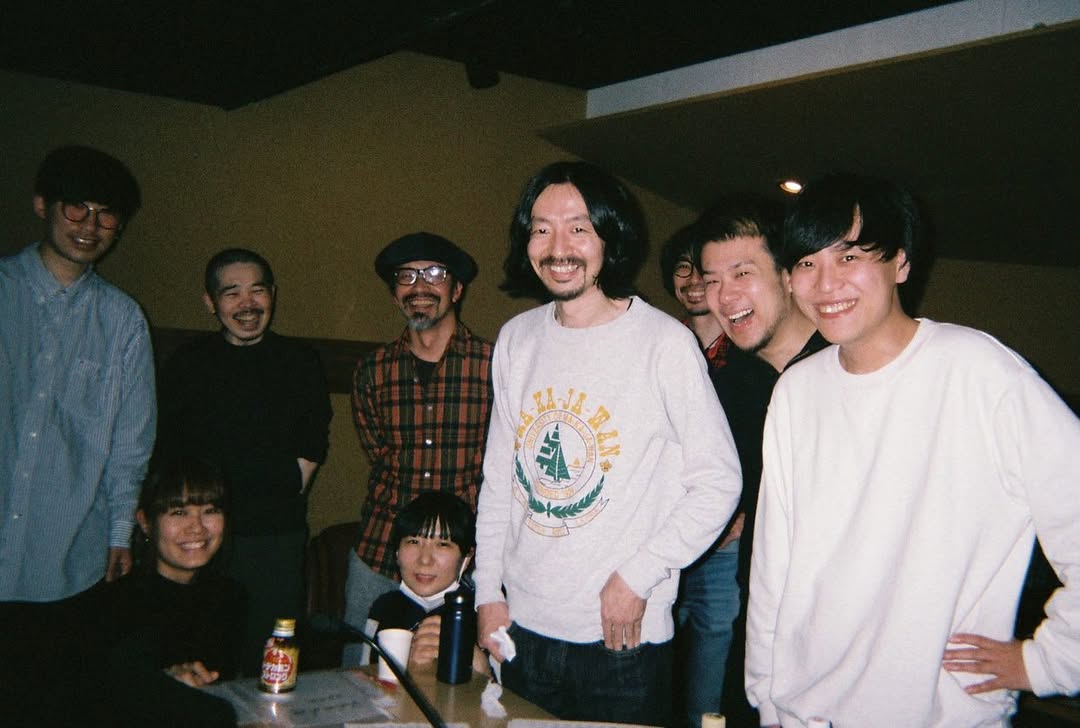
— To illustrate your point, my first time listening to the album, I was surprised to hear how every song on the album has an approach to it that has never been heard before in any of Kaede’s previous solo work.
Someya: Of course, the basic premise was to create something that was a good pop and vocal album, but we also wanted to make something in which anyone—no matter what year it was or what country they were from—could find something of value. In a word: we took it seriously. (laughs)
The vocals, too, were recorded very well, and I’m satisfied with how the songs turned out. I even enjoy listening to it myself, and I’m excited to see how everyone is going to react once it’s out. What will they think? Are they going to be surprised? Some people might be disappointed though. (laughs)
— I don’t think anyone will be disappointed. (laughs) What do you two think makes Kaede a compelling vocalist? Was there anything you were trying to draw out of her in her performance?
Someya: This is something I already thought the last time I worked with her, but there’s some component in her voice that just has this immense feeling of sadness. I think that’s what makes her appealing as a vocalist. She naturally produces this, like, “sadness of youth.” I especially felt it when we doubled her vocals, or when she sang in falsetto.
Kadoya: She’s got a completely different type of voice compared to Lamp’s vocalist (Sakakibara) Kaori and Uwanosora’s (Iemoto) Megumi. There’s almost like this fleeting quality to her voice, or like a “statuesque” element. But at the same time, there’s also this unwavering core to her voice. To me it felt like when we added Kaede’s singing to the tracks, they suddenly had this sort of appeal to them that wasn’t there when it was just the demo vocals. I thought it was just great.
— And what was your impression, Kaede, of their compositions?
Kaede: They’re so complex and difficult. (laughs) It’s like they’re so full of… information.
Someya: Yeah, I get what you’re trying to say.
Kaede: They’re so different from the songs we usually do with Negicco. When I listen to Lamp and Uwanosora’s songs, it’s the sort of music where I think… “It’s a waste for me to listen to this right now—I should save it for later.” (laughs) So since I knew they both make that sort of music, the fact that they were going to give me a full five songs… It was like, “What do I do?!” I felt so grateful.
— While I’m sure they’re all challenging songs, I thought “Sepia September“—with its rhythm and tempo changes—was especially amazing.
Kaede: I was so nervous especially about singing “Sepia September.” (laughs)
Someya: This was Nagai (Yusuke)’s composition, and it was originally just this straightforward ballad with him strumming quarter notes on the guitar. When I heard it, I felt that it would’ve been boring for the song to end up as just a ballad. Nagai himself apparently wasn’t entirely satisfied with it either, so I asked him to let me handle the arrangement, and I changed up the rhythm and built it from there.
— I thought it was interesting how, while you both wrote your songs individually, Sakakibara Kaori then wrote lyrics for you both.
Someya: It ended up being divided between two songs by me, one by Nagai, and two by Kadoya, but since none of us are particularly fond of writing lyrics, we all ended up asking Kaori to write the lyrics for one of our songs.
Kadoya’s composition with the lyrics by Kaori was a pairing no one had ever seen before, so that was the most interesting one for me. “Farewell Is A Heartwork” really became a fun song.
— Looking inside the booklet, you immediately notice how the words of “Farewell Is A Heartwork” are arranged in the shape of hearts. I thought that was so unique. How was this done?
Kadoya: I’d always liked Kaori’s lyrics, so I wanted to take this opportunity to ask her to write for my song, too. I wanted her to write the words before I wrote the melody, so I asked her if she could do that. But Kaori herself had never written lyrics before the music even with any of Lamp’s songs, so it was like, “How do we do this?”
I then suggested that she impose some sort of a limitation on herself, like writing the lyrics in the form of an object, like a house or something. Instead, what she sent me were lyrics in the form of hearts. I was so surprised and moved. I felt happy just knowing there was someone out there who would even think to do something so lovely.
— So it’s not you who suggested the heart-shape—that’s just what she sent you?
Kadoya: Right. I asked her where she’d gotten the idea, and she said it came from Terayama Shuji’s “Heart-gata no Omoide” [a poem where the words are in the shape of a heart] that she’d read and liked as a high schooler.
So then I just wrote the melody for that. It was so exciting to work on it. But then I needed more words in order to have a good balance with the melody, so I put in an additional order to her for one more heart. Kaori was complaining about it, saying, “It looked prettier with just three hearts.” (laughs)
— What did you think when you got the song, Kaede?
Kaede: I just thought it was so amazing. As Kadoya was saying, I was surprised by the heart-shape. In order to make the words fit in the shape of hearts, there are places where some of them are written in kanji but with different readings. That was so stylish, too, I thought.
Kadoya: It’s her singing that really breathed life into those lyrics, though. It’s Kaede who made that song complete.
— Also, I wanted to ask Someya about the placement of the instruments and voices. It’s very ear-catching with things like the vocals being panned to the right.
Someya: I would’ve actually liked to push that even further. Still, I feel like I managed—at least to some extent—to achieve what I was trying to achieve. After years of making pop, trying by sheer intuition to make something which I think is good music, whenever I’m making something, there’s always this part inside of me that’s a total contrarian or just like a difficult person. So it was with this project that I wanted to try and break down certain preconceived notions, or like, fixed ideas.
They first came out with stereo sound in the Beatles days, and often when you listen to music from that era, you’ll hear the vocals only in the right channel and instrumentation only in the left channel. That may sound weird to you, but when people were listening to the Beatles, no one thought the “panning was weird” or anything—they just listened to it without a second thought.
Ultimately, I think no matter how it might be panned, good music is always good music. That was my hypothesis, and so I wanted to try doing something you don’t really hear very much these days. That was the challenge. It was a process of putting the vocals on the right and then searching for the right spots where everything sounded pleasant.
— Hearing you describe it, it really does sound like you were free to experiment however you best saw fit.
Kadoya: Exactly.
Someya: After all, where’s the fun if you’re not pushing yourself? Together with Kadoya, it was my first time working on the sound, and I just wanted to see what kind of ideas would pop up. I wanted to do something interesting.
— Did Yukita give you any sort of general direction as to what he wanted you to do?
Someya: We thought he’d give us something… But no, there was absolutely nothing. (laughs) From the get-go, he said he wanted to leave everything up to us, including the mixing, so we got to work on it with exactly that as our intention.
— Would it maybe have been easier for you if there had been some sort of a limitation?
Someya: Yes, I can see how that might have been the case. In that sense, while it’s not a “limitation” per se, it was already decided that the album would be released in September, and so seeing as autumn was actually our theme, it all worked out perfectly.
Kadoya: In my case, since the people from Lamp were also involved, instead of me just going for a sound I’d normally go for, I thought more about the overall balance. Had I done something like what I might do with Uwanosora ’67, for instance, I felt like it would’ve blown the whole thing.
I began by listening to the demos for the two songs Someya wrote, and because I loved the elements I heard in them, I wanted to see if I could express something along similar lines in my songs, too. I was always thinking about that balance.
— You wanted to first see the approach Someya was going to take.
Kadoya: Yes. The two of us had agreed that we should write one normal mid-tempo song or ballad, and one uptempo song.
While this might be deviating a bit from the discussion about limitations, I was also thinking about striking a good balance with whatever Someya and the Lamp side were doing. I wanted to make something experimental and challenging, but at the same time, I also didn’t want to stray too far from what sounds accessible to the general public. So that’s another thing I was conscious of.
Still, the album does have a strong character to it, so I wouldn’t be surprised at all if it gets a mixed reception. I think that’s only be expected. Some people are going to hate it for sure. (laughs)
— I doubt anyone is going to hate it. (laughs)
Kaede: Even many of Negicco’s supporters are fans of the music of these two, so they were all happy when this release was announced. Everyone is excited to hear what it sounds like.
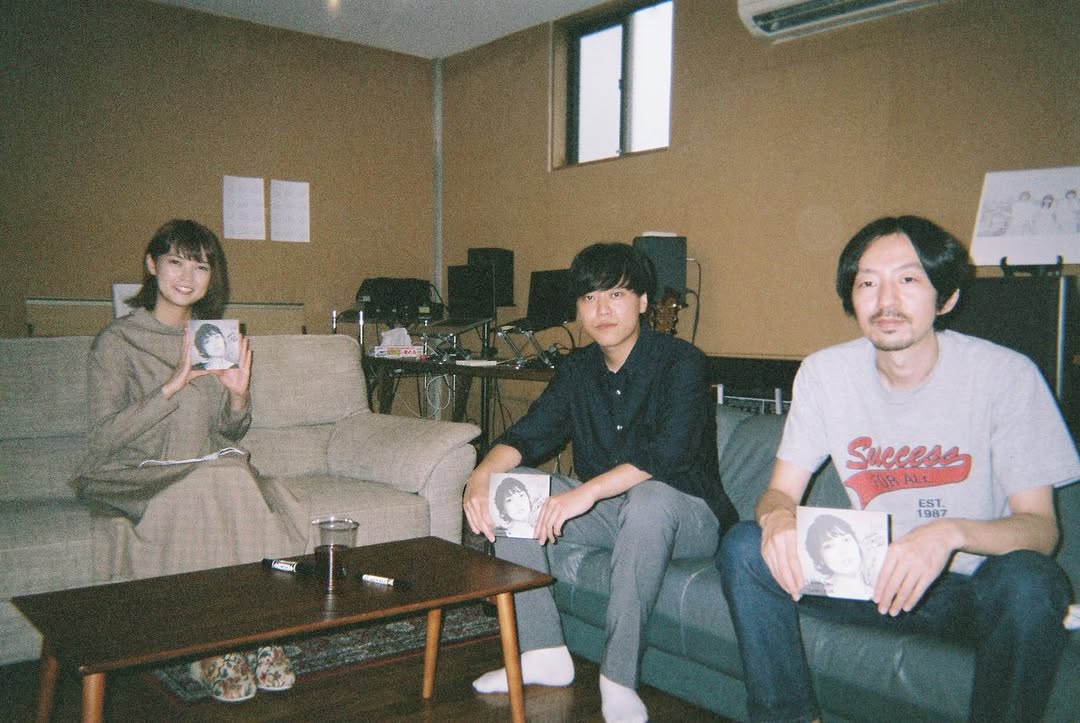
— What did you all think when you finally heard the end result?
Kaede: I thought it came out really great. The only thing I was anxious about was my vocals… I was worried they might say, “The songs are good but the vocals are kinda second-rate.” But when Someya told me he thought we had made something good, I finally felt relieved.
Someya: Speaking for myself, as I said before, I’m very satisfied with it. It’s tough for me to judge it objectively though—as someone who usually lives like a hermit, I’m so far removed from the rest of society that I don’t really know what anyone else might think. (laughs)
Kadoya: We gave it everything we had and without any compromise, so I’m definitely pleased with it. Kaede’s vocals, Someya and Lamp, all the new supporting musicians—they all gave me a lot of inspiration, so I enjoyed the process. Still, I do sometimes find myself thinking how it would’ve turned out had I done the project with someone else, or done it all by myself.
— Ah, so you’re saying it came out this way because of this particular line-up.
Kadoya: Right. Thanks to Someya and Lamp’s songs, I was able to write songs I wouldn’t have written just by myself. And the same goes sound-wise, too. But it’s not that I forced myself to write this way—I wrote what I wrote because it’s something I myself personally like, so I feel that it’s also an expression of a new side of Uwanosora as well.
— If you were to perform these songs live, I’m guessing it’d work best with these same band members.
Someya: It really was intended only as a recorded work—none of the songs were made with the expectation that they would ever be played live. But while I think it’d be quite a challenge to do them live, they were all made with live instrumentation, so it’s possible at least in theory. It’d be nice if one day there was a live performance of some sort.
Kaede: It’s hard to feel optimistic about playing live in this current climate [due to COVID], but yes, it’d be nice to do a show like that sometime.
