Here is an interview with soraya about their self-titled debut album from 2024. Of all the new music I’ve discovered this past year or so, this duo is one of my personal favorites. Highly recommended listening for anyone in search of some warm, laid-back, jazz-infused pop with genuinely memorable songwriting. Or, really, for any music fan in general.
Most of this post originally comes from an article by AVE, along with some additional questions from the April 2024 issue of Music Magazine. (These segments are marked “MM.”)
Interview & text: Murao Yasuo (AVE), Munekata Akimasa (Music Magazine)
English translation: Henkka
soraya: Website, Twitter, Instagram, YouTube
Note: You can buy this album on CDJapan.
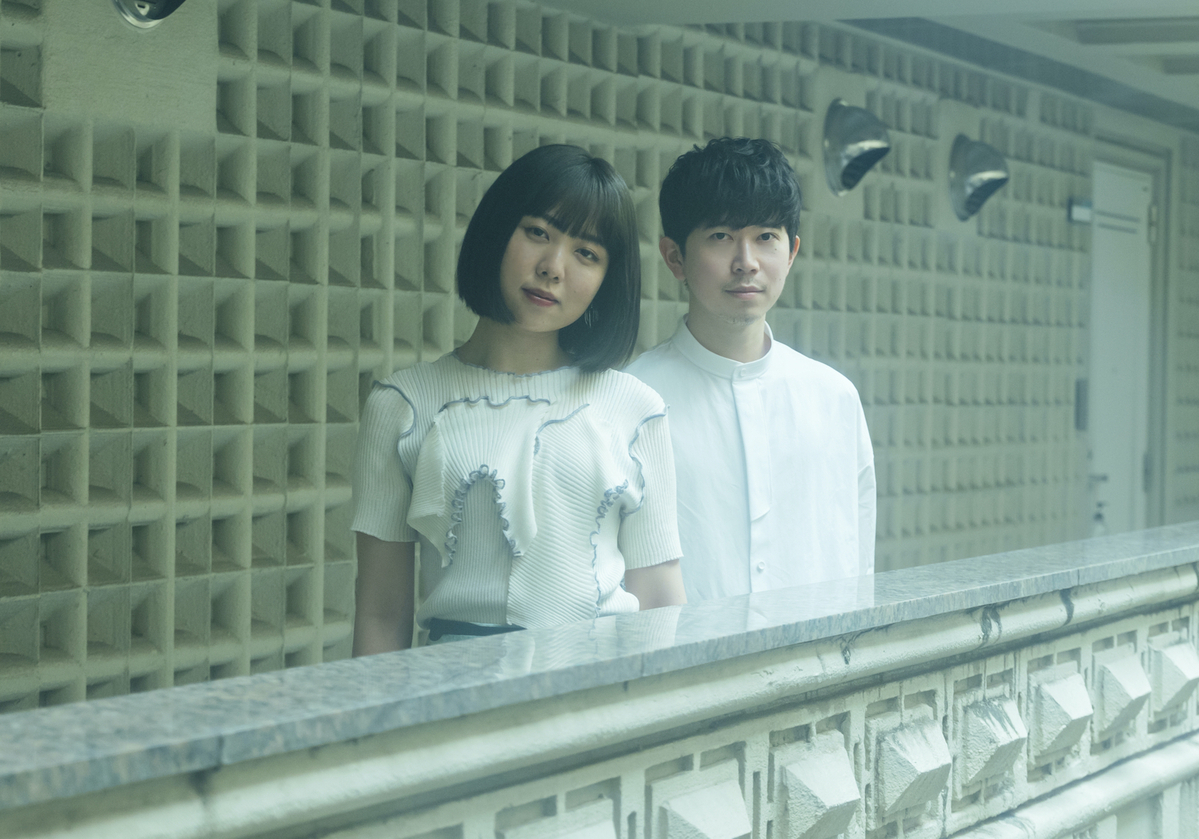
soraya
Ishikawa Kurena & Tsubosaka Kento
soraya is a unit comprised of two musicians active in the jazz scene, Tsubosaka Kento (piano) and Ishikawa Kurena (vocals, bass).
Drawing influences from a variety of musical styles—not only jazz, but also folk, rock, R&B, and world music—the duo aims to create something universal; songs that can move the heart precisely because of their simplicity. Even as their work overflows with playful ideas, one can clearly sense their sincere love for music.
We got to ask the two about their feelings behind their first album soraya.
— How did you two first meet, and how was soraya formed?
Tsubosaka Kento: We’d played one jam session together when we were in college—Kurena was not yet singing at the time, so she took part only as a bassist. Anyway, we’re the same age and the jazz community is so small, we just knew each other’s names from the start.
Afterwards, I was studying abroad at the Berklee College of Music, living in Boston, and I just happened to see a video on YouTube of Kurena singing Happy End‘s “Kaze wo Atsumete.” It really matched my mental state at the time, so it left a big impression on me.
— And what was your mental state?
Tsubosaka: The pandemic happened just after I’d graduated from Berklee and had started working, and suddenly you couldn’t even go out anymore. I’d lost all my gigs and I was just sitting at home all day.
Up until that point, I’d been listening to and playing all this very complicated, super energetic stuff. But suddenly I found myself tired of that sort of thing, and I became drawn to music with some warmth to it. For instance, Carole King, James Taylor, Yano Akiko, Onuki Taeko… And that’s when I heard Kurena’s “Kaze wo Atsumete.”
— I can see how it would really resonate with you.
Tsubosaka: I was shocked—I didn’t even know she could sing. At the same time, I was totally charmed by her voice.
— So what led you to start singing, Ishikawa?
Ishikawa Kurena: The COVID pandemic played a big part. I, too, lost all my jobs during COVID, and I was just spending more time at home. That’s when I had the idea of reconnecting with my musical roots, and as I re-listened to all kinds of different things, I realized again how much I love soul music—artists like Stevie Wonder and Minnie Riperton and so on.
With there being less opportunities to play live, more musicians were uploading their performances on YouTube, and Tsubosaka also released his digital single, “Minato ni te.” It’s this very Hosono Haruomi-esque song, and I was similarly shocked to hear that he does that kind of music, too. Thinking it would become good motivation for practice, I then also began putting up my own singing videos.
— So you two were brought together not by jazz but by music like Happy End and Hosono Haruomi. And what’s more is that you both found each other’s musical works at the same time by coincidence. It almost feels predestined.
Tsubosaka: Yes. We weren’t even keeping in touch or anything, so I guess we both just happened to be feeling the same sorts of feelings at the time. So then when I came back to Japan and played my first show back here, Kurena came to see it and we talked about all kinds of things. That’s what led to soraya’s formation.
Ishikawa: He messaged me asking if I wanted to play together. I was glad—I’d been following him on social media ever since “Minato ni te.”
— What was the first song you made as soraya?
Tsubosaka: Our first single, “Hitori.” We made it while discussing what sort of music we wanted to be making together.
— While “Hitori” is Tsubosaka’s composition, the tight drum beat really brings out Ishikawa’s roots with the soul music influence.
Tsubosaka: I’m myself a big soul music fan, having been very much influenced by Minnie Riperton’s Adventures in Paradise.
But when we’re writing a song, we’re not conscious about what style we want to make it in. Instead, we start by thinking about what the idea of a “good song” means to us, and we think about what sort of music we’d like to listen to ourselves, and we get to work. Because I believe that if you can write a song with a good melody, good harmony, and good rhythm, and if it really touches you, then you can make it work with any and every arrangement or configuration.
— That’s true. What kind of image did you have in mind when writing the lyrics, Ishikawa?
Ishikawa: These were the first lyrics I ever wrote in my life. Tsubosaka sent me a recording with his programmed melody and rhythm, and when I listened to it, I could just picture the ocean and canals and like majestic scenes of nature. With that image as my basis, I just tried writing lyrics that would be fitting for such a strong melody.
— Ishikawa writes the majority of the lyrics, and your second single, “BAKU,” presents a fairytale-like world inhabited by baku, an imaginary creature that consumes nightmares.
Ishikawa: With this one, I basically wanted to write baku’s “work song.” I started by writing a short story which I sent to Tsubosaka, and then he composed the song around his mental image of the story.
Tsubosaka: It’s a story of baku working all night, jumping from one dream to the next. Just munching his way through them. As I was thinking about the rhythm, something that came to mind was the music of the African Pygmy people. Also, at the time I was hooked on Sakamoto Shintaro‘s recordings that use this drum machine called the Maestro Rhythm King, so I incorporated some programmed beats, too. Then, to also give it some acoustic feel, I added in some overdubbed percussion.
Within the song, you can hear Cuban, Brazilian, and Pygmy rhythm ideas—all sorts of intermingling styles which I tried to keep in good balance. I think the fact that the sound of the song could expand so much is all thanks to the imaginative power of Kurena’s lyrics.
— It’s such a fun song with all sorts of clever ideas—there’s even some rapping in there halfway through.
Tsubosaka: Yeah. The alarm clock goes off in the intro and the baku awakes. He heads out, works throughout the night, and then it’s morning. Finally, at the end of the song the alarm clock goes off again—only this time, it’s us who awaken. (laughs)
I had this picture book image for this song, and so I even asked picture book artist Momoto Curico to draw the single’s cover art. I wanted to make a song that takes the playfulness of fairytales and picture books and combine it with our own musical background.
— “Utopia” has the same sort of borderless feel to it as Tsubosaka’s “Minato ni te.” Those touches of strings and marimbas help create this very exotic kind of mood.
Tsubosaka: When we thought about doing another exotica song, for our starting point we used not Hosono but rather Martin Denny—someone who influenced Hosono—as well as things like bolero and mood music, really giving thought as to what sort of music we ought to be making as soraya. Going back through history and studying music of the past to discover your own style. That’s the approach used by lots of jazz musicians.
— “Chiisaku Sayonara” also features added percussion and flute. (MM)
Tsubosaka: Me and the percussionist Kan are friendly enough for me to just say to him, “Let’s do a baião here” or “Let’s try a cha-cha here,” that sort of thing. Depending on the listener, it might sound like either samba or Cuban. We listened to lots of different clave and New Orleans beats and stuff, and even though we’re on the opposite side of the globe, those rhythms still sound exhilarating. That must mean there’s something universal about them.
So the fact that that’s the sort of approach we took with this song, I suppose here the term “world music” might be an appropriate description. That approach being, we wanted to see what would happen if we made a pop song while showing our respect to those sorts of influences. (MM)
— Your jazz background is very much apparent on “Mimi wo Sumasete.” With its pleasantly swinging feel, it comes together as a very friendly, easy-to-like pop song.
Tsubosaka: When you talk about jazz, most people tend to have this very “romantic” or “moody” image of it. But to us, that’s not how we view it. When I listen to good jazz music, I just feel so warm—it moves my heart. It’s the same feeling I get when I listen to good pop music.
Take the Carole King song “Music,” for instance. It swings, sure, but it doesn’t feel like they’re playing it in a jazz “style” at all. In that sense, it’s actually a great embodiment of Carole King’s music as a whole. That one really left an impression on me. I wanted to take on the challenge of making a song like that, and this is what I came up with.
Ishikawa: I feel the same way. With a lot of Joni Mitchell‘s songs, too, even though you have people like Jaco Pastorius participating and they incorporate elements of jazz, her singing comes through so clearly. You can really feel the energy of all the people playing. I just feel warm listening to it.
Tsubosaka: Whenever you’re doing swing in a pop music context, you always run the risk of it sounding like you’re saying, “Look, we did something that swings!” But we didn’t want that—our approach was to think about how to make it more “pop” than “swing.”
Even the Motown musicians were mostly all jazz players, and in the same way even though the two of us have studied jazz as well, I feel like there’s definitely a way for us to play in a way that doesn’t just sound all sentimental. Generally speaking, our goal is not to play music only in some specific style, but to always create the sort of pop music that blends all kinds of different elements together. (MM)
Ishikawa: With this song, Tsubosaka and I talked a lot about how I wanted it to sound like something you’d feel like listening to first thing in the morning, but also how even though the song is in an odd meter, I wanted to sing it in a way that makes it sound like it isn’t. I wanted the words to be the most important thing. (MM)
— Listening to your acoustic cover of “Ai no Shirushi,” I can really sense how soraya is trying to go beyond jazz or pop, and that you’re seeking something “warm” in music.
Tsubosaka: Thank you. When you listen to this song, I think you’ll first be reminded of PUFFY‘s original. It’s such a stylish, cool arrangement, what with those striking timpani sounds and everything, but when you take that melody—written by Kusano Masamune—and really look at it from different angles, you realize just how deep the song actually is. To me it felt like it matches with the kind of songs soraya is trying to make.
Ishikawa: Tsubosaka chose this song for us to do, and as I listened to it over and over again, I was surprised to notice again just how warm it made me feel. Tsubosaka’s arrangement takes that warmth and makes it so that it flows directly into your heart. I just tried my best to sing it in a way that conveys the charm of the original song.

— The fact that you’re able to convey that warmth must be in large part thanks to the strength of Ishikawa’s voice. Would you say that that certain charm you felt when you first heard her singing on that YouTube video has become the basis of soraya’s music as a whole?
Tsubosaka: Kurena’s voice—which can carry the words and melodies straight to the heart—is an absolutely essential element in the expression of soraya’s music. When I first heard her sing during the pandemic, I just remember thinking, “Singing really is a wonderful thing.” Her voice is at soraya’s very foundation, so yes, it’s absolutely vital.
Ishikawa: After I began singing in soraya, my desire to express myself has gotten stronger. I think part of that shift comes from the fact that I’m now singing lyrics that we wrote ourselves.
— What kinds of people do you hope to reach with this album? (MM)
Ishikawa: The fans who have liked our previous jazz work, of course, but it also makes me so happy when we get girls younger than us coming up to us after the show, asking for our autographs. (MM)
Tsubosaka: Now that it’s actually finished, I’m really not even sure myself… I’ll just, um, I’ll leave it in their hands. (MM)
— Hey, what’s with the sudden loss of confidence? (laughs) (MM)
Tsubosaka: Takano Hiroshi complimented our music on X, saying, “It’s pop that sounds like standards but with a fresh sound.” For us, we’re just trying to make simple melodies. Nowadays, even on TikTok people will just swipe to the next video after like six seconds, and we don’t have anything attention-grabbing or visually appealing to offer those people… But even so, it’s just something I very much want to try doing in this present era—that is, sincerely making four-minute pop songs that pretty much sound the same from beginning to end, and yet, to make them something you want to savor and enjoy. (MM)
— Ishikawa just made her major debut last year, and Tsubosaka too is busy with his solo activities. You two concurrently making music as soraya is something I’m sure will lead to you broadening your musical horizons.
Ishikawa: It would be great if we could bring over the things we learn through our solo work and have it influence soraya, too.
Tsubosaka: Even as we were making the album, Kurena’s voice was constantly changing. But the strange thing is, even though we were working separately outside of making the album, we really seemed to share a mutual understanding in so many respects. Like, one of us would say, “I think this part should sound like this,” and the other one would have been thinking the exact same thing. So even as we’re both being inspired by new ideas, it’s like we’re still looking in the same direction. I hope we can maintain that solid partnership as we continue to evolve as soraya.
