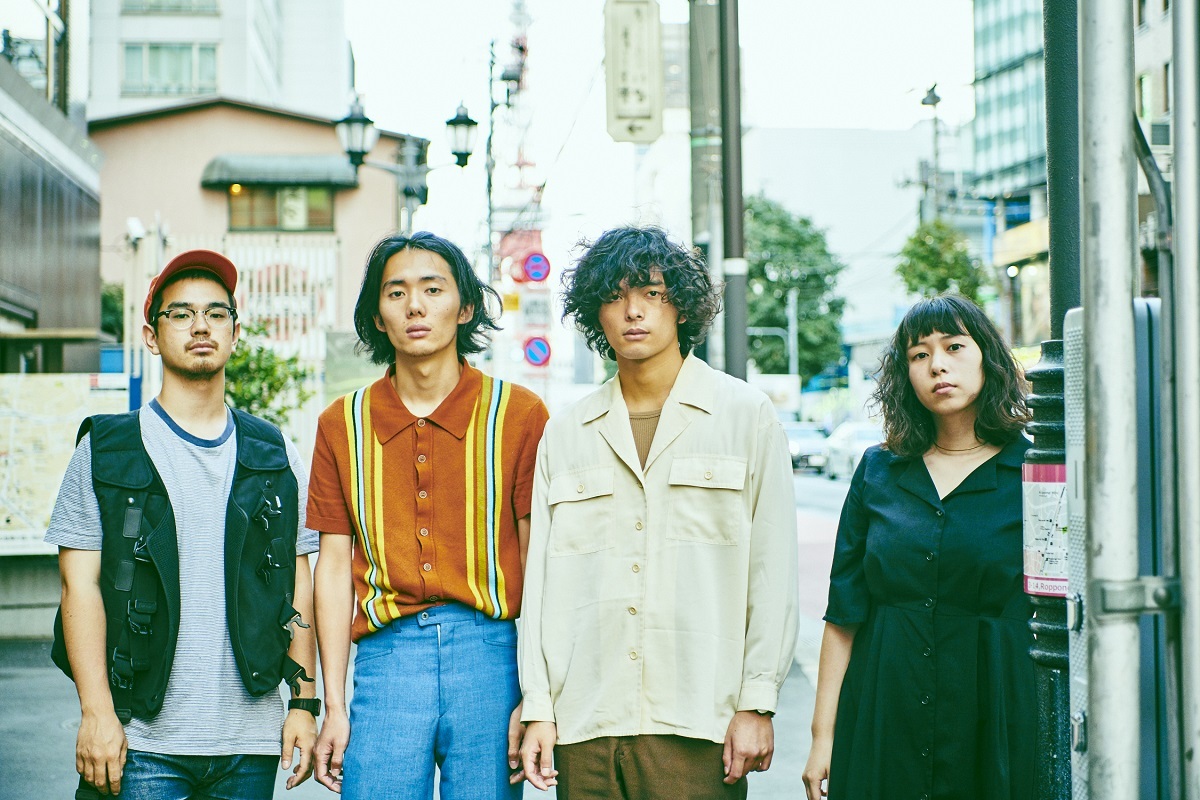
This is an interview with MONO NO AWARE about their third album Kakegae no Nai Mono, which translates to “Something Irreplaceable.” I hope you find it useful.
On a side note, the second track “Enpitsu“ is one of my favorite tunes from this band. It’s got just the right amount of that lighthearted, nostalgic-sounding J-pop melancholy.
Interview & text: Ishizumi Yuka (Japanese text)
Photography: Oohashi Yuuki
English translation: Henkka
MONO NO AWARE: Website, Instagram, Twitter
Note: You can buy Kakegae no nai Mono on CDJapan.
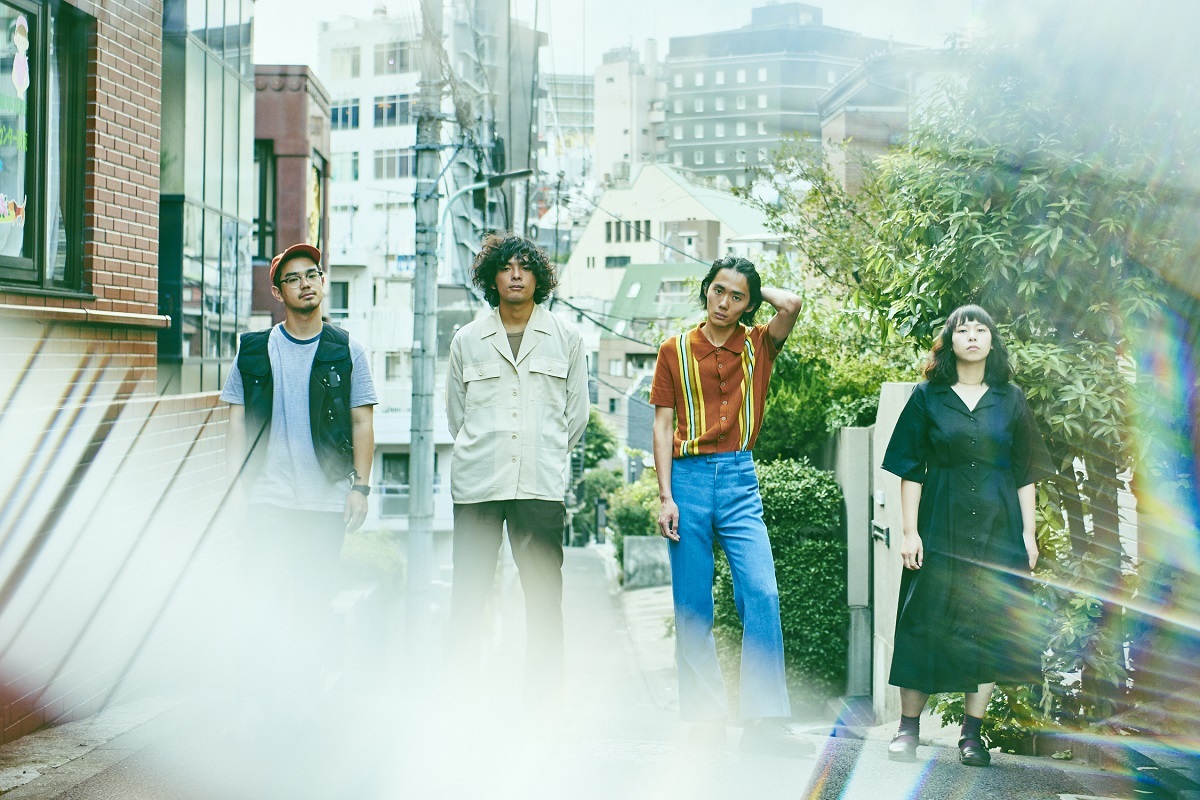
MONO NO AWARE
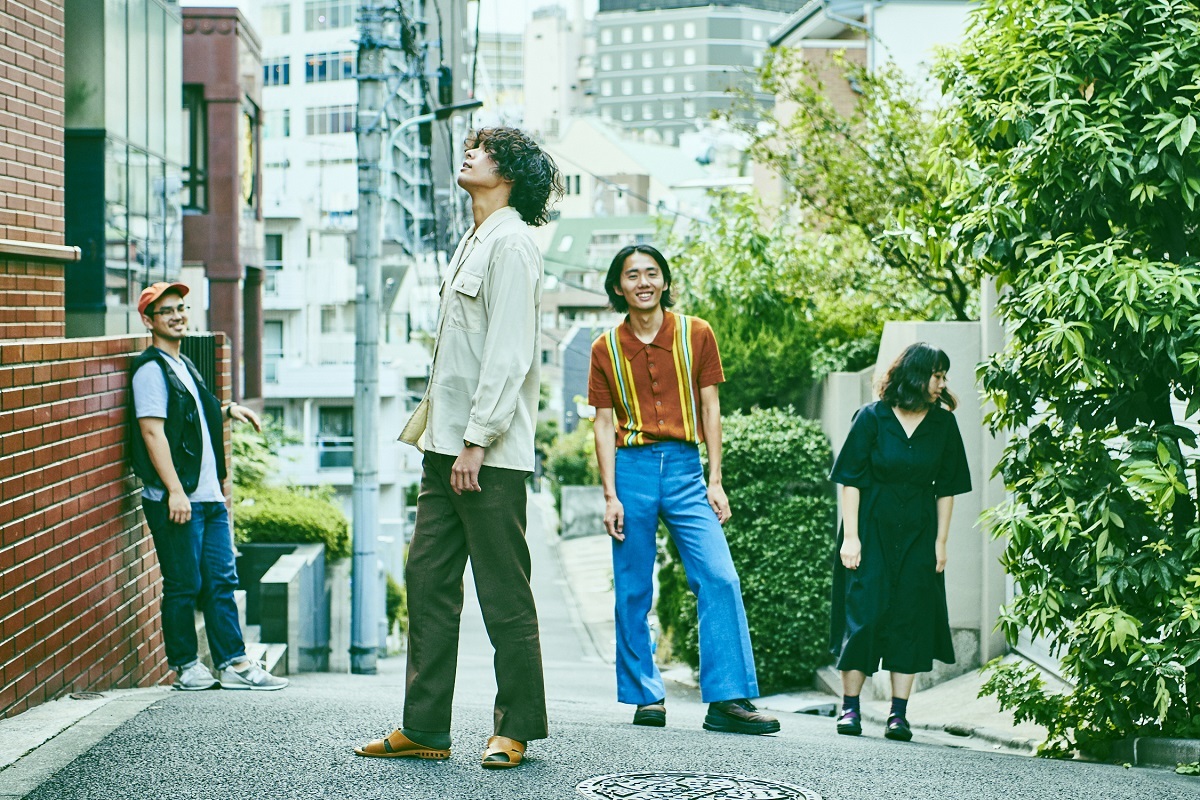
(L-R) Yanagisawa Yutaka, Tamaoki Shukei, Kato Seijun, Takeda Ayako
On their first album, Jinsei, Yamaori Taniori, they expressed a kind of tricky, humorous funkiness which only indie bands can pull off. Their second album, last year’s AHA, was—as symbolized in the lead track Tokyo—something that resounded with the image of a mid-twenties youth living in Tokyo, transcending any particular music scene.
MONO NO AWARE are a rare thing. They are a rich, organic entity, in which band music comes together with themes, melodies, ensembles, and words, all at the group’s own pace.
The theme of their third album, Kakegae no nai Mono, is based on the personal vision of frontman and songwriter Tamaoki Shukei. Both the radiance as well as one’s apprehension towards “the future” as seen through the eyes of a child; a child’s affection for material things; that slight feeling of hesitation when one is standing at the brink of adulthood… Of course, it’s precisely because he is no longer a child that these themes he depicts resonate so deeply, and I believe that it’s this very thing that is the heart of this album.
With tracks like the theme song for film Chinbotsu Kazoku and the 2019 October/November song for TV program Minna no Uta, it was with hopes of introducing listeners not yet familiar with the worldview of this profound band that I spoke with its members.
— In MONO NO AWARE, you always seem to have a distinct theme for each one of your albums. As a band, what kind of a direction were you going for with this album?
Yanagisawa Yutaka: It started with Shukei saying he wanted to make another album; to make music.
Tamaoki Shukei: This was right after AHA, so initially I told our manager that maybe we should just do an EP. By that point, I already had a pretty good idea of what I wanted to do.
— Which was…?
Tamaoki: There’s this intuition that I feel is inherent to all children… Like, for example, why do kids on their summer vacation always leave their homework until the last week of August? As an adult, you know what happens if you don’t finish your summer homework on time, so if you were in their position, you’d know better and you’d probably do a little bit every day. But as a child, you don’t have that perspective yet.
That intuition is what I wanted to write about. But when I started thinking about it, I realized I couldn’t convey it with just the number of songs that would fit on an EP. I then decided I wanted to make an album with ten or so tracks that would be about that, so right from the onset, the project was intended to result in a full-length album.
— But at that point the idea existed only in your mind?
Tamaoki: Right. I didn’t have songs or anything yet.
One thing that led to it was us being asked to write the theme song for the movie Chinbotsu Kazoku. The director, Kano Tsuchi, is one year my junior from my hometown of Hachijojima, but the image of how I remembered him from high school compared to how I saw him now, talking to me as a director about his ideas for the theme song of his film [which is about an experimental, communal living arrangement which he had been part of]… It was such a huge discrepancy. I was like, “Oh, so this is the sort of life this guy led.”
The only thing I could remember from my childhood as far as Tsuchi speaking about his experience living in such an arrangement was just him mentioning how it had been “fun.” That just goes to show how childhood memories seem to fade away, and you lose the sensations you felt at the time. I really felt like that’s something probably all of us have in common.
That’s where the first song I wrote, “A・I・A・O・U,” came from. But in that song, I wrote about the full journey of a lifetime, and I realized how one song wasn’t enough. And so, I began writing an entire album depicting a child’s development.
— What with you releasing the song “Tokyo” last year, it feels like MONO NO AWARE have established this image that you’re a Tokyo band, despite two of you actually being Hachijojima natives.
Tamaoki: On the first album (Jinsei, Yamaori Taniori), we sounded like a band just having fun, with a collection of all the songs we’d amassed up until that point. On the second album (AHA), we tried to retain that sense of playfulness while, at the same time, rather than being content with the album only being accepted in that narrow indie scene, we tried to appeal to a broader audience, and that’s where songs like “Tokyo” came in.
For this third album, we looked at the balance of our previous two albums, and we felt that we could make an album where we’re having more fun and playing around more, while at the same time making something with an actual theme.
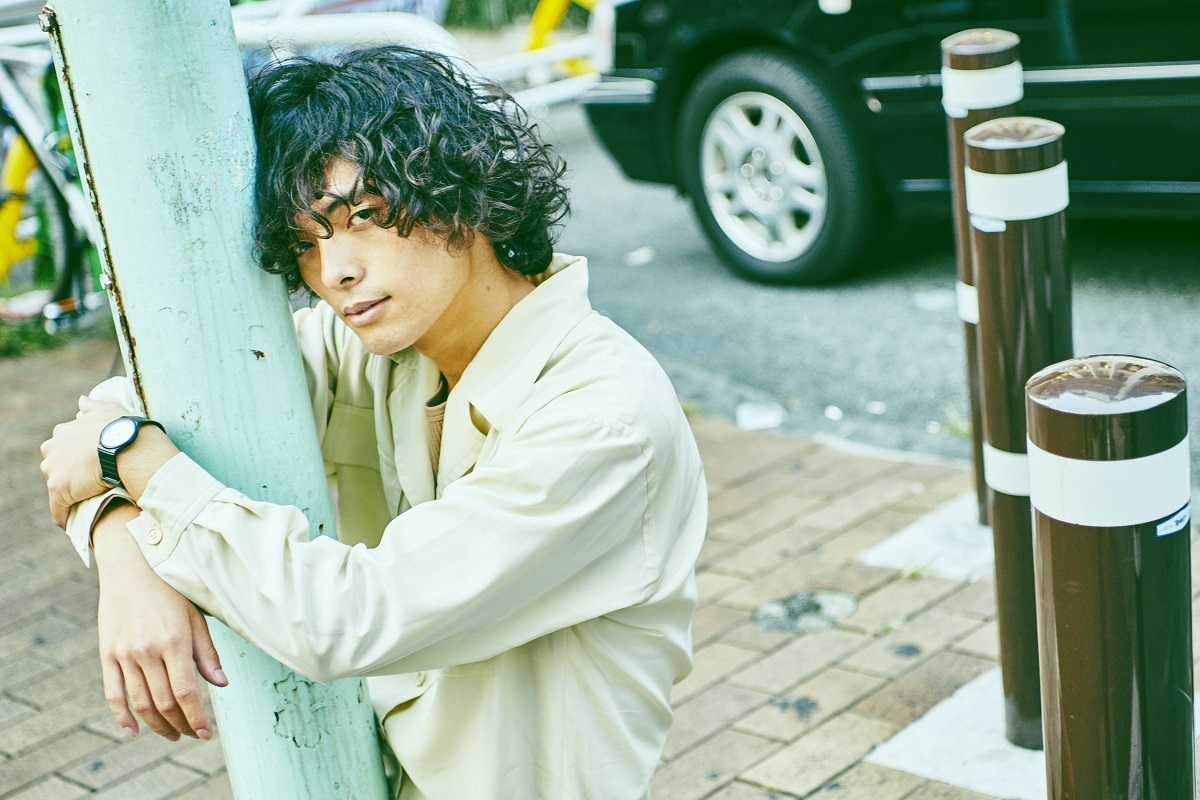
Tamaoki Shukei (guitar, vocals)
— As I understand it, there is an age gradation in the lyrics of this album. What sort of an age range were you picturing while writing these songs?
Tamaoki: Well, right around the same time, we were approached about doing the song (Kamu Kamo Shikamo Nidomo Kamo!) for the children’s TV program Minna no Uta, so of course I had that image of writing something that was aimed at young children. I even thought about writing every song like it could be on Minna no Uta… But, as you know, I’m an adult now, and having it be too child-oriented didn’t feel right—like doing “baby talk” or something.
Just as I was thinking about it, Yutaka came up with the idea that the tracks should all be grouped in order of the academic year, linked so that it’s songs about elementary school and before, songs about middle school, and songs about high school. So then I wrote down notes about what I was generally thinking about at each age, picked a theme, and wrote a song about each thing.
— Next, I’d like to ask you about the songs themselves. “Shin Jinrui” (“New Human Breed”)—there’s something a bit nostalgic about that expression…
Tamaoki: Oh? There is? Who used it first?
— It originated from the economic anthropology scene of the ’80s—it’s what they used to call young people back then. What was your intention in choosing this song title?
Tamaoki: How interesting. I didn’t know that. Anyway, it was from manga. Especially in all the manga I was reading back in middle and high school, there were a lot of stories where some kind of a new human race was born, and the current mankind was exterminated or driven out by this new breed.
For instance, Terra Formars had cockroaches becoming human, and then you also had Tokyo Ghoul, and the zombie manga I Am a Hero… I don’t know if it was a particularly dark period of time or what, but it feels like science fiction stories are always popular in times like that. In that sense, children are in a way always a “new human breed.” They’re so rich with ideas, but then as they become adults, they gradually do away with that part of themselves. I think that’s where the words “new human breed” came from.
— That first verse with lyrics about wanting to “become lovers with a small bird, so we could give birth to a child that can fly“—that’s definitely not something an adult would come up with!
Tamaoki: That verse alone was something I actually wrote in my first year of high school. I happened to come across that lyric again, and I thought, “Huh. So this is the kind of stuff I was writing back then.” And so I just used it. Today, I probably wouldn’t be able to think of a line like that anymore. Already by that point I could feel a pretty significant age difference between my current self and my past self. That’s why I decided to use that line.
— Being able to think that way when you’re in high school… You must have either been a very philosophically-minded high schooler, or just a very “pure” one.
Tamaoki: True. (laughs) I wonder which one I was…
Kato Seijun: Probably the pure type, no?
Tamaoki: Seeing as it’s coming from a guy who actually knew me back then, I suppose you’re right. (laughs)
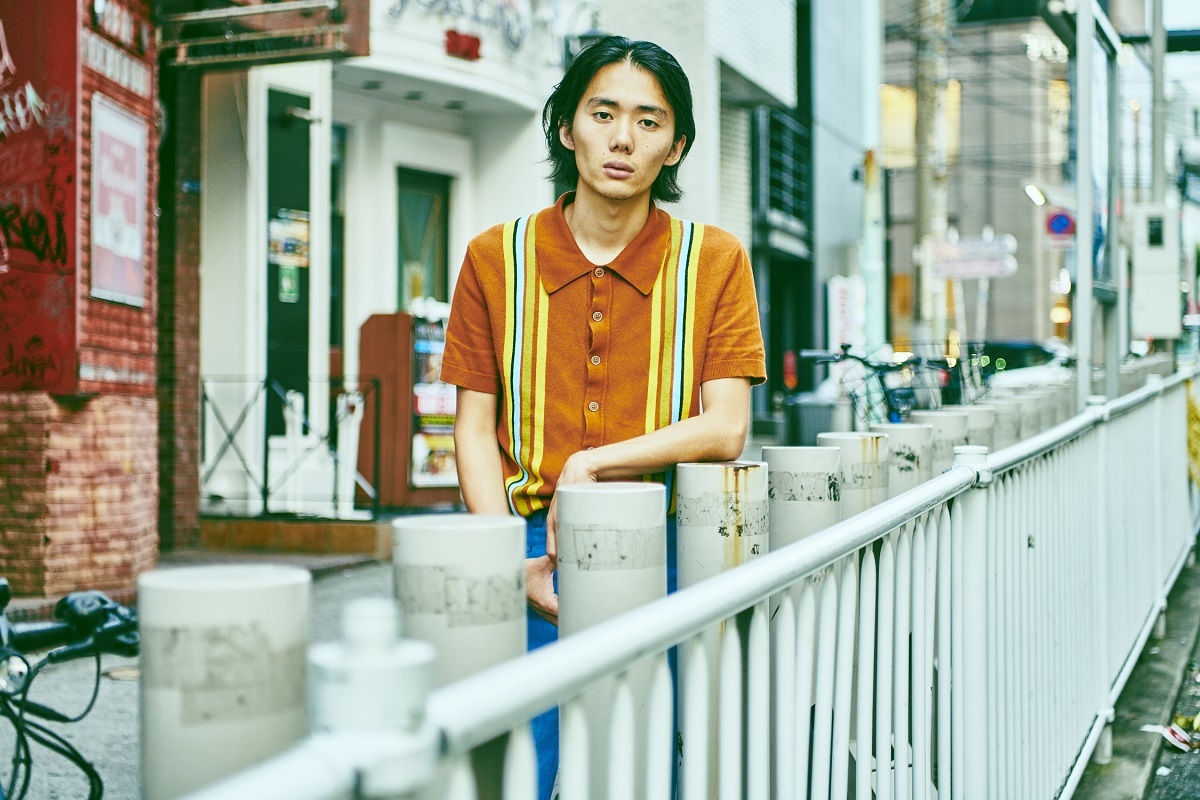
Kato Seijun (guitar)
— And you then wrote the rest of the lyrics as your present-day self?
Tamaoki: Right. It’s really like I was trying to mimic my younger self. I had a lot of trouble writing those lyrics. I just kept adding stuff that wasn’t even really coming from the heart. I was writing along the lines of, “Okay, so if past me had this idea, then maybe he would’ve also thought this and this and this…” I felt very conflicted as to if it was even okay to put out lyrics like that. But then the song itself turned out so cute… (laughs) That’s when I felt like it was absolutely the right call to use those lyrics.
— It’s difficult to peg the song itself under any one genre. Does it have a bit of a Latin beat maybe? But then it also sounds psychedelic and yet… “sober.”
Yanagisawa: I wouldn’t go so far as to call it “psychedelic,” but there’s definitely something unusual about it. What should we call it… Sober psych? (laughs)
— I get the feeling that a big reason for the music giving that sort of impression is thanks to Kato’s guitar tones. What was your approach on this album? With the guitar tones, I mean.
Kato: Well, the songs all had a proper image to them, so I was just careful about not breaking that balance. If I really wanted to, I could have gone for a total psych approach, but I thought maybe I would instead go for something that felt exciting and yet somehow unsettling… On “Shin Jinrui,” for instance, I was conscious about not overdoing it in that interlude.
— As the album progresses, that childlike feeling gradually turns into that of adolescence.
Tamaoki: Yes. It’s something that evolved as the project went on. From the beginning, I wanted the songs to all be from a young boy’s viewpoint. Up until now, we’d never really touched on the theme of “youth” in our lyrics, but this time it felt like the time was right.
Takeda Ayako: Compared to our previous works, on this album there were a lot of themes that I could really identify with. Like, the songs individually had themes that I could really sympathize with, even more than on our past songs.
— What were the songs that especially made you think, “I totally get this!“; the ones that were especially easy for you to arrange?
Takeda: I wonder…? This song, “Jikan Dorobou ga Yattekuru,” that was initially a slow song. But I felt like making it faster would suit the theme of the song better, and overall just make it “cuter” in a way. We were also rushing to finish up the song and the lyrics near the end, so maybe that sort of hurried feel is quite fitting for it. It’s got like this sense of enthusiasm about it. (laughs)
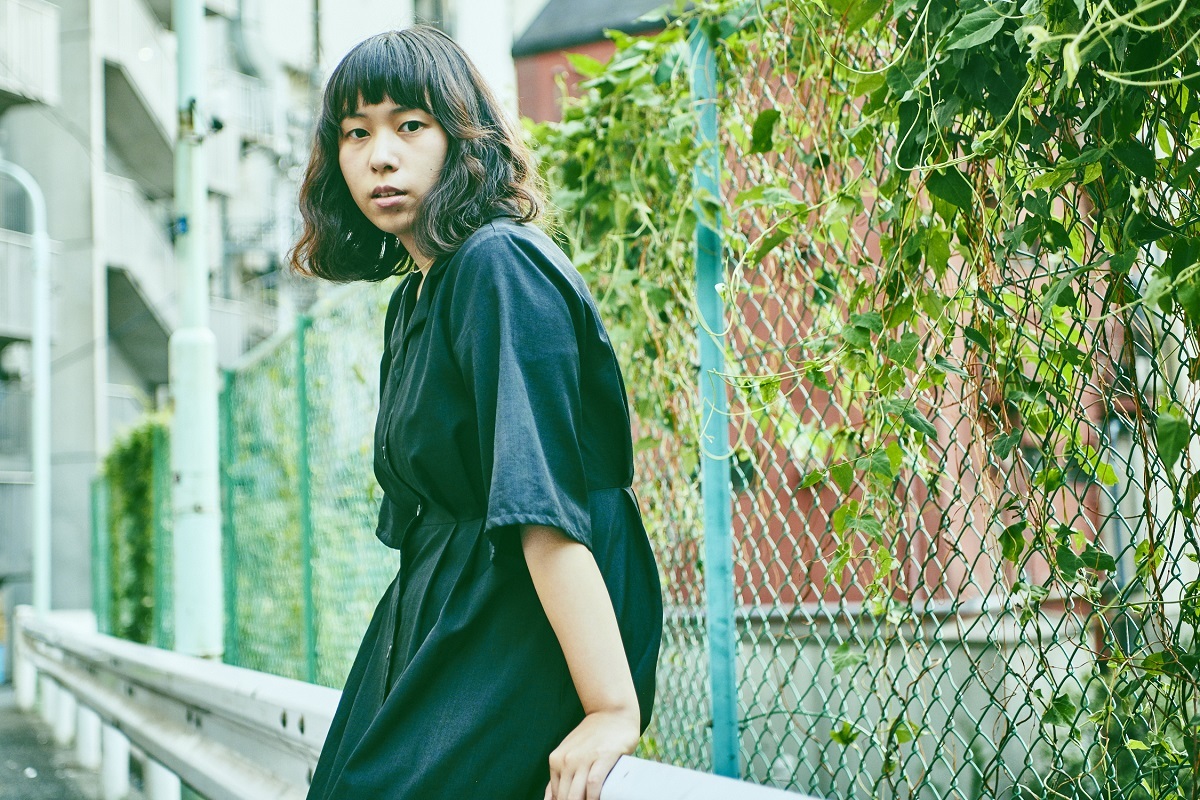
Takeda Ayako (bass)
— By the way, the theme of that title—”Jikan Dorobou ga Yattekuru” (“The Time-Thief is Coming”)—is something that could well be applied to the modern way of life, too. What was the inspiration?
Tamaoki: The inspiration was Michael Ende’s book Momo. The theme of that book is almost exactly the same as the theme of this song. That intuition of “time-saving” as depicted in Momo—I was amazed that there was someone who was already writing about it way back then [in 1973], and it just made me convinced that history repeats itself. Or like, how it’s a recurring issue that always happens in urbanized cities. I could see many parallels even in my own life.
— I see. The not-quite-fusion, almost West Coast rock–esque sound of “Futsuu no Hito” is so fresh to my ears, and Kato’s guitar has a tone to it that we haven’t heard before.
Kato: Yeah, you may be right. The big difference in that one could be that I’m hardly using any clean tones—it might be the first time I’m using so much distortion even on the verses. During recording, I just played it as-is and our engineer, Okuda, went, “That’s the one,” and we went with the very first take.
Up until now, we’d always splice up my guitar parts pretty meticulously, but on this song, we really wanted to capture that live feeling; that energy. With all the solos and stuff—on all the other tracks, too—we were careful about not making anything sound too rigid, and going about recording them in a way that they matched the atmosphere of that particular moment, and doing what was best for each individual song.
— It’s just that, thus far, the image I had of your playing was that it was always clean, concise, and careful…
Kato: Yeah. This time, our engineer was always telling me how we should go for whatever feels interesting. Compared to our previous albums, we also had more time to record, and it was also our first time holing up at the studio, too. That’s why I think we could capture everything—the drums, bass, guitar—so well.
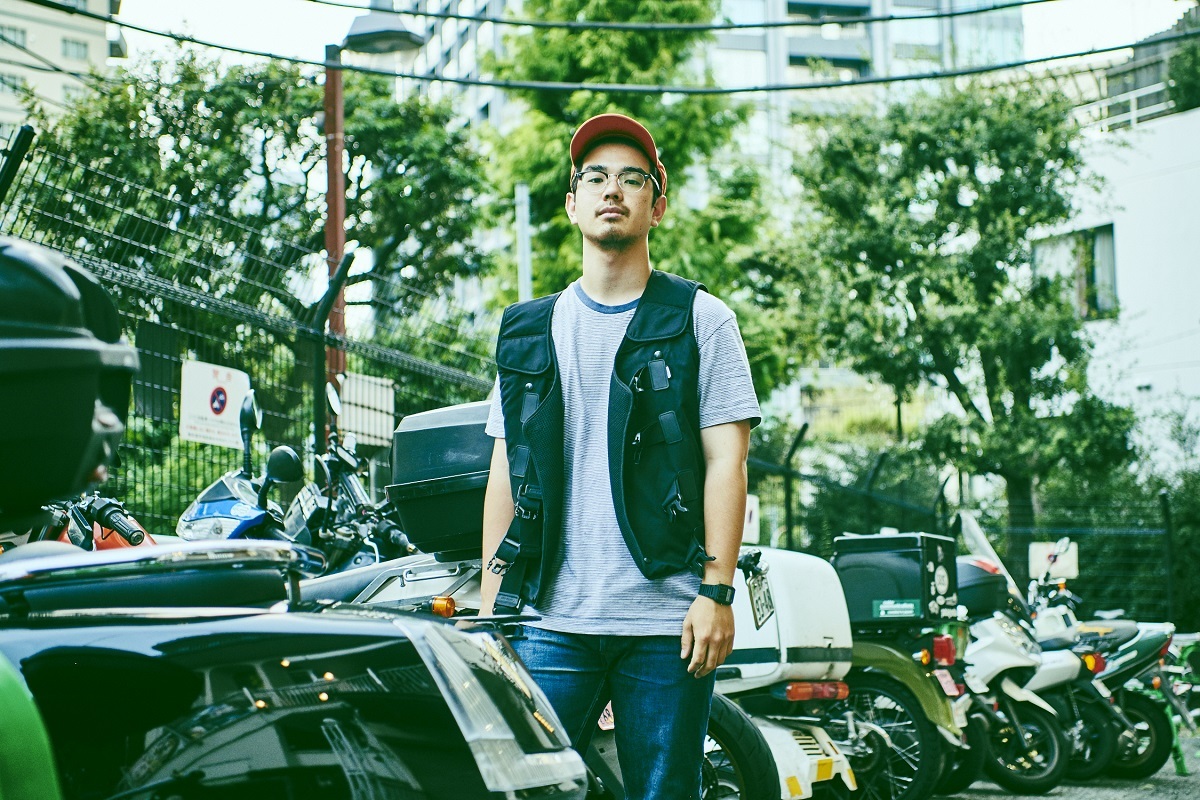
Yanagisawa Yutaka (drums)
— Your drumming, too, Yanagisawa, feels jazzy somehow; like you’re doing something different from the rest of the instrumentation.
Yanagisawa: In the past, we used to do everything in one take. This time around, we recorded just my drums and the bass first, and then built the rest on top of that foundation, adding the guitars and all the other elements later.
Takeda: In that sense, we put quite a lot of time into this recording.
Kato: A part of it is that this time around, Shukei actually told us what it was he wanted to do, and that’s why we were able to spend so much time on it. In the past, when it was time to record his vocals, he might suddenly change the melody, or he might announce that he hadn’t even written the lyrics yet. This time, there were no surprises like, “Oh, so that’s what he decided to sing.” Nothing that put us in a fix.
But then on the flip side, there were other songs that we struggled with because we did know what they were about. “Joshi Kousei”, for example—that was a tough one. That one was just somehow embarrassing to do… (laughs) And there was this struggle of, like, “Can we properly express that sense of youth?”
— You were “embarrassed” to do that song? Even though you’re not the vocalist? (laughs)
Kato: Well, maybe “embarrassed” isn’t the right word… But like, I wasn’t sure I could pull off that kind of guitar rock.
Tamaoki: I mean, that goes for all of us. With some of us being 26 years old or thereabouts, it isn’t easy doing a song titled “Joshi Kousei” (“High School Girl”).
— It’s quite an edgy high school girl you’re singing about.
Tamaoki: A totally made-up high school girl. (laughs)
— (laughs) But I can visualize the wild fantasies of the protagonist. It feels very real.
Tamaoki: With this song, I wanted to write a song that feels like one long sentence. I didn’t want the meaning of the words to disappear as is usually the case with the typical verse/pre-chorus/chorus structure. With most of our songs, the words are clearly split between each section. But with this one, it has so many words and it feels like it’s all connected. It was supposed to represent the speed at which the protagonist’s imagination is flying. All these wild delusions—I wanted to express how the things he sees in them are constantly changing.
— And this was originally a guitar rock song?
Tamaoki: That’s right.
— What do you mean by it “not being easy” to do the song specifically now?
Tamaoki: I mean, taking into account my interpretation of it, if I was to just run through the song and try desperately to convey that feeling of “youth,” it’d just be a lie. My hope was that maybe there’s an inherent quality about the song that gets that feeling across even without our best efforts.
— Rather than calling the song “eccentric,” it could perhaps best be described as an experiment. Also, just to share a personal opinion: when I first heard “Gomi,” I just started to cry—all out of nowhere.
Tamaoki: Ooh. Thank you!
— What’s the age setting in “Gomi“?
Tamaoki: Around sixth grade… Or, I mean, all of the songs are just that—they’re all “around” a certain age.
In my household, they were always very strict about things like not littering, and being thankful for what you have. Obvious stuff, really. Anyway, it’s drawing from my personal experiences.
— The song finally arrives at the statement that even parts of your own body can suddenly become trash (“gomi“) when they’re cut off, and how “we’ll all become trash one day.”
Tamaoki: Yes. Everything aside from that last verse is something I had been thinking about ever since I was a child. But then that last verse suddenly takes a dark turn, sounding almost like a grown-up joke.
But yeah, I just always found it so strange to think about—if the hair and the teeth one loses are trash, then that means a dead body must be trash, too. While we also deify them, that must be the reason we feel scared when we see corpses. I now think it must be because we somehow find it hard to accept that your body isn’t really you. So that comes at the end—some darker words. But it was all something I thought of thanks to the things I was taught by my parents when I was little.
— This really is a good song. And it’s not pushy about the message at all. It just feels natural.
Takeda: I felt the same way. As a child, I could never throw away things like my candy wrappers, so I’d wash them clean and stash them away. I felt sorry somehow about throwing them away.
Tamaoki: Yeah, you did mention that. Like candy wrappers with animals printed on them and stuff.
Takeda: It’s not like they literally had life in them, but I just couldn’t get that thought out of my head, and so I’d save them. I would often feel things like that, so I can relate.
Tamaoki: Kids do feel that way about things—always holding onto their dirty stuffed toys and such. I mean, to put it bluntly? To adults, it’s all trash. But to the child, I really think they treasure it because to them it feels like there’s life inside of that thing.
So then the question becomes… What if it’s not a stuffed toy? Is it trash then? Even something seemingly inanimate can feel like it has life inside of it. I saw Toy Story 4 the other day, and there’s this scene where a child makes a toy out of trash, and it then comes to life. I was like, “Yeah, I get that.”
— And then there’s “Kamu Kamo Shikamo Nidomo Kamo!” To think that we’re going to be hearing this airing on Minna no Uta… I can’t wait. (everyone laughs)
Tamaoki: Yeah, that was a fun one. I made the demo in two or three hours.
— I understand you being able to write it—it’s the you actually being able to sing it part that confuses me.
Tamaoki: You know, I’ve been told that quite a lot, and I’m actually pretty surprised to hear everyone say that. Just to check: you’re saying that in the sense that you think I’m pretty good at those tongue twisters, right?
— Right.
Tamaoki: Did you try singing it yourself though?
— I did not. (laughs) Although I do think I could maybe pull off one line or so.
Tamaoki: If you try it, you might be surprised to notice that anyone can do it. Please do give it a shot sometime. I mean, if no one else does it, then it’s not “everyone’s song” (“minna no uta“). Then it’s just… my song. (everyone laughs)
— I have the feeling that children would be more open to just trying whether or not they can sing along to it.
Tamaoki: That was one of the gimmicks with this song. Like, “Are any grown-ups even going to try and sing this? Are they going to be too scared to even try because it’d be embarrassing if they got tongue-tied? Or if it just sounds too silly for them to sing it?” I partly wrote the song thinking children might be more committed than that.
— Sound-wise it’s such a cool song that there’s quite a contrast.
Takeda: There’s not a lot of notes to it so it turned out sounding rather “solid.” It was a fun song to do.
Tamaoki: One would hope so, since the lyrics are completely meaningless. (laughs)
— Finally, the artwork. Was it drawn by someone who does parodies of Tezuka’s works professionally?
Tamaoki: The artist, Tsunogai, is someone who originally did these jokey parody illustrations of Black Jack on Twitter, and they were then contacted by Tezuka Osamu’s daughter—who now works at Tezuka Productions—asking if they’d like to do official work for them, so Tsunogai then wound up actually working with them.
— That cover art sure leaves an impression.
Tamaoki: Yeah, I thought it was so cute. While manga wasn’t a theme on the album, I do feel like manga played a big part in my personal growth, and that led me to requesting this cover. I was an avid reader of Tezuka Osamu and Fujiko A & F, and that’s how I learned of this person and asked if they would draw the cover art.
— How would you like to see MONO NO AWARE’s audience expand with the release of this new album?
Tamaoki: I’d be happy if more and more people—from people in nursery schools to people in retirement homes—would listen to our music.
Takeda: I do think some people are going to discover us because of the cover art, too. It’d be nice if we could be discovered not just by the music enthusiasts, but people from totally unrelated communities as well.