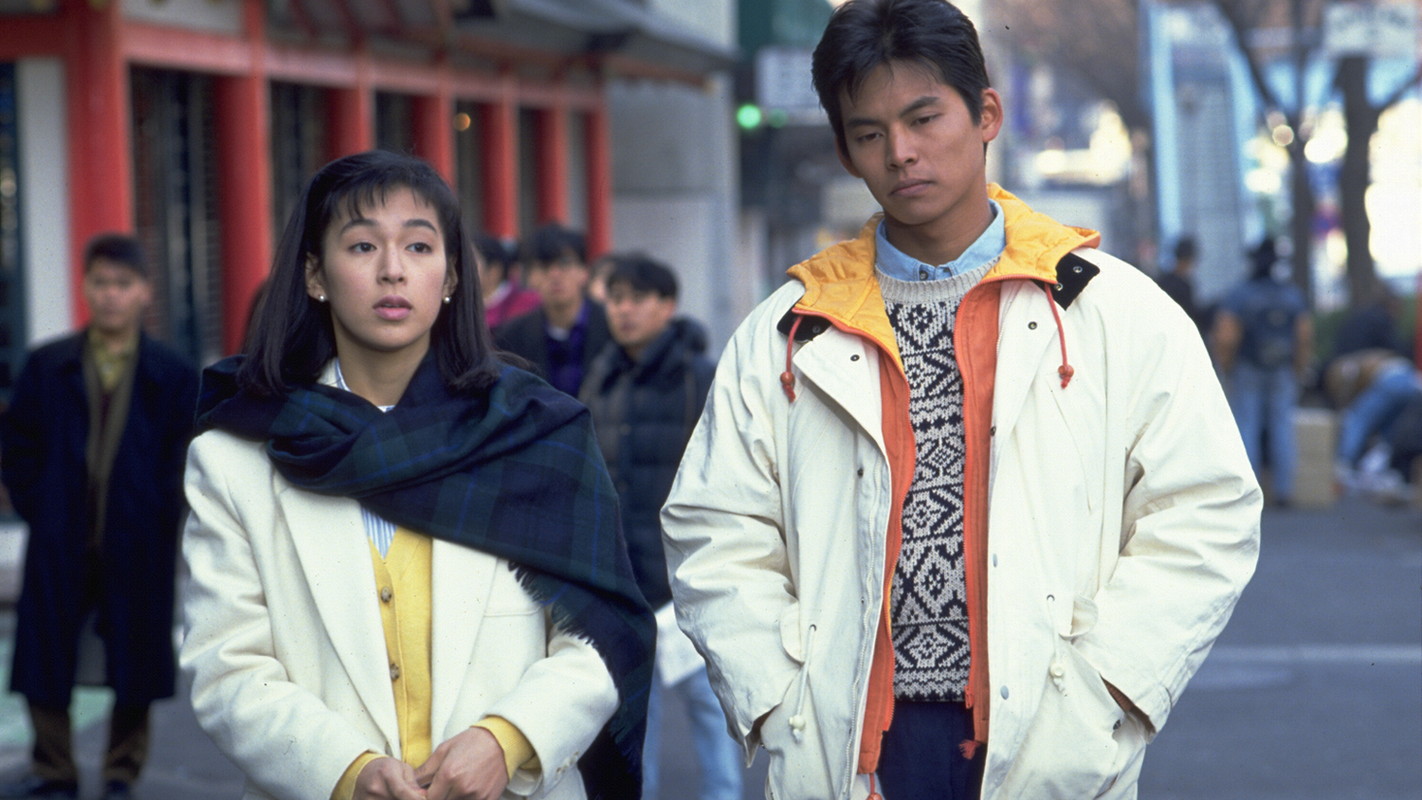
Here is a delightfully in-depth interview with Hinata Toshifumi about the recent 35th Anniversary Edition re-release of his (quite fantastic) 1991 soundtrack album Tokyo Love Story. Additionally, there is a lot of interesting discussion about his early career in general. Enjoy!
Interview & text: Otani Takayuki (Japanese text: one, two, three, four)
English translation: Henkka
Hinata Toshifumi: Website, Instagram, YouTube, Facebook
Note: You can buy this album on CDJapan.
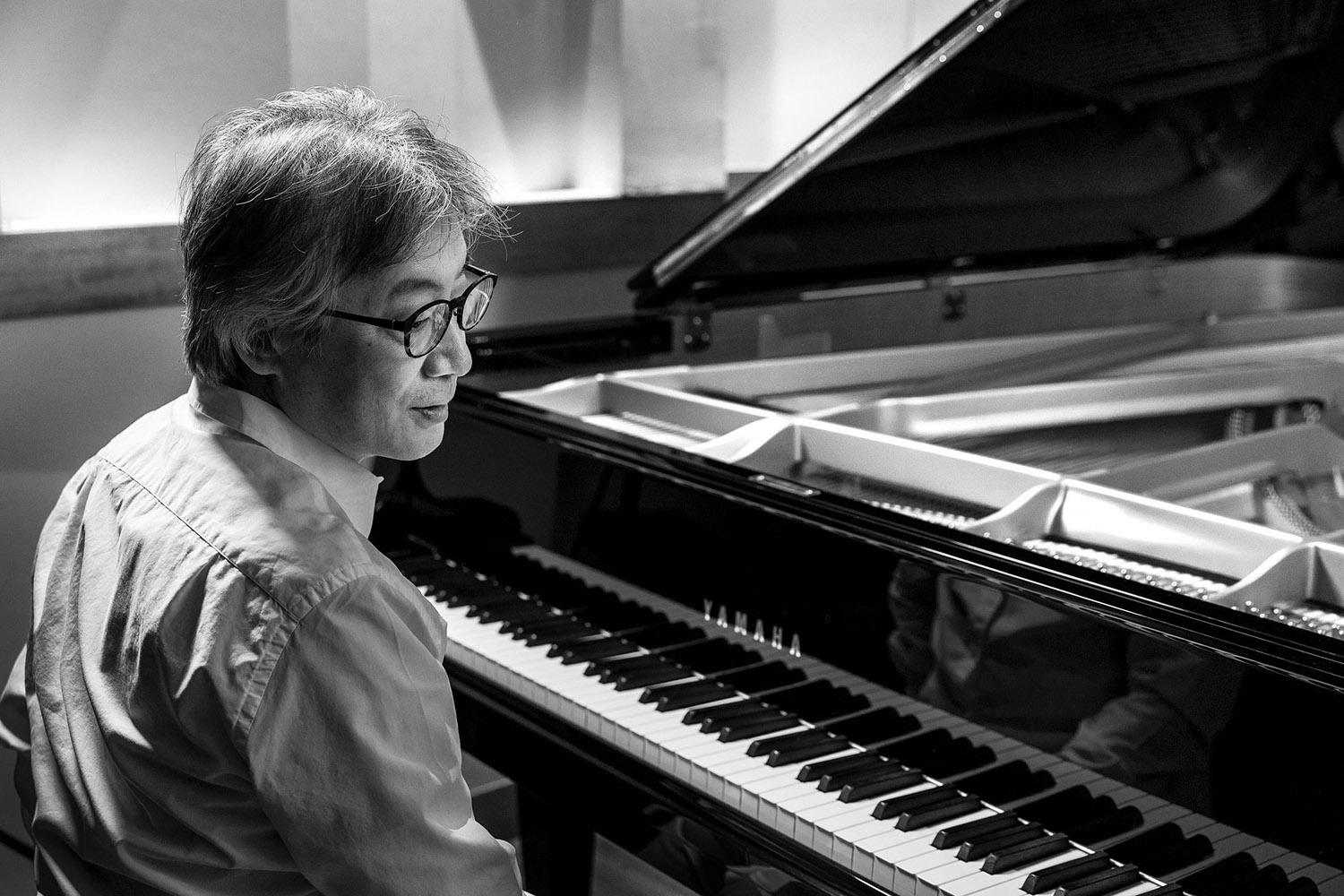
— Today, I’d like to ask you to look back on the days of Tokyo Love Story. But before you do, allow me to ask you about your most recent work from 2025. The Dark Night Rhapsodies is your first fully orchestral album. It’s a wonderful work; an exquisite combination of lush, beautiful melodies reminiscent of Italian opera of the yesteryear, along with concern—and prayer—for an increasingly troubled modern society. I’ve found myself listening to it whenever I possibly can.
Hinata Toshifumi: Ah. Thank you very much.
— But what really left an impression on me was when I interviewed you about that album and our conversation happened to turn to your TV drama soundtrack work of the ’90s, and you quietly remarked, “Those were truly difficult years for me.”
Hinata: Hahahaha. Did I really say that?
— Yes. It’s like you looked tired even just remembering that era. (laughs) You said that your current pursuit of your musical vision while making full use of orchestration might be just a “counterreaction to all the years I had to keep writing soundtracks in the ’90s.”
Hinata: I see. Yes, I do think there’s truth in that.
The thing about background music is that it’s always about writing whatever the director or producer asks for. Especially when it comes to commercial TV dramas, there’s just no time compared to movies—at least with the schedules back in those days, it was like walking a tightrope. There’s far less time for the composer to express themselves than viewers might expect. And the demands given to us would be pretty brutal, too.
— Brutal in what way?
Hinata: For starters, just the sheer breadth of genres they wanted. “This scene needs a classical feel, this scene should be pop, this scene has to have that urban jazz vibe…” You have to bring everything you have in your musical toolbox and you have to do it quick.
And what’s more is that it wasn’t unusual at all for someone from the production side to just hand me an already existing track and say, “Write something like this.” When that happens, it gives the songwriting task an additional, almost puzzle-like complexity.
— So it doesn’t make it easier when they give you reference material like that?
Hinata: Quite the opposite. You have to be so careful not to write a melody that sounds the same, but at the same time, the feel needs to be similar. If anything, it requires an even higher degree of craftmanship. Of course, if you’re a pro, you could just quietly rip off that song and cover it up with the arrangement. But for any fellow musician, it would be instantly obvious. I could never bring myself to do that.
For me, the most difficult thing was how the scores in TV dramas always have to be utterly straightforward and easy to understand. Although, of course, that’s simply part of the job when you take on soundtrack work.
— Right. It’s primetime commercial television. You can hardly even submit something as a finished product if it doesn’t easily resonate with a wide range of viewers.
Hinata: Exactly. For example, let’s say I come up with a melody. If it’s for an album of my own, I’m free to use that motif however I want. Every musician will have their own sense of how they think about it, like, “I want to develop this melody this way,” or “I definitely don’t want to take it in this direction.”
But when it’s for the background music of a TV show, that’s usually not allowed. To the contrary, with most scores, what ends up happening is that you’re sitting there going, “Were I writing this to release under my own name, I would never in a million years write something like this.” And yet, what ends up happening is that those are the very CDs that end up selling way beyond your expectations…
— The Tokyo Love Story soundtrack was released by Alfa Records in February 1991, roughly one month after the TV drama began airing. It sold an unprecedented 300,000 copies, and even now it is considered one of your representative works. But for you, you’re saying you’ve had mixed feelings about it for the past 35 years.
Hinata: I mean, I know it’s a very privileged thing for one to be complaining about. (laughs) From my point of view, I had just written those songs purely as a craftsman, made-to-order, but now they had suddenly started spreading far and wide as the work of “composer Hinata Toshifumi.” In all honesty, I always felt a sense of confusion about the whole thing.
Part of it was how I’d already released a number of original albums through Alfa Records prior to Tokyo Love Story. I think the contrast between the material on those albums and this soundtrack was just too jarring.
— Starting with your debut album Sarah’s Crime (1985), you had released seven original albums before then. These works, characterized by your melodious style centered on the piano and electronic instruments, are today held in high regard in the “post-classical” context. One embletic example is the track “Reflections” from your third album Reality in Love (1986). With its gentle, cyclical rhythm and a lyrical melody woven by piano and violin, this song was recently “discovered” by listeners around the world through streaming platforms, amassing more than 100 million plays in just a few short years.
Hinata: Yes. Many people from all sorts of countries and regions seem to have taken to “Reflections.” I’ve received so many DMs through social media, and what has been particularly surprising to me is how so many of those messages have been from young people who would be considered members of social minorities—for example, LGBTQ youth who experience a sense of day-to-day oppression in their lives due to living under authoritarian governments. To receive comments from listeners like that, saying, “I see my own life in this music,” it feels immensely rewarding as a composer, and it has helped broaden my own previously narrow perspective.
The thing is though that back in the ’80s, I actually received very little praise. To the contrary, every time I released a new album, people would be saying I was “behind the times.” Certain parts of the music media were absolutely merciless in their reviews of my work.
— It’s hard to imagine that today. I wonder why they felt that way?
Hinata: Mmm… Maybe it just didn’t fit with the mood of the times back then—after all, the ’80s were the golden age of new wave and postmodern music. The fashion back then was the deconstruction of traditional tonal music and treating it almost in a playful way.
For a composer like me who was just earnestly committed to melody, I felt rather out of place. Especially considering how I was doing instrumental music built around nothing more than piano and violin—hardly anyone was doing that back then.
— I see. But obviously you had your own uncompromising sense of aesthetics.
Hinata: Right. Although you could just as well say it was the only thing I could do. (laughs) Still, it’s true that I simply kept making the music I wanted to make, with no concern for “reading the room” or worrying about anyone’s expectations.
Also, Alfa Records back then were one weird company. They were willing to put out my music exactly as it was, never uttering a word of complaint. I can tell you that that is not how other major record labels operate.
— YMO, Tachibana Hajime, Guernica, Casiopea… Alfa Records had a lot of highly distinctive artists on their roster at the time. I know that in the ’70s you studied jazz and classical music at an American university before making your professional debut, but what was it that originally led you to releasing your first record?
Hinata: It all started with a commercial. At the time, I was going back and forth between the U.S. and Japan while taking part in various recording sessions, and through that, I was contracted to do the music for a Toyota Corolla FX commercial—as I recall, it featured model Koda Miyako driving in a white car through a grassy field somewhere. Someone from Alfa Records happened to see the commercial, and they came to me with an offer along the lines of, “Why don’t we put out an album with a similar approach?”
Looking back now, it really was my lucky break. Because, you have to remember, the best-selling instrumental music at that time was all the so-called “New Age” stuff. For example, all the releases from Windham Hill Records—represented by pianist George Winston—or otherwise the spiritual, synthesizer-based music by artists like Kitaro.
— It’s true that your albums aren’t really similar to either of those examples. Even if it’s all instrumental music, unlike “New Age” which tends to prioritize atmosphere, your works feel more structurally solid, with a firm core beneath the flowing melodies.
Hinata: But whenever they wrote up my albums in magazines and such, they’d often just label them as “New Age” anyway. (laughs) But as far as I was concerned, I had no interest in what was considered “fashionable” instrumental music back then. That’s why I still feel grateful to Alfa Records to this day—because the truth is, none of my albums did particularly well.
— Really? The sales weren’t that great?
Hinata: They hardly sold at all. (laughs) But on the flip side, I did have a small number of dedicated listeners who would buy my albums and keep me afloat. I deeply treasured those fans of mine who connected with the music.
So in 1991 when the soundtrack for Tokyo Love Story—a project I’d taken on quite casually—suddenly sold beyond anyone’s expectations, I couldn’t be entirely happy about its success.
— What was the reaction from your fans like?
Hinata: Some of them got angry and stopped following my work. I can’t say I didn’t understand how they felt—I mean, if you were someone who’d liked my early original albums and suddenly you heard Tokyo Love Story. It wouldn’t be unreasonable for them to think, “What’s with this mass-market nonsense?! Has Hinata become a total sellout?!”
For me, although I considered it an entirely separate thing from my other work, there was no way for me to convey that to the listeners. In fact, I originally took on the soundtrack as a way of expressing my gratitude to my label. “The show seems to be getting good ratings, so if we put out a CD it might help them in making a bit of money.”
Of course, I never expected the thing to sell over 300 thousand copies.
— Ah, I see. So we’re back to where we started this conversation—for the past 35 years, you’ve always had mixed feelings about the soundtrack becoming such a big hit.
Hinata: That’s exactly right. (laughs)
— However, having thoroughly listened to the newly-released Tokyo Love Story 35th Anniversary Edition, I actually find it to be a very well-crafted soundtrack.
Hinata: Well, I’m glad to hear that.
— Like you said, it does have an entirely different texture compared to your early original albums. There is so much variety in the material that it almost lacks unity, and many of the parts are deliberately very catchy.
Hinata: Yes.
— But what really left the biggest impression on me was the strength of the melodies. While the circumstances behind the two works are of course entirely different, I was struck by those beautiful melodies that are very much “Hinata Toshifumi” in the same way that I felt when listening to your most recent work, The Dark Night Rhapsodies. It just goes to show how, even when it’s something that’s made purely with a “craftsman’s mindset,” a certain amount of the composer’s identify will inevitably seep out regardless.
Hinata: Oh, I see. Right. I’m very glad to hear you say that.
— For this 35th Anniversary Edition, you went back and re-edited nine of the 13 original songs. What was it like revisiting these songs after all these years?
Hinata: Now that… That was actually rather fun for me. (laughs) The songs were of course written in response to specific requests from the director and other people from the show’s production team, but as I listened to them carefully, I could find little touches in there that no one else but me would be likely to notice.
For instance, I was exposed to all sorts of different TV shows when I was living in the U.S., and some of their musical tricks which I found interesting can be heard on Tokyo Love Story as well. Listening to it again, I was going, “Oh, I see. This is how I was trying to expand on my musical vocabulary at the time.” It was a new discovery about myself.
Also, listening to it now, you can really hear the results of everything I learned living in America.
— In what way?
Hinata: From 1976, I spent two years studying at Berklee College of Music in Boston. Although it was originally a jazz-focused school, by the time I arrived, there were so many different types of people there. There were people who only acknowledged jazz and nothing else, but also people who were more into rock and pop. Progressive rock, heavy metal, salsa, even country and western—the practice rooms were filled with musicians playing every genre conceivable.
My lived experience in such a diverse environment is clearly apparent in Tokyo Love Story as well. They even offered classes on TV drama and film music at Berklee.
— Were those classes focused on teaching specific techniques and know-how, or more about the composer’s role in the whole “flow” of the production process?
Hinata: Both. Not only is Berklee a training ground for jazz musicians, but it’s also a pipeline supplying talented people into the American entertainment industry. So they offered a wide range of classes of that nature. They might be even more specialized today for all I know. I took several of those classes myself, and I do believe they were quite useful for me.
— So by making that rediscovery, it allowed you to look back on this work you did 35 years ago with a bit more objectivity.
Hinata: Right. Obviously, I can only listen to the Tokyo Love Story soundtrack with the ears I have right now, and when I do, I can clearly see how I was unconsciously being influenced by the popular music of the time. And naturally, there are moments on it that make me embarrassed.
But at the same time, there are other moments where I can see how I was struggling to absorb those influences without losing sight of who I was. I can look back on it and genuinely think that I was just trying to do the best I could. At least, it feels like that sense of unease I’d had about the album for the past 35 years has finally lifted. (laughs)
This is a bit of a digression, but lately, I’ve been listening to more Schoenberg again…
— Arnold Schoenberg—the composer known for creating the atonal twelve-tone technique that challenged traditional tonal classical music, widely regarded as a leading figure who had profound influence on modern music.
Hinata: Yes. From a music history perspective, Schoenberg emerged in the period just after 19th century Romantic music had reached its saturation point. That is to say, he began composing after people like Wagner and Mahler had already fully explored the possibilites of beautiful, lush orchestral music—no matter how original you try to be in your writing, the influence of those two would always come through.
I think what ultimately ended up happening was that because Schoenberg faced this massive, insurmountable wall, it made him move towards an entirely different world in the form of atonal music. But when you actually listen to his entire body of work, his music from the time when he was still wrestling with Wagner and Mahler—their influence on him still very much apparent—you find that it is in fact often tremendously beautiful.
— So you’re saying that the intense struggle of resisting influences can be the very thing that allows a person’s individuality to emerge.
Hinata: Yes. His string sextet Transfigured Night is the most striking example of that. Although it is of course presumptuous of me to be comparing myself to an actual pioneer of modern music. (laughs) But, listening to Tokyo Love Story again for the first time in a long while, it’s just something I found myself thinking about.
— Let me ask you just a little more about your life before Tokyo Love Story. So, from the age of 21, you studied for two years at Berklee College of Music.
Hinata: That’s right.
— You then transferred to the music department of University of Minnesota Duluth (UMD) in 1978 on a scholarship. There, you spent the next four years intensely focused on classical piano, along with composition and orchestration. After your graduation in 1982, you then immediately made your professional debut.
Hinata: I think it was the following year. I started an agency with my younger brother (music producer, composer, keyboardist Hinata Daisuke), and after that I was going back and forth between the U.S. and Tokyo for a while, working as a session musician on various projects and composing music for commercials.
— And those songs written for commercials are what then led to your 1985 debut album Sarah’s Crime. As it was your first time releasing original music out into the world, what kind of genre did you envision for it?
Hinata: Hmm… Honestly, I didn’t have a particular genre in mind at all. I had definitely absorbed a lot of different music living in America. Before I started studying at Berklee, I’d played keyboards in local blues bands and big bands, and during my time at UMD, I was very much influenced by French composers such as Ravel and Poulenc—I feel that their exquisite, beautiful harmonies are something that form a subconscious foundation for my work even today.
But when it was time to make an album of my own… I simply didn’t have any vision as to what route I wanted to take. I didn’t have any particular role models as far as musicians were concerned either.
— At the time when you were living in America… That would’ve been when pianists like Keith Jarrett and George Winston were selling a lot of albums, right?
Hinata: Yes. Their musical styles were polar opposites, but they were both very popular.
— The former plays improvisational jazz, while the latter plays an atmospheric kind of “New Age” music. This might be a silly question, but—purely for the sake of comparison—which of the two do you think you were closer to at the time?
Hinata: I can’t say I really identified with either one. (laughs)
Keith Jarrett is without question an exceptional musician. He released his first solo album Facing You (1972) when I was in high school, and I remember being completely stunned. “It’s actually possible to express all this with just the piano?” And then I suppose his most famous work is the live recording, The Köln Concert (1975).
— Yes. His completely improvised, roughly hour-long performance, often said to be the best-selling solo piano recording in jazz history.
Hinata: In my Berklee days, the piano majors would all be listening to that album. I had friends who were learning the entire two-LP set by ear, while others were devotedly trying to transcribe every last improvised passage.
But for me, at a certain point, I started to feel distant from his improvisational style. It began to strike me as too self-indulgent, or rather… Well, I felt that his ostinatos were so long that they began to bore me. Once he gets going, he can go on and on for 10 minutes, repeating the same thing over and over as he groans away at the piano. Of course, for the people who like him, they probably can’t get enough of it.
— Would you say that for you, rather than relying on intuition to allow songs to unfold in long improvisations, you are more drawn to the process of deliberately refining a melody?
Hinata: I would say so, yes. Or maybe it’s taking the sequence of notes and rhythms and searching for the most pleasant “flow” for them. Even when the process itself is difficult, that is ultimately the part of the process that I love the most. Fundamentally, my approach to the creative process has never changed.
In that sense, George Winston’s music was a bit too “loose” for me back then. Calling it too “commercial” might be a bit harsh, but I suppose for me, I felt he wasn’t rigorous enough in pursuing his melodies. Although, well, the fact that one can write melody after melody that are all so pleasant to the ear is already a rare gift in itself. I’ve actually found myself thinking that more and more in recent years—my assessment of him has changed somewhat.
— Perhaps your perspective has evolved a little with age. Either way, when you released your first album, Sarah’s Crime, you didn’t categorize yourself under either of those approaches.
Hinata: Yes, and I was also indifferent to the Japanese pop music trends of the ’80s. There was very much this feeling that the music media and the critics didn’t really know how to handle my albums. So I felt very lonely at the time. (laughs)
Still, I was able to maintain my creative motivation thanks to the small number of fans that I did have. Oh, and I suppose another big thing were the rumors I would occasionally hear…
— Rumors?
Hinata: For instance, a friend of mine who went to visit a certain famous musician at their house told me, “They were playing your songs the whole time!” (laughs)
Also—this is just something I heard through an acquaintance—Sakamoto Ryuichi once apparently walked into a café and handed the owner one of my CDs, asking if they wouldn’t mind playing it over the speakers.
— Ohh. Interesting.
Hinata: Each of these things on its own is trivial. But when I heard that there were other fellow musicians who showed even a little bit of interest in my work, it gave me courage. It was the accumulation of those small moments that allowed me to keep making original albums.
And, alongside my personal creative projects that I was doing for me, I was also doing well-paying commercial work.
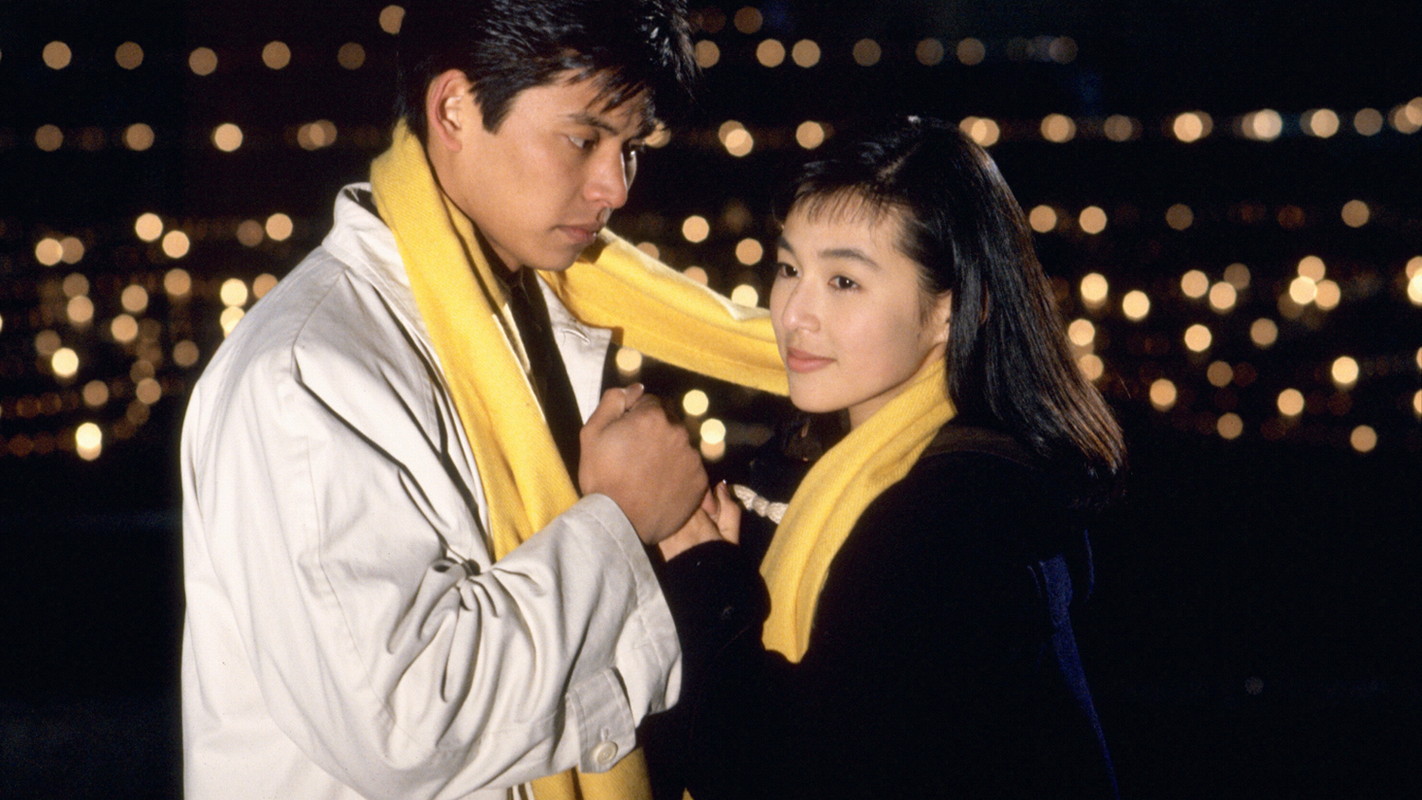
— Tokyo Love Story—Fuji TV’s Monday night 9 PM drama—began airing on 7 January 1991. By that point, you had released seven original albums through Alfa Records.
Hinata: Yes.
— But at this stage, you had no previous experience with film or TV drama music. Why did they approach you to begin with, given that you had no prior track record?
Hinata: That was a very simple matter. The chief director of Tokyo Love Story, Fuji TV’s Nagayama Kozo, was my younger brother’s classmate. It was through that connection—we’d already been in contact from before.
And so one day he just went, “I want to ask you to make the music for our next drama from scratch.” Well, rather than it being like an official request, it was more casual. “Hey Hinata, want to try your hand at this thing?”
— Really?
Hinata: Nagayama isn’t the type of person to push you by going, you know, “You have to do this thing for us!” If anything, he’s so easygoing that it’s as if he was saying, “You don’t have to do this if you don’t want to.” So I took on the job with a fairly casual attitude. “Well, I’m sure it’ll work out somehow.” (laughs)
Although it was my first time scoring a TV drama, by that point I’d already had lots of experience dealing with clients through commercials. However, once it actually got going, it became clear to me that TV drama and TV advertisements were two completely different worlds. It seems obvious, looking back now, but in the beginning it was definitely quite a shock for me.
— What was the biggest culture shock?
Hinata: Most of all, it was the pace. Since the show was airing once a week, you had to respond to their requests at an incredible speed. The production side were themselves shooting on a very tight schedule, so there was no time for me to be sitting around watching the footage and letting it help me gradually develop my image for the music.
If I remember correctly, when I got to work on it, they only had scripts for the first one or two episodes. Of course, I had no idea how the actors were going to play their roles either. So honestly, while I did read the scripts, it was nowhere near enough information. (laughs)
And so the way we went about it was… To me it felt like I hardly even thought about the story or the characters in writing the songs. In practice, the way it really happened is more that I just wrote a bunch of material as per the production staff’s wishes, and then they were free to pick from the bunch as they liked.
— On that subject, the popular TBS dramas Danjo 7nin Natsu Monogatari (1986) and Danjo 7nin Aki Monogatari (1987) also used your composition “Ikoku no Onnatachi.” It’s a very leisurely kind of song in triple meter that somehow calls to mind Erik Satie.
Hinata: With that one, what happened is that someone on the production side heard it on my second album Chat d’ete (1986), and they liked it so they used it on the show. While I gave it my OK, I actually had nothing more to do with that. I couldn’t even catch it on air—I was so busy with work back then, I didn’t have time to be watching TV.
— So Tokyo Love Story was your very first time composing order-made original music for a TV drama rather than using existing material.
Hinata: Yes. I’m sure it was also part of the challenge for Nagayama and the other directors at Fuji. When it first started airing, even the cast weren’t particularly well-known yet—if anything, it’s more like they all became stars because of Tokyo Love Story, right?
All of which is to say, neither I or the staff had much know-how in regards to scoring a TV drama. Especially in the beginning, we were all just fumbling our way through the process.
— With virtually no time to pull it all off, did you not feel overwhelmed?
Hinata: Actually, not really. Because the thing with Nagayama and the rest of the Fuji drama staff at the time was that so many of them were also music lovers. They were always very specific with their requests.
For example, there are many scenes in the show where the characters come out of the office and they’re walking out on the street. When you always play the same song during those kinds of scene changes, it automatically creates this rhythm for the drama. It’s like with all the American TV sitcoms filmed on studio sets in front of an audience—they follow the day-to-day lives of the same characters, with the same situations occurring week after week in a comical and fast-paced way.
— Right. One popular example from back then might be Full House (1987–1995), or—if you want something a bit older—Bewitched (1964–1972).
Hinata: I think the Tokyo Love Story staff were trying to recreate a similar kind of light atmosphere, only with Tokyo as the stage. That’s why it’s always the same song playing when they’re walking out on the street—they must’ve intended it as like a scene change jingle.
As a result, their request was very specific. “It should have a fresh, sparkling sound. Tempo-wise, think of someone walking at a brisk pace.” Already at the planning stage, I had a clear sense of what they wanted.
— So they didn’t just tell you to do whatever—you weren’t left to your own devices. It was just up to your craftmanship to figure out how to meet their needs.
Hinata: To do that, I had to draw on every trick in the book. Their orders were clear-cut so there was no confusion there, but conversely, I had to work on a very short deadline.
I’d be in a mad rush to write a song according to their specifications, and then I would immediately go into the studio to record it just three days before the episode went on air—actually, sometimes it was only two days before.
— Did you not have any qualms about them only using select parts of the compositions you provided them?
Hinata: Not at all. That’s where scores differ from original works that you release under your own name. To the contrary, if the editors freely cut it up and arrange it to make it fit the footage, it also means fewer requests for revisions for me.
In fact, many of the songs on the Tokyo Love Story soundtrack were originally just that sort of raw material. But then because the show had such high ratings, there was a last-minute decision that they would release a CD, and they just picked whatever seemed good from all that raw material I’d given them. With most of the music on the album, it was only at that stage when they were shaped into something resembling actual songs.
— So the versions on the CD aren’t necessarily the versions that you gave them originally.
Hinata: Well, it varies from track to track. But for the most part, that’s right. And with most of the song titles, I only forced myself to come up with them when it was time to release the CD. (laughs) After all, we were never even thinking of putting out an album in the first place.
— That really goes to show how enormous the reaction to the show was. By the way, a minute ago when you were talking about the “American sitcom-esque scene change song,” that track would’ve been…?
Hinata: Uhh… I think it was the fourth song, “Crazy For You.”
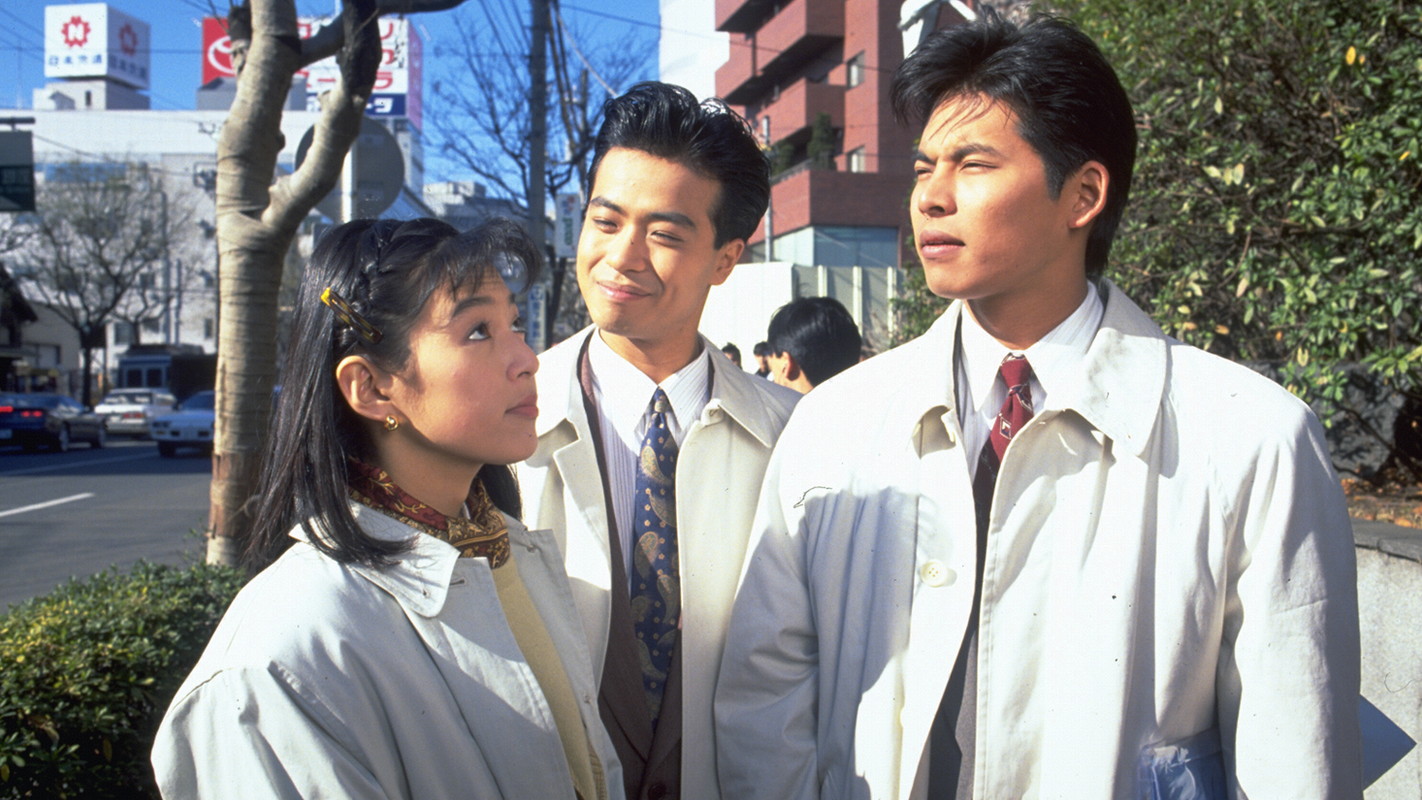
— I thought as much. Indeed, just listening to this song, I can picture all the scenes of protagonist Kanchi (Oda Yuji) and Rika (Suzuki Honami) walking side-by-side on the street, or the two as they’re going out for drinks with their colleagues. The easygoing strumming on the acoustic guitar together with that bright tone of the electric guitar is so dinstinctive, and the drums cut through nicely, too. This one is quite unusual for you in that it feels like it’s driven more by the chord progression rather than the melody.
Hinata: Perhaps so. Like I was just saying, I wrote this song entirely according to the production staff’s orders. The tempo, sound texture, arrangement—I was consciously thinking about American sitcoms with every aspect of it. It’s like the whole song was born directly out of all the methods I’d learned at Berklee. (laughs) I think it was among the first batch of songs I delivered to them.
— By the way, when you would deliver them those batches of songs, would it be the on-set director deciding what worked and what didn’t, and where each piece would be used?
Hinata: Yes. Since it was a weekly show, there would be other young directors there in addition to Nagayama, and for the most part I would leave it up to them.
In addition, there was also this man by the name of Onuki Etsuo doing sound effects at Fuji TV at the time who worked with the directors on the sound placement side of things, and his contribution was in fact enormous. Even beyond just the finer details of cueing the music, he was making bigger decisions about the whole musical framework of the show—as in, which songs were used in which scenes. I would often be shocked by his decisions, in a good way. Like, “Wait, you’re going to use this song in that scene?!”
— So when it came to the usage of music, the sound effects staff were on equal footing with the directors—if not having even more of a say in some ways.
Hinata: Every TV company has their own corporate culture, but yes, that is at least how it seemed to work at Fuji TV. Of course, I’m sure there were some interpersonal dynamics going on as well. That is to say, the more the shooting schedule got delayed, the less time there would be for the sound effects team to put in their finishing touches. Even the most stubborn director wouldn’t want to be on their bad side. So that could be why the directors were more open to their opinions. Mind you, this is all just speculation on my part. (laughs)
Still, there’s no doubt that Onuki was an extremely talented sound effects man. I do feel that a great deal of what made the music work so well came from his ideas.
— What about the fifth song, “Tenderly ~ Rica’s Theme“? The acoustic guitar that suddenly appears halfway through the song—that musical phrase is really what most symbolizes the entire Tokyo Love Story TV drama. Was this song written based on the character of Akana Rika, as one might infer from the title?
Hinata: Honestly speaking, I’m not even sure myself. (laughs)
After I’d read the first few scripts, Rika was definitely the character that left the biggest impression on me. When the staff first gave me their descriptions for each character, there too I could already somewhat visualize her. However, it’s not like I had this perfect image of her in my mind and then I just wrote a song to match that image.
Instead, it was more like… Through our meetings, I brought them several motifs which I thought were “Rika-like.” The staff picked the one they thought best suited her, and then—using that motif as my basis—I made it into a song. Because from the beginning, they had a clear role in mind for this particular song.
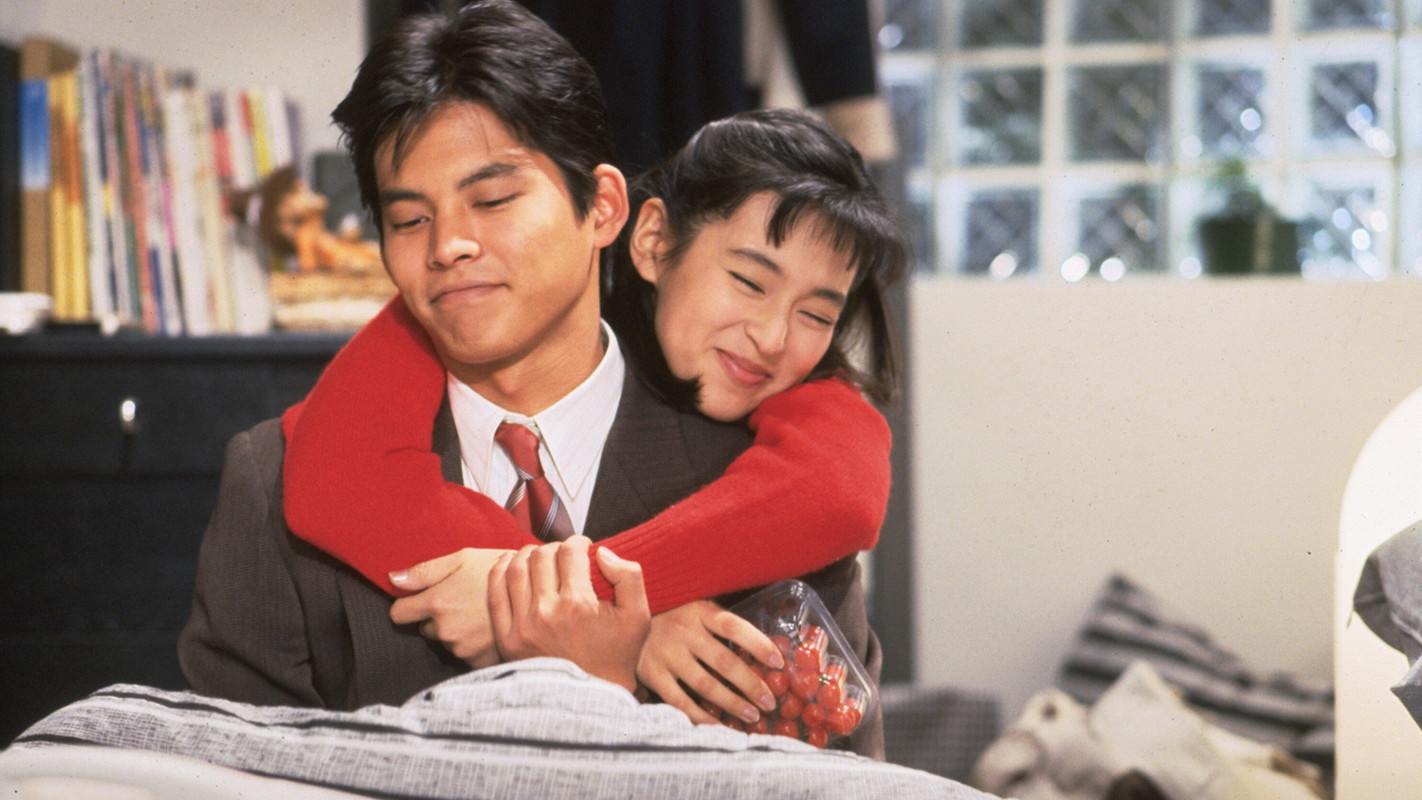
— And what role was that?
Hinata: To put it plainly, they wanted an easy-to-understand “hook.”
Back in those days, TV producers were almost obsessively focused on drawing viewers into the world of the show. If it was a 50-minute show, then they wanted viewers to be completely engaged for the full 50 minutes, never losing interest. They thought through every little detail, from the placement of all the shocking lines spoken by characters, to how scenes would transition following commercials.
And for them, the background music was an important tool in helping them accomplish that. That is to say, they wanted songs that viewers would hear and suddenly you’d have their undivided attention. That’s why in “Tenderly ~ Rica’s Theme,” that part where it suddenly picks up in the middle is actually the first thing I wrote.
— Right, the part where the acoustic guitar kicks in. On this reissued version, it’s at around the 1:40 mark.
Hinata: Indeed. With regards to that, I got clear directions from the staff in their order of the song—I forget now the exact words they used, but it was basically along the lines of, “Give us something upbeat and energetic!” (laughs) Basically, they needed a song with a catchy melody that would instantly grab the viewers’ attention. I remember them telling me that over and over again and thinking, “I guess that’s just how TV dramas are.”
And it wasn’t just the background music either. I later heard that the production staff even told Oda Kazumasa the same thing, and they were pretty adamant about it. “Mr. Oda, please, above all else just give us a catchy intro!” If you were a normal person, you’d be too scared to demand something like that from Oda Kazumasa. (laughs)
— His song being “Love Story wa Totsuzen ni,” the no. 1 best-selling single of the year. The memorable guitar part was played by then-up-and-coming Sahashi Yoshiyuki—apparently, that famous guitar phrase just before the intro was something suggested by him at the last minute when, after they’d finished recording the song, Oda felt that it was still lacking something.
Hinata: That just goes to show how much they were thinking about what they actually wanted the song to accomplish. I constantly felt the same way during the process of making the score.
— That acoustic strumming on “Tenderly ~ Rica’s Theme” definitely does leave an impression—it’s perfectly synchronized to so many iconic scenes in Tokyo Love Story. If you’ll allow me to mention just one, to give an example… Let’s watch a well-known instance from just before the final scene of the first episode. Having been forced to work late one night due to unexpected trouble at the office, Kanchi and Rika are having trouble saying goodbye and calling it a night…
Hinata: (while intently watching Episode 1 from around the 42-minute mark) You know, watching it like this, you notice how the pace of the visuals and the music are perfectly aligned.
Whether it’s a TV drama or a documentary, it’s not just about the musical phrases and the arrangement when it comes to the score—where you set the tempo is also crucially important. If the BPM was even a little bit different, this scene would give an entirely different impression. In that sense, too, I’m struck again by how precise the production staff were in their order of this song.
— That scene connects in a very natural way the first half of track 2 on the soundtrack, “Good Evening, Heartache,” and the latter half of “Tenderly ~ Rica’s Theme.”
Hinata: Yes.
— “See you tomorrow.” “It’s already today.” They’re reluctant to part ways, until finally they start walking away. Here, it’s still the tender melody of “Good Evening, Heartache” playing in the background. But just then, Kanchi happens to look back, the camera suddenly zooms in to a close-up of Rika’s face, and in that exact moment the acoustic strumming suddenly kicks in…!
Hinata: (still watching the screen) Oh, okay. I see. To be honest with you, I don’t remember if I ever actually watched the entire finished version of Tokyo Love Story. (laughs) I do believe they sent me the VHS tapes, but I was always so busy writing next week’s songs that I didn’t have time to be checking each episode as it aired. So it feels very fresh in a way to be rewatching it like this.
Of course, had I been able to do it like on a big-budget film where I’d have the opportunity to watch the actors’ performances and then compose the music to match that, that would’ve been even better. Deep down, maybe that’s what the staff would’ve liked to do, too. However, given our very tight schedule, I now realize that they really made the most of the material I gave them.
— By the way, the song “Tenderly ~ Rica’s Theme” as it is on the soundtrack is structured in a rather unusual way. It starts with a classical prelude featuring violin, harp, and piano, then it moves into this lovely, melancholic melody played on a music box-esque tone, until finally the mood suddenly shifts completely as it changes into that energetic acoustic guitar strumming part we were talking about earlier. I wonder, is the breadth of the song’s contrasts almost like a reflection of Rika as a character?
Hinata: No, that’s not the case. I think it was only after it’d been decided there was going to be a soundtrack album that we just took all the motifs which had often been used in scenes where Rika appeared, and we combined them into a single song. Like I was saying, back then, I would write fragments of songs in addition to what had been requested from me—I wanted to have as much material as possible to hand over to the staff. That gives them more options, and it reduces the risk of me having to do retakes.
For example, let’s say I’m trying to write an acoustic, upbeat song to fit my image of Rika, as per the staff’s request. Then, when I’d be handing it over to them, I would say, “I also wrote this other thing. This might work with the scene too.” That gives them a choice. “Ah, this is actually pretty Rika-like as well.”
— So not only were you listening to the staff’s requests, you would sometimes also offer them songs without a clearly defined purpose, many of which actually ended up being used on the show. Was that also the case for the other main characters like Kanchi, Satomi (Arimori Narimi), and Mikami (Eguchi Yosuke)?
Hinata: It might’ve been even more so the case with them.
For example, let’s say I’d give them 10 songs on the day of a deadline. Half of them would be songs specifically written to match the staff’s requests. “Please write us a song like this.” But the other five songs, it would be stuff I’d written on my own accord, thinking, “Wouldn’t it be interesting if there was a song like this playing on the show?” In terms of percentages, I think that ended up being roughly the balance.
And indeed, there were scenes where they ended up using material I’d just inadvertently written myself, and a lot of those pairings made for some unexpected and interesting results. And, again, I think a lot of that came down to not just the directors, but also the sound effects editor Onuki, who I mentioned earlier.
— You’re saying that, with him being in a position somewhat removed from the actual set, it maybe gave him more of a bird’s-eye perspective of the show as a whole?
Hinata: Yes. A perspective different from the director or score composer—more like that of a film music producer. And when you have that kind of chemistry, it gives the work a real momentum.
Jumping ahead a bit, that’s also what happened with “Hidamari no Uta” which was featured on Hitotsu Yane no Shita 2 (1997). I once again worked with Fuji TV’s Nagayama on that one, and compared to the rather serious tone of the show, the song itself is very gentle. It’s not at all unusual for that kind of contrast to be the very thing that makes something into a hit.
— How about “Good Evening, Heartache“? This is another beautiful song, likewise featuring a music box-like tone. I feel like this song would often play during scenes where the characters were having quiet, heartfelt conversations.
Hinata: I think that was played on a glockenspiel—I first tried it on “Tenderly ~ Rica’s Theme” and the staff seemed to like it.
“Good Evening, Heartache“—which would end up being used in lots of different scenes—was one that they ordered some time after our initial meeting. At the beginning of every TV drama they always try to swiftly introduce the characters and the setting, so you need these upbeat numbers like “Crazy for You.” But once the story has progressed a bit, they always have scenes where the characters open up to one another and talk about their feelings.
— Right. Like in that scene at the end of Episode 1 when Rika and Kanchi suddenly become a lot closer.
Hinata: They told me they wanted me to quickly write a tender song that would fit exactly those kinds of situations—I remember it being a fairly last-minute request. (laughs)
So, I remember just sitting down at the piano on the spot and going, “How about a melody like this, for instance?” They immediately approved it, and that became the song “Good Evening, Heartache.”
— So this melody that plays repeatedly throughout all 11 episodes was actually something that pretty much came from improvisation?
Hinata: Yes. Out of all the background music in Tokyo Love Story, this song was probably the most effortlessly written. That melody would come to symbolize the show, and we later even recorded a full orchestral version of it. It just goes to show how you can never know the fate of any given song. (laughs)
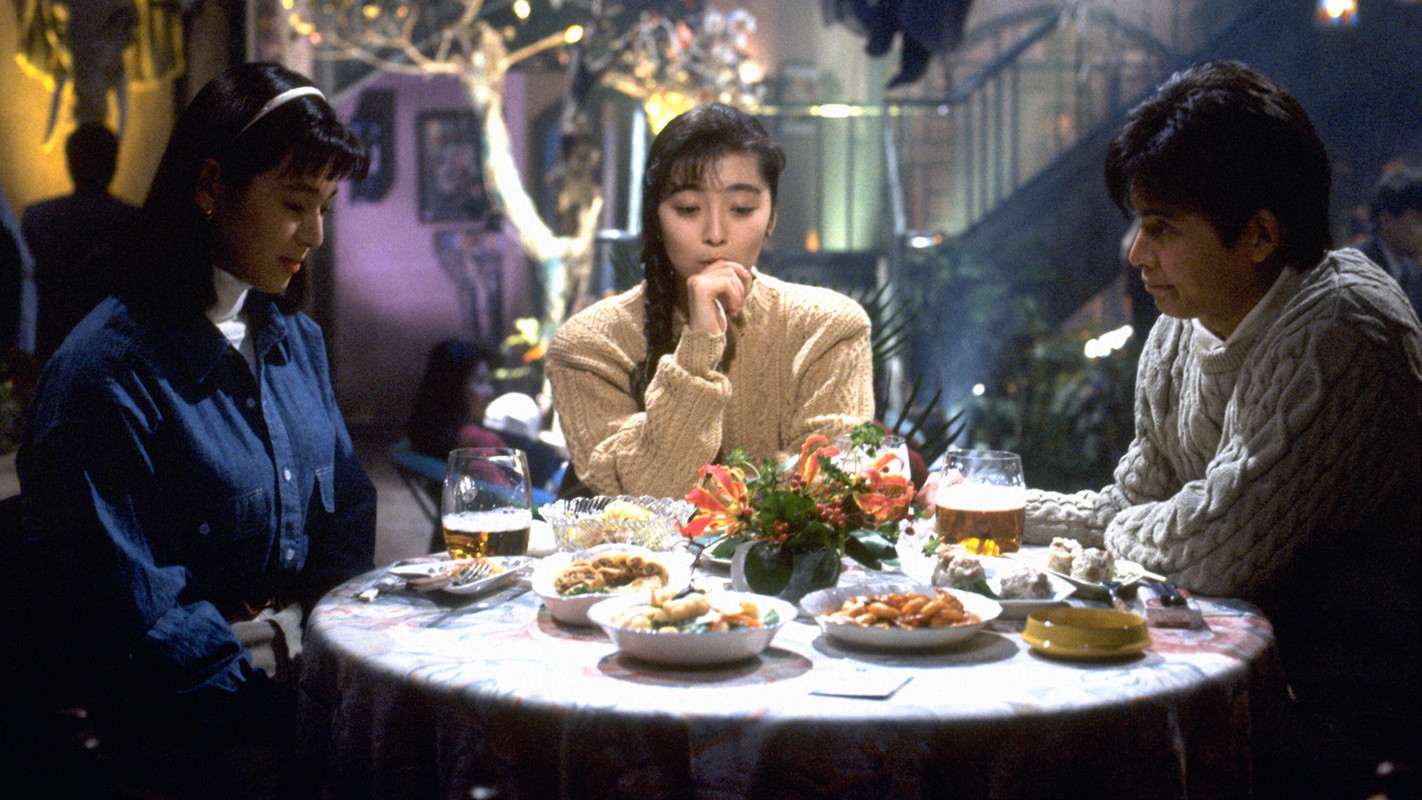
— “Coco and Jasmin,” which kicks off the soundtrack, is a dynamic track perfectly suited for the beginning of a story. It starts with an almost Oriental-sounding intro, evocative of the Japanese koto, but then before you know it, it has morphed into a programmed dance beat.
Hinata: That one was probably inspired by the frenetic atmosphere of Tokyo at the very end of the Bubble Era. The whole city felt flashy and restless, and it was starting to have this Pan-Asian, cosmopolitan character. In the song, think I was trying to express that strange mix of glitter and emptiness that was in the air at the time.
That flourish with the loud traditional Japanese instrument-sounding thing, that was completely on a spur of the moment. (laughs) It’s something I would never use in my original works, but I felt that I wanted to have a song that plays with the whole “Japan as seen through foreign eyes” kind of orientalism.
— So this piece wasn’t specifically requested by the staff either?
Hinata: No. It was my suggestion. But initially, they really didn’t take to this song at all. (laughs) I think it was hardly used in the actual show. It was only once we got into talks about releasing the soundtrack that I brought it back up—the reason being, there was very little time between the start of the broadcast and the release of the CD.
— More precisely, the first episode aired on January 7, 1991, and the soundtrack was released on February 10.
Hinata: Right. We had less than a month—in terms of scripts, I’d say I had only read the first three at that point, and we simply didn’t have enough material to put out a CD. What’s on the album is probably only around 20% or 30% of all the music that we ended up using on the show. So, to be honest, we were forced to include even some pieces that were hardly used on the show.
“Coco and Jasmin” is pretty flashy in its sound and arrangement, so I felt that by putting it as the first track on the album, it would give it the outward appearance of it being a “proper” CD. That was part of my thinking.
— By the way, where did the title “Coco and Jasmin” come from?
Hinata: That was another complete spur-of-the-moment decision. They told me the songs needed titles if we were to put them out on CD, so I just came up with something in a hurry. Honestly, I don’t remember why I chose those specific words. (laughs) It was all a rush.
— Why was the CD released on such a tight schedule?
Hinata: One reason was financial. Even for a prime-time commercial TV drama, they only have limited budgets for the score. Moreover, since it was the last days of the Bubble Era, the studio costs and musician fees were rather high as well. It was financially quite difficult to create an original score for a TV drama.
So then, Alfa Records—the label I was signed to—suggested, “Why don’t we release a soundtrack album?” In other words, they would help cover part of the production costs in exchange for having the music be used on television.
— The broadcast of the show was in itself publicity for the CD.
Hinata: Right. And unlike with films, there was virtually no precedent at the time for releasing TV drama soundtrack albums. I do think it was a rather novel idea in many respects. But it also meant that you had to release the CD while the show was still hot for it to be commercially viable.
But the show got good ratings from the very first episode. Back then, TV dramas would often have these “prize giveaway” segments at the end of the episode…
— They did. The cast would appear and announce, “We’re giving this away to X number of viewers!”
Hinata: Alfa Records were determined to showcase the actual CD on that segment—it makes for great publicity. And so, we set out to complete an entire album in just two or three weeks. Meanwhile, I was of course still making music week after week in real time. It was physically very demanding.
— Were the tracks re-recorded for the CD, or did you just use the versions from the show?
Hinata: We had no time or budget, so it’s mostly what we used on the show. However, even though the plan was to just “make use of what’s on hand,” what we actually had were short fragments. So the first thing was to take those fragments and turn them into proper three- or four-minute songs.
We also had to make it so that it had at least some sense of flow and coherence as an album. What made it challenging was that the record label wanted to maximize the running time—CD was still a new format at the time, and one of the major selling points for CDs was that they could hold more music than analog records.
— It was said that the maximum running time for CDs was 74 minutes. Unlike today, the capacity itself was a major selling point.
Hinata: Ultimately, it ended up being 47 minutes, but I think Alfa would’ve wanted it to be even longer. They were genuinely afraid that if it was any shorter, the customers would complain.
— It sounds like it really was quite a challenge, in more ways than one.
Hinata: Yes. (laughs) But I think a big part of what made me do it was my sense of obligation to Alfa Records—they were the label that had continued to release all my original albums despite the fact that they hardly sold anything. My thinking was that if I made them a soundtrack that got a lot of attention, I might be able to give them something in return, even in some small way.
— In reality, it ended up exceeding everyone’s expectations and becoming a social phenomenon.
Hinata: Yes. Never in my wildest dreams did I imagine it would sell 300 thousand copies. (laughs) When I was holed up in the studio just focused on the day-to-day work, I couldn’t have pictured anything of the sort.
— Let’s look at the individual songs on the soundtrack a bit more. The third track, “So Far Away,” is—as the title suggests—a piece evoking imagery of an immense, open landscape. There’s also something about its breezy sound that brings to mind the ’80s material of Pat Metheny Group.
Hinata: If memory serves, this was also not one that the production staff requested, but rather my own suggestion. The arrangement itself is quite simple, but there’s a small twist in the instrumentation.
Backed by the acoustic guitar, the main melody is actually played on an oboe. Like I was saying earlier, because the staff had liked the glockenspiel in “Good Evening, Heartache,” I then started to think it might be fun to try and bring in other instruments that you don’t often hear on these kinds of television dramas. I remember starting with the main melody, imagining the gentle timbre of a woodwind instrument.
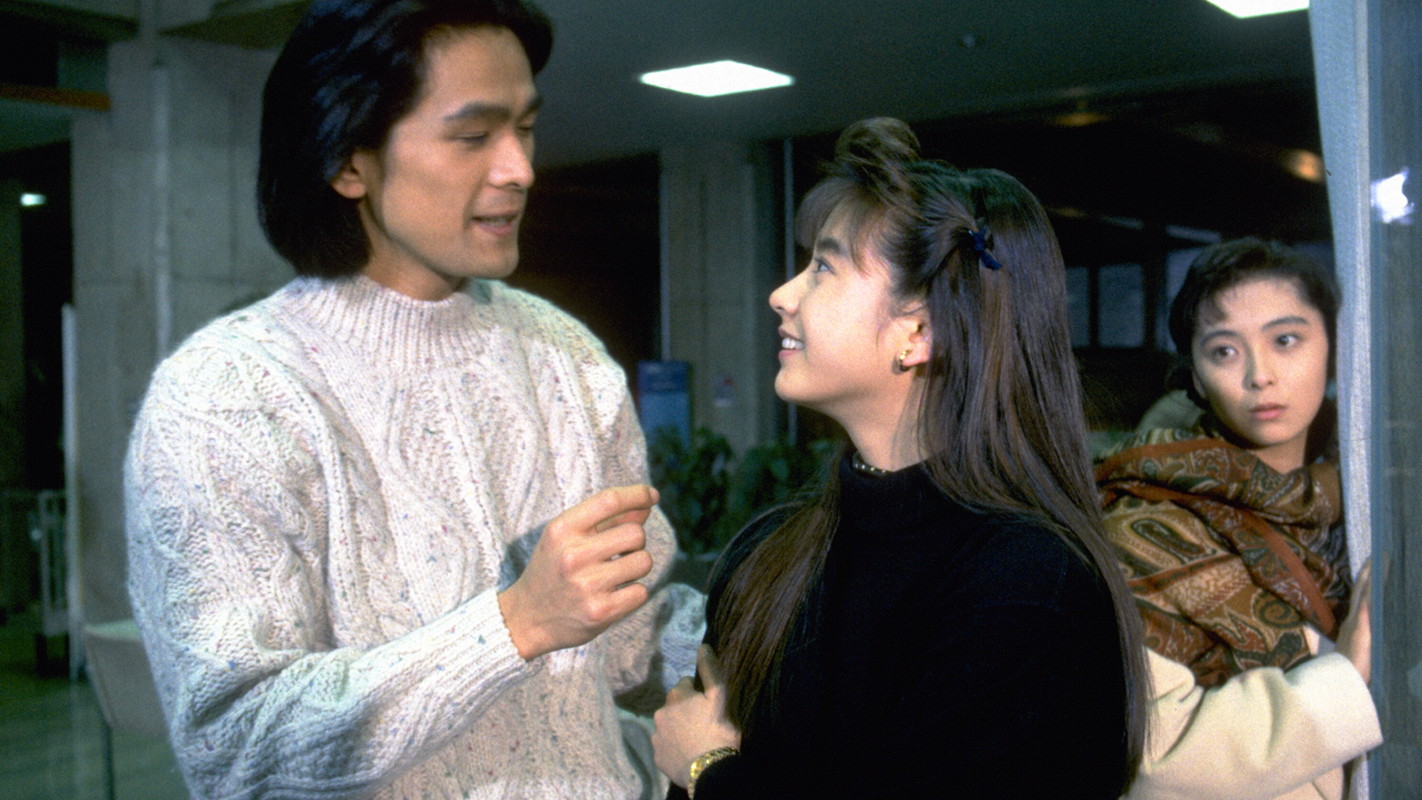
— So not only were you in charge of the composing, but you also chose who would perform which parts. How about the sixth track, “Promise“? It’s a piano-led piece which leaves behind a lingering sense of tenderness and melancholy.
Hinata: This was a rare case in that I wrote it with a specific character clearly in mind—it might actually be the only one like that on the soundtrack. It’s based on the character of Satomi, played by Arimori Narimi. Her expressions, her presence, the atmosphere of her scenes… I was thinking about those kinds of things as I wrote the song.
— It does feel like this song would play a lot during scenes with Satomi.
Hinata: I think the way it happened was, the staff first showed me a particular scene and said they wanted a song to use there—my memory’s a little hazy, but I think that’s how it went. The reason I mention this is because on the original 1991 soundtrack album this song was only a minute long, making it by far the shortest piece. I suspect it’s because the scene they showed me was just around that length, and I simply wrote something to match the scene.
On this re-release, I extended it to just under two minutes.
— On this 35th Anniversary Edition, you have personally “re-edited” nine out of the 13 songs that were on the original soundtrack album. But actually, of all those songs, “Promise” is the only one that became longer in the process—the other eight were all trimmed down into tighter versions.
Hinata: Yes. Because the original ’91 soundtrack was just a total rush job. (laughs) I simply took all the fragments we’d used on the show, assembled them into tracks at a breakneck speed, and somehow shaped them into an album format. On top of that, the record label also wanted me to make the album as long as possible.
Judging the original album purely as a musician, it’s just needlessly long. Listening back to most of the tracks, there are parts where I’d find myself going, “This could be shorter.” So since we were going to do this reissue, I wanted to take this opportunity to get rid of all those unnecessarily long sections.
— Just to give an example, the main theme “Tenderly ~ Rica’s Theme” has in fact been shortened by more than 20 seconds. With that said, the listener can hardly even notice anything missing. That is a testament to your skill.
Hinata: Despite the fact that I’ve called them “re-edits,” it’s not like I changed the actual structure of any of the songs. It was more about just carefully going through and taking out the parts that were unneeded, and making the edits so that everything would still be seamlessly connected. Honestly, I might be the only person who can actually tell exactly what has been cut and where. (laughs)
That said, with the song “Promise,” I’d always felt like that track could’ve been made a bit longer. Doing this finally gave me the chance to do just that, so I’m glad to have gotten this opportunity.
— Much like “Coco and Jasmin” which we discussed before, the seventh track “Passion Flower” is permeated by a koto-like, oriental texture. It makes for an interesting contrast together with the mid-tempo synth drums and the distinctly fusion-influenced bass.
Hinata: Right, that lively, bouncing bass line. That was played by Gregg Lee, a musician from California. He’s a highly skilled bassist who was originally in a fusion band called Caldera in the late ’70s. He later relocated to Japan, and I got him to play on my second album, Chat d’ete.
He was very much the type of bassist I really liked, so I wanted to have him play at least on one track on my very first soundtrack job. To begin with, “Passion Flower” was actually written very much with his playing style in mind.
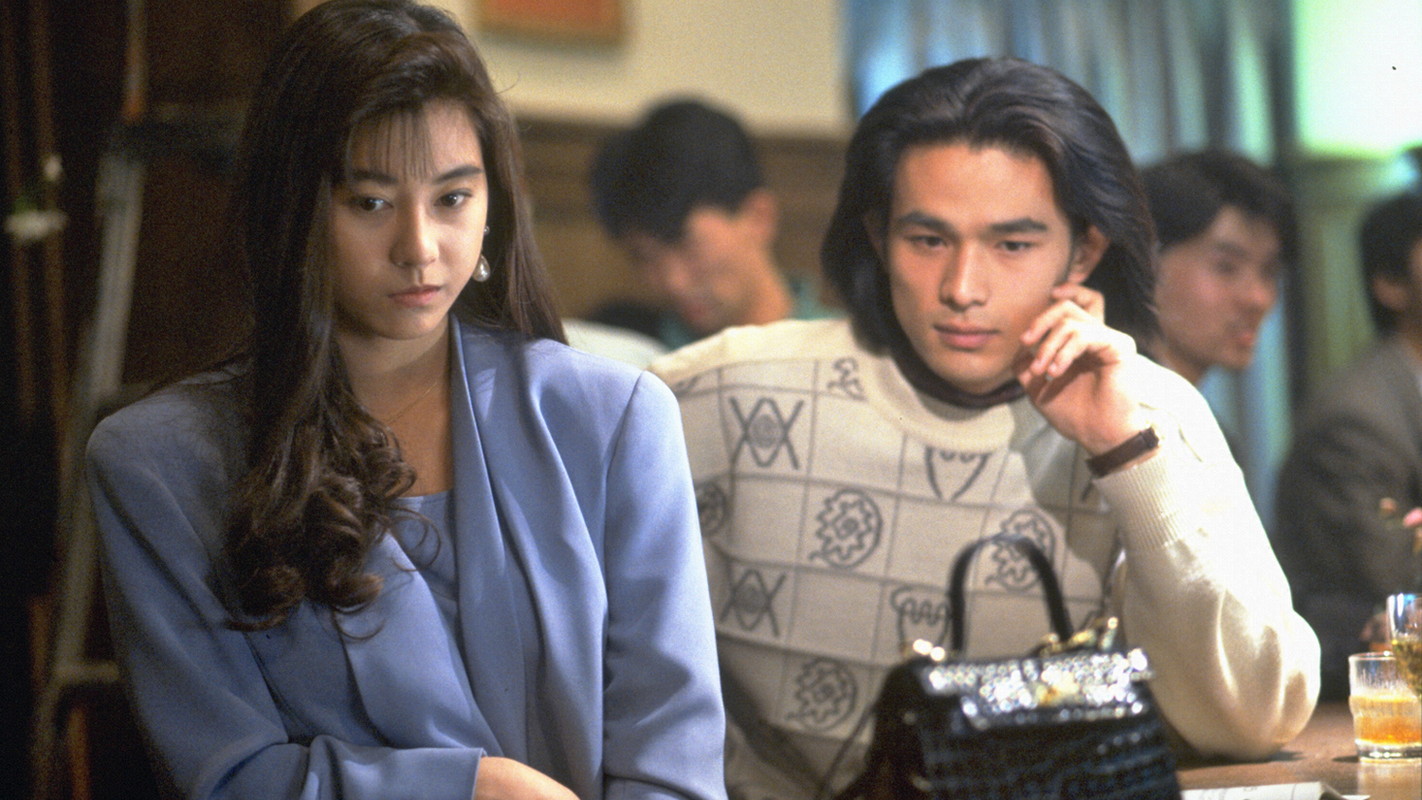
— It really stands out even within the soundtrack as a whole. But then, the mood totally shifts on the eighth track, “Autumn“—suddenly there’s brushed drums and jazz guitar, creating a smooth, laid-back swing. There’s something “European” about its ambiance that even calls to mind the classic “Autumn Leaves.” Was this one that the production team requested from you?
Hinata: No, this was also one of my suggestions. Compared to the rather flashy “Coco and Jasmin” though, I feel like this one seemed to be fairly well-received by the staff. I think it was even used in some pretty important scenes on the show.
— And speaking of jazz taste, there’s also the tenth track, “Zelda.” At five and a half minutes, it’s the longest track on the soundtrack. This song wasn’t re-edited for this reissue—was there any reason behind that?
Hinata: The reason is very simple: the entire piece was pretty much an improvised session from start to finish, so there was no way to edit it. I’m playing the electric piano, and I believe we recorded it in the studio pretty much in one take.
This is something I’m only able to say now, but to tell you the truth, this song was really just album filler in order to round out the soundtrack.
— “Album filler”? I can’t say I’ve ever heard that expression before.
Hinata: Yes. It’s a term we used a lot back when I was in America, basically meaning tracks that are there just to fill out the album. No matter if it’s rock, pop, or jazz, most albums will usually have only two or three key tracks, and the rest of the material is often there to just fill out the running time. Although I suppose that has its own kind of appeal too. (laughs)
Looking back, that was probably my reason for writing the song, to somehow get this CD finished within a very short time limit. Or maybe I just took a fragment we’d already used on the show and expanded it into this bigger jazzy piece. I forget the exact details now, but I think that’s how it happened.
— There’s something about its listless, slightly decadent mood that brings to mind Zelda Fitzgerald…
Hinata: I was just reading a book about her and her husband Scott Fitzgerald at the time. Both the musical theme and the song title were borrowed from there. There may have been some overlap in my mind between the frenzy of pre-Depression America and Bubble Era Japan. But, especially taking that into account, I can’t deny that this track was put together rather… casually.
— I think it’s really a wonderful performance.
Hinata: Hahahaha. Well, I’m glad to hear you say that. For all these years, I’d honestly felt a little bit guilty about it.
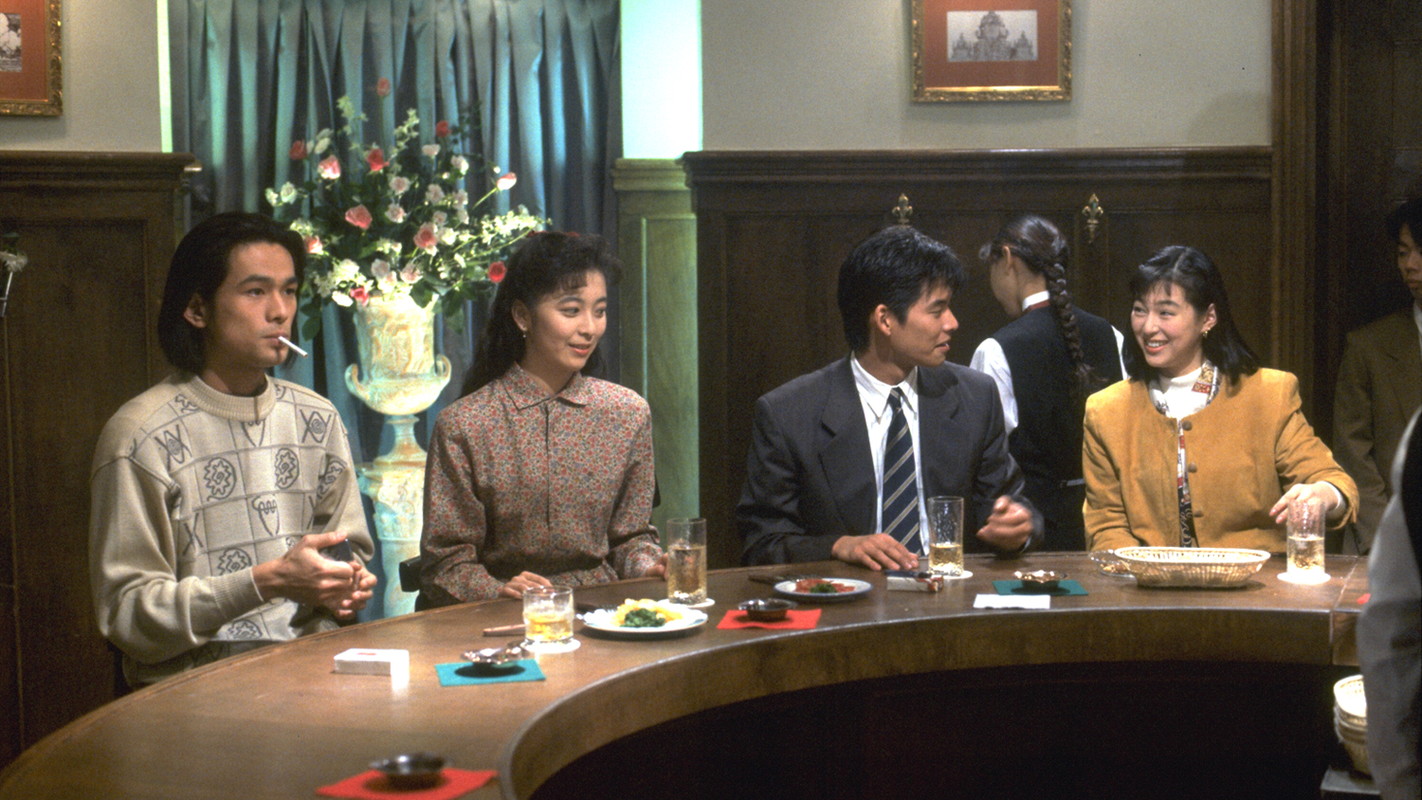
— The twelfth track, “Alone in the Street,” has also not been re-edited. It’s exactly the same as the 1991 original.
Hinata: Yes.
— Listening again to the soundtrack while giving it my full attention, this was actually the track that stayed with me the most. In the first half of this interview, I said, “Even when something is made purely with a ‘craftsman’s mindset,’ a certain amount of the composer’s identify will inevitably seep out regardless.” I feel like the solo piano of “Alone in the Street” is the very embodiment of that.
Hinata: Ah, I see. Right, right.
— The left hand cycles through the same repeating phrase while the right hand weaves this gently drifting melody. Structurally it’s very simple, but its delicate musical sensibility is very you. How did this piece come about?
Hinata: This is the one song that I wrote with a sense of resistance to the show’s production staff.
Considering the Tokyo Love Story score as a whole, I did very little in terms of artistic self-assertion. Yes, I did give them various suggestions, but I didn’t want to force music on them that didn’t feel like it would fit the framework of a television drama.
“Alone in the Street” was the one exception in that I tried to assert myself a bit with that one, suggesting something outside of their creative vocabulary. I think I just wanted to have one song in there that was the complete opposite of what they were looking for. So, in that sense, your observation is correct—this song is different from the others.
— It’s such a beautiful melody from start to finish. Did it take you a long time to compose?
Hinata: No no, I think this was pretty much improvised in one take—that’s why there’s this one spot during the song where the tempo is a bit off.
When I handed it to the production staff, I remember telling them, “If you’re going to use this song, use it like this.” And, to my surprise, they actually ended up using it in many of these scenes that were focused on the characters’ inner emotions. I was happy to see that. Listening to it again for the first time in quite some time for this reissue, I didn’t feel the need to change anything about it.
— Closing out the album is “End Title.” This is, so to speak, a piano version of “Good Evening, Heartache,” which was frequently used on the show. I would think that for many people this gentle melody is something that remains deeply ingrained in their hearts.
Hinata: Thank you. However, this piano version also wasn’t something that the production staff specifically asked for—if anything, it was a last-ditch effort to somehow make the soundtrack album happen.
— A “last-ditch effort” in what way?
Hinata: By the time it was time to master the album, this song still wasn’t on there. Then, as we were looking over the data we had at that point, the engineer said, “I doubt the higher-ups are going to sign off on this—it’s too short.”
As we were trying to figure out what to do, he went, “No one’s using the studio upstairs right now.” So I suggested, “I could just play the same melody on the piano—that’d buy us another three minutes.” So, I went in to record it in a hurry, and it went straight to CD.
— On the day it was mastered?!
Hinata: Yes, same day. (laughs) Looking back on it now, it really was a pretty incredible high-wire act. But following the soundtrack’s release, even this piano version ended up being used a lot in the latter half of the show. So in the end, I suppose it worked out for the best.
At any rate, it was all just one big scramble. To begin with, even just the idea of having a composer write an all-original score for a TV drama was something quite novel at the time, and releasing a soundtrack album of one was similarly unheard of. There was seemingly no established production workflow to any of it—we could only try and fumble our way forward as we went.
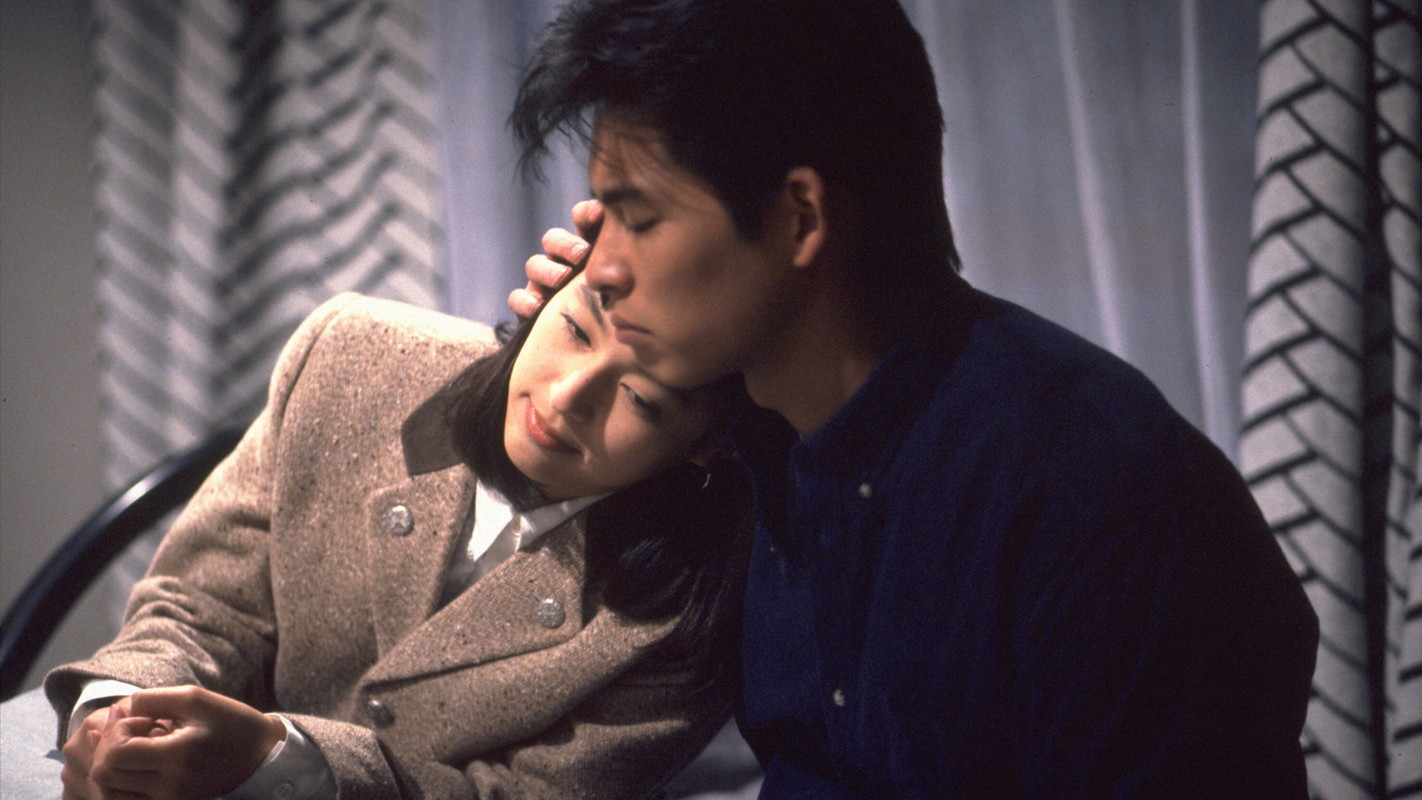
— Tokyo Love Story began airing on January 7, 1991, and the soundtrack CD was released on February 10. In hindsight, it really was made dizzyingly fast. Incidentally, the TV drama’s popularity kept rising even after the CD release, eventually reaching a viewership peak of 32.3% for the final episode. How did you feel about it at the time as you were watching it all unfold?
Hinata: Mmm… People often talk about it as a “social phenomenon,” but personally it never really sank in for me. Because it’s not like I ever visited the set, and I didn’t really get to meet the cast either. For me, it was simply a time of spending every waking hour writing the score and then recording it in the studio. At best, I suppose I could notice the production staff at Fuji TV having a bit more stride in their step when walking inside the building. (laughs)
But that was about it. If anything, what I remember most vividly is thinking, “I hope I don’t hear the soundtrack playing anywhere.”
— Why was that?
Hinata: Ultimately, I think I was scared—we’d made this album in a huge hurry, not even knowing what we were doing, and suddenly it had turned into this massive hit. I would’ve felt like I’d returned the favor to my record label had it sold a mere 20 or 30 thousand copies, but it went on to sell in excess of 300 thousand.
To me, it felt like this album that I couldn’t fully stand behind had been released into the world. I felt myself wanting to distance my own ears from it. Those kinds of complicated feelings and a sense of unease surrounding the album stayed with me until quite recently.
— For me, it’s the opposite—I would very much want listeners who used to enjoy the Tokyo Love Story soundtrack to listen to your original works as well. Particularly with pieces like “Alone in the Street” and your early representative pieces like the global viral hit “Reflections” or your fully orchestral album The Dark Night Rhapsodies, I feel like you can definitely find the connecting thread between it all.
Hinata: I’m glad you see it that way. It was thanks to the success of Tokyo Love Story that I would go on to write many more scores in the following decade or so. And indeed, every single project was difficult, and I was constantly up against deadlines. I can’t even count the number of times I found myself worrying if I might one day regret what I was doing back then as a musician.
But with this reissue, I was given the opportunity to confront my past work. I was able to genuinely think, “Maybe this is fine in its own way“—and I don’t mean that in a negative way at all. Maybe it sounds a bit grandiose if I say I was able to “reconcile with my past,” but still, it was a rather significant discovery for me personally.
— There are also two bonus tracks which were not on the original 1991 album, along with improved sound in the way of a new remaster.
Hinata: Yes. One is an orchestral version of “Good Evening, Heartache” which was recorded for a personal best-of years ago, and the other one is “Rica’s Theme Special Version” which was issued as a single from the soundtrack.
With the remaster, we tried to preserve the sonic character of the ’90s as much as possible, while making careful adjustments so that it sounds good even on today’s listening environments, including streaming. With all that in mind, I hope listeners will enjoy the album.