This is a great heart-to-heart discussion between Uwanosora’s Kadoya Hirohide and Lamp’s Someya Taiyo. It was originally included in Uwanosora’s “7 Years Live” pamphlet from 2019, only a couple of months after the release of their third album, Yogiri.
Their conversation discusses not only the album, but also the pair’s struggles with songwriting, Someya’s qualms with some of Uwanosora’s music, Kadoya’s concerns about “selling out,” and what the two would do in the face of Planet Earth’s imminent destruction.
Text: Yoshikawa Kohei
English translation: Henkka
Uwanosora: Linktree
Lamp: Linktree
Note: You can buy Yogiri on CDJapan.
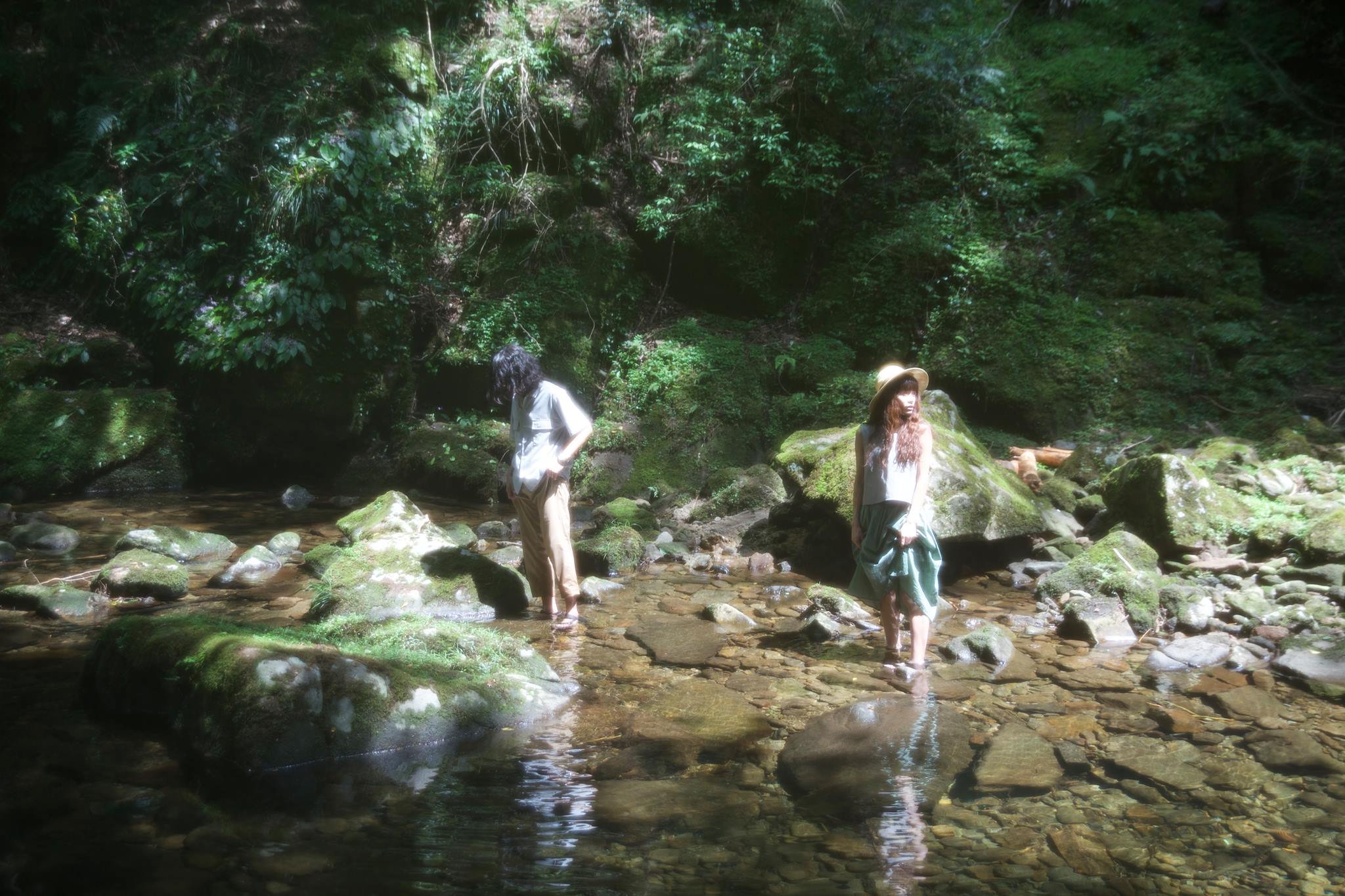
Uwanosora
Someya Taiyo: What’s your favorite Uwanosora song?
Kadoya Hirohide: Hmm…
Someya: For me, it’s “Poolside ni te.”
Kadoya: Maybe “Namida no Forkball.” (laughs)
Someya: Oh… Okay… (laughs) The last bit in that song—in terms of my musical sensibilities, there’s just no place for jokey bits like that in my songs. The fact that you enjoy that kind of thing, it sort of makes you a bit old-fashioned.
Kadoya: If someone was to try and figure out what I’m like based on just my songs, they might think I was the “highly ambitious type” or whatever. But that’s not at all the case—at my core, I’m a very unserious person. If you didn’t know that about me, I might come across as someone a bit uptight, if not scary. But really, I just want to joke around all the time.
Someya: You might come across as a bit “difficult.”
Kadoya: Well, I am difficult. (laughs) But weren’t you yourself more difficult in temperament ten years ago or whatever?
Someya: I was.
Kadoya: How did you feel about music ten years ago?
Someya: What a vague question to ask somebody. (laughs) That would’ve been, what, 2009? That’s when we were working concurrently on Tokyo Utopia Tsuushin and Hachigatsu no Shijou. What was I thinking back then, I wonder? One thing I know for sure is that I felt I wanted to create something amazing. Now, I don’t really think along those lines anymore…
One thing I always think about when I’m talking to you is how totally different the two of us are. Even like your whole reason behind wanting to make Yogiri, saying you wanted to “bring closure to songs you’d written way back”… I can’t imagine ever saying that myself. To be totally honest, that sort of thing about you is so difficult for me to understand.
Like, for example, let’s say someone comes across the music of Uwanosora for the first time. They obviously have no way of knowing you’d made the album with the intention of just wanting to “bring closure” to some old songs. I can’t help but think they would be at a bit of a disadvantage, not knowing that.
Kadoya: When people talk about visual art, it’s often accompanied by like some sort of an explanation as to what that artwork is, right? I think that’s sort of what I was going for with that. Call it “musical aesthetics” or whatever.
Someya: Yeah, I definitely feel that in this album. Do you remember how I said to you, commenting on “Sweet Serenade,” how I myself could never write something that sounds so much like “I Want You“?
Kadoya: I wrote that song purely with the intention of announcing to the world how much I love Marvin Gaye.
Someya: I think it’s amazing you could make that the motivation behind writing a song.
Kadoya: So far in my songwriting for Uwanosora, I have been trying to simulate other artists, or deliberately pay homage to them, or—to put it bluntly—just copy them. Basically, what that has meant in my case is copying everything: the drumming, the 12-tone scale, the chords, the voice… Copying the thinking and all the techniques behind the original.
And yet, no matter how much I tried to copy everything to the best of my ability, it would never sound like the original. I always found that so fascinating, and ever since university I’ve just kept trying to write songs in that manner. But then, just as of late, I’ve finally started to feel this sense of defeat, or like, resignation… And so at the moment, I’m trying to take a new step by paying homage in an unconscious way in my songwriting.
Someya: A new step away from flat out copying, you mean?
Kadoya: Right. Although I think some of our listeners actually liked the whole feeling of us copying someone else. I never got a sense of that in your songs.
Someya: If anything, I was always trying to do the opposite. I used to feel like copying was somehow “bad.” Or, well, I should say that I still feel that way even now.
Kadoya: It’s like Lamp is always in pursuit of something original.
Someya: I think that’s totally normal by conventional standards though. Isn’t that what everyone who’s making music thinks? That they want to make something original? That’s why, initially, I couldn’t at all understand Uwanosora. I mean, that’s not to say I still understand Uwanosora even now, but…
Kadoya: Since the beginning, Uwanosora has always been different from other musicians when it comes to dealing with “originality.” It was fun trying to deliberately pay homage in my songwriting while still having my songs be sufficiently different. But as I kept doing it, I became so good at it that the songs started to sound closer and closer to what I was paying homage to. I started thinking, “Wait a minute… This might sound too similar.”
So lately, my motivation has been just going into the studio without any preparation, and just start writing. Also, I’d like to halve the length of my songs—I feel like around two minutes and thirty seconds might be the perfect song length.
Someya: My songs have been becoming shorter as of late, too. It’s like I can only write short songs now.
Kadoya: Isn’t it just so tiresome, listening to long songs? It used to be that when you bought a CD, you’d listen to it constantly. But now there’s just so much music available, it’s easier to listen to short songs.
It’s the abundance of music that especially makes me feel like there’s not much point in writing songs anymore. Like, there’s so much music out there in the world that I haven’t even heard yet, so what’s the point of me writing even more new songs?

Kadoya Hirohide
Someya: I do agree that there’s no point in writing bad songs. Something I really struggle with as of late is that the songs that are coming out of me are all awful.
Kadoya: Really?
Someya: Yeah. I’ll be writing a song and I’ll think, “God, this song sucks.” It’s terrible.
Kadoya: Songwriting really is painful. Because it’s all about taking that initial composition and then just narrowing down its potential; narrowing down your options. You felt like the song had limitless potential which you then had to constrain, and while there is a feeling of relief upon finishing a song, there’s also a feeling of disappointment. It’s more exciting to just imagine and play all that music in your mind.
For me, I always have to finish the arrangement in my head before I can do anything with the song. First, I’m just playing with my imagination; playing with the chords and singing. “First it’ll go like this, then it’ll go like this, and finally like this.” It’s after that where it gets tricky. Because at that point, all of the sounds will be playing in my mind, and then it becomes this process of putting all the pieces together as if it were a puzzle.
Someya: We’re totally different in that respect—I don’t hear anything in my mind. With Lamp, when I’m writing a song, I’ll call up this keyboard player, Jun, and when he comes in, it’s like the song totally changes, and that’s what gives me inspiration. Jun will just play whatever ideas he might have on top of the song, and I’ll choose which parts I want to use and arrange the song that way.
Kadoya: In my case, my songwriting starts with coming up with the setting, or the lyrics really. That’s why it was relatively easy to work on Yogiri (Night Fog)—because the setting is night, not day. When it’s nighttime, if you have some light, you can illuminate the spaces you want and those things alone become defined. But when it’s daytime, the lyrics can be about anything and everything… In the daytime, you lose focus.
Someya: Yeah, I know what you mean. But then, as a listener, I don’t really care about the “concept” of the music I’m listening to at all, you know? For example, I used to listen to a lot of ’60s concept albums, but I couldn’t care less about the actual concepts—looking back, I liked those albums because of the sound of that whole era; because of the works themselves.
I mean, all that they really are—those “concepts”—is just the wild ideas of the musicians involved. Sometimes it can be more interesting if you’re not even sure what the concept is supposed to be.
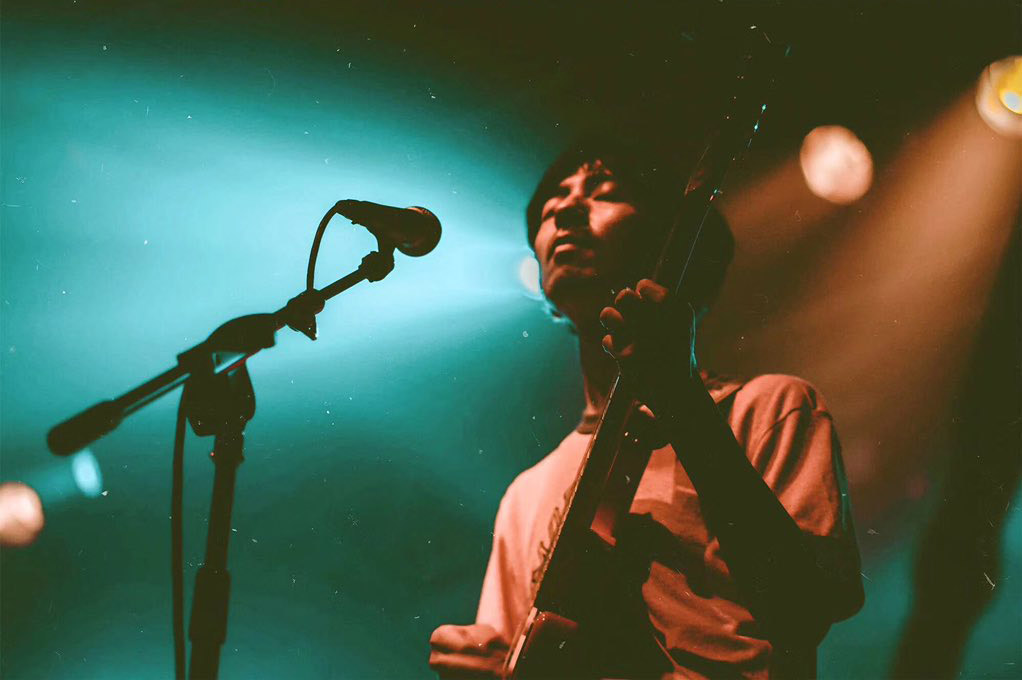
Someya Taiyo
Kadoya: This person from Pet Sounds Record once commented on our music, “This is good—it’s like a mixed bag of flavors.” But the way I’m writing songs now, I think our music is going to really become a mixed bag.
Someya: Even that’s overthinking it. I don’t think that’s something you even need to be mindful of. You just have to forget about all that stuff you used to be conscious of. Maybe just have “making it a mixed bag” be your motivation from now on. (laughs)
Kadoya: I know. I’m just a fool.
Someya: No, you’re just very earnest. No one who wasn’t as earnest could be as thorough as you are. And you’re also a perfectionist. The average person would very much struggle to reach the point you’ve reached musically. You have a talent for music. I want you to put that last bit in bold. (laughs)
Kadoya: One talent the heavens didn’t give me, though, was a talent for singing. (laughs)
Someya: You and me both. (laughs) To think how different life would’ve been with that talent… If only I could sing, I could have done so much without relying on other people.
Kadoya: When it comes to music, I really think the gift of singing is the greatest talent one can have.
Someya: Absolutely. I totally agree.
Kadoya: Anyone can write a song…
Someya: Yep.
Kadoya: …But not everyone can sing a song. That is a true talent.
Someya: By the way, Uwanosora’s guitar solos—is that you playing those obbligato-ish bits? Or some other guitarist?
Kadoya: Depends on the song.
Someya: For example, the David T. Walker–esque thing on “Inseki no Love Song.”
Kadoya: Yeah, that’s me.
Someya: Oh, okay. Huh… So you can play that sort of stuff, too.
Kadoya: David T. isn’t a fast player, so you can at least try and imitate his phrasing. But that uniqueness of his playing—that totally erotic, emotional part of it—I don’t think it’s possible for anyone else to attain that.
Someya: Stuff like the intro of “Hotel 70“—to me that sounds so peculiar. It’s unlike anything I’ve heard before… But while the verse has got such a great mood to it, I’m not the biggest fan of that chorus. Even though the verse is so nice and different.
Kadoya: That’s just because it’s you. For the average listener, most of them probably feel the opposite—they’ll probably be fast-forwarding through the verses all irritated, going, “Okay, okay, I get it, enough already.”
Someya: There’s this Showa era (1926–1989) kayou feel to it which is something I hate. I actually feel like I’d enjoy listening to Uwanosora’s music instrumentally—I’m sure it’d be great. My problem is that I just dislike the Japanese language.
Kadoya: Yeah. You hate Japan.
Someya: It’s not so much that I hate Japan as it is that there’s just a lot of stuff I hate about Japan… Like, local dive bars and public bathhouses—places that have that “macho” vibe about them. And I don’t like a lot of Japanese music either.
…Instead of me being all negative, tell me something positive about Yogiri.
Kadoya: Hmm. Well, I’m glad I managed to sneak some sexual stuff in there, too.
Someya: Again with the jokes…
Kadoya: No, I’m being serious. I really was aiming for the kind of eroticism of like Marvin Gaye’s “I Want You.”
Someya: It’s true that you’d never had those sorts of suggestive elements in Uwanosora before.
Kadoya: I actually wanted to make it more “dry,” but because it’s in Japanese, it instead became this damp, sultry kind of eroticism… But as a result, Yogiri ended up becoming different than anything Uwanosora has released before, so I guess it’s okay.
Someya: I personally like Hidamari the best. It’s easier to listen to than Uwanosora or Yogiri.
Kadoya: It might be because Yogiri is not very emotionally stirring, I think.
Someya: Yeah. Hidamari is more emotional. [While listening to “Chou no Tattoo”…] You know, it might just be unconscious on your part, but I feel like Uwanosora can be very Yuumin-like at times. You like Yuumin, don’t you?
Kadoya: I do, but pretty much the only song of ours where I was really conscious of her was on “Tokimeki no Blue.” On “Chou no Tattoo,” my thinking was more along the lines of Michael Jackson’s “Butterflies,” or—with the woodblocks—Deodato’s “Love Island.”
Someya: What’s your approach to mixing? Like, for example, do you give instructions to the engineer about every minor detail? Like the position of the hi-hat or whatever?
Kadoya: All of it, yeah. I do let them handle the very basic essentials though.
Someya: The thing that strikes me about Uwanosora—or your songs, really—is how the levels and the balance of all the instruments are just perfect. It’s very impressive. No matter what equipment I use to listen to it, the balance is always right and there’s never a feeling of like, “I wish this or that instrument was a little bit louder in the mix.” I really do think it’s amazing. It’s all made with so much care.
Someya: So it seems you’re going to get distribution for Yogiri. How come you didn’t do the same for Hidamari?
Kadoya: When we released Portrait in Rock’n’Roll, I thought, “This is probably the last music we’re ever going to release.” In order to pay back all the musicians who’d helped out on that album, we had to at least sell the CD. But at the time, I had this reluctance towards selling CDs. I really hated the idea of how, were we to get distribution for it, that meant that even record shop owners who hardly even knew about Uwanosora were going to be selling our album.
In my mind—by virtue of being young—I felt that to sell our album in that manner would’ve been a loveless thing to do. So I really struggled with it. What I ended up doing was, I contacted all the record shops that I knew, and I sent them a letter, saying, “If you like the album, please sell it at your store. If you think it’s not so great, I don’t mind if you don’t sell it.” At that stage, it was too early for me to even be thinking about things like proper distribution.
I remember talking to you afterwards and you telling me how I really needed to get it distributed, but even then I still felt afraid. It felt like… If I was going to take that path even just the once, it was like I would be completely surrendering myself to the flow.
Someya: While I do think you’re well within your rights to think that way, speaking just from an outsider’s perspective, I think it’s a narrow-minded way of looking at it… Because if you don’t get distribution for an album, it’s the same as not having it in stock at stores. I mean, let’s say you have a person who likes to always buy all their CDs at the retail store. If they can’t find your CD there, then to this person that’s the same as if Uwanosora never even existed to begin with.
So although I get what you’re saying, I just don’t think it’s realistic to expect all retail store employees to listen to and check the contents of every single thing they put up on their shelves. I just don’t think it’s fair to demand something like that from people working on an hourly or monthly salary.
Kadoya: You know how you’ll sometimes go on YouTube and you find these amazing songs that only have like 500 views? That’s such a cool thing to me. “This music is so good, yet no one’s listening to it.” That’s part of what I was feeling, too.
Someya: And that’s the sort of thing you wanted to become at the time?
Kadoya: I’ve always wanted to become that.
Someya: Well, in some sense, I’d say your dream has come true then.
Kadoya: Right. For me, there’s nothing that I’m particularly trying to achieve through music; no “greater aim.” I’ve just always wanted to create something that might only have 50 views on YouTube, and yet, someone somewhere thought it was good.
Someya: Sort of like those unknown, “hidden gem” records; the stuff that people at the time thought nothing of, when really the content of those albums was totally underrated?
Kadoya: Mmm… I’m looking for a stronger sense of destiny with my songs. With all of the music I’ve created so far, it’s like it’s always been through a “destined encounter” between me and the music, but at the same time, it’s also like each one of those encounters has been of my own making, if that makes sense.
In the movie Cinema Paradiso, there’s this scene where the protagonist watches a film of kiss scenes that was edited together by a friend of his. The film is meant only for the protagonist, and he watches it in his lonesome, in a closed-off setting. That’s what makes it so wonderful. Sure, maybe it was some footage merely edited together by someone, but that doesn’t make it any less unique. And what makes the footage so appealing… That’s something only the protagonist can understand.
Of all the music out there in the world, listeners somehow happened to come across the works of Uwanosora. It’s the romantic aspect of those kinds of encounters that I’m drawn to—encounters that feel coincidental and yet somehow inevitable. I’m making music specifically for that lone music listener, as well as for myself.
So that’s where I’m at—struggling with these sorts of concerns way before even considering the issue of distribution.
Someya: I’d be lying if I said I didn’t have thoughts along similar lines myself.
Kadoya: Pop—or popular music—is something that has evolved through its ability to sell under capitalism. And with that being the case, then my thinking isn’t “pop” in the least. I’m just doing something I love—I can’t subscribe to that way of thinking at all, and doing what I do, it’s always felt very much like a contradiction.
Someya: To me, “pop” isn’t anything like the sort of “pop under capitalism” thing that you’re talking about. I mean, I guess it’s just a question of how you define the word. But to me, “pop” isn’t so much a genre as it is just something that speaks to my inner self—other people might call it “jazz” or “soul” or whatever.
Kadoya: That’s generally how I feel about it, too. When I listen to music, I’m not sitting there thinking, “This is pop that I’m listening to.” It’s just that, when I think of it in terms of the origins of popular music—music meant for the masses—it just seems contradictory to me to be making this kind of music. I’ll often think to myself, “What am I even doing…?” But then I soon just forget about it. Although if you were to tell the past me how in the future I would have my music be distributed, I’d probably feel disappointed in myself.
To change the subject… Do you have an image in your mind of what you would like Lamp to become?
Someya: There’s nothing I particularly want us to “become,” but I would like to make a living doing this.
Kadoya: Ah… That’s something I never even thought possible myself.
Someya: I didn’t use to think about it either… Hmm, although, maybe I did actually. Just vaguely.
Kadoya: In my case, by the time I was first starting out in music, the whole music industry was already dead. So to me, there was this awareness that doing music basically meant death. Our sort of music wasn’t particularly trendy or anything either.
One thing I didn’t like was how just around the time we made our debut, there was this weird “city pop” boom taking off, and people saw us as being part of it.

Lamp & Kadoya Hirohide
Someya: By the way, you’re a light eater, aren’t you? I feel like you hardly have any attachment to food.
Kadoya: Hardly any, yeah. I don’t have any foods that I dislike either.
Someya: Right. You’re not the type of person to be like pushing people out of the way to be the first one to grab a rice ball or something. (laughs) You’re the type who’s okay with being three or four steps behind everyone else in that line.
Kadoya: I never had to worry about not having anything to eat. No, wait… At one point during college, I actually did. Especially while we were recording for Uwanosora ’67—that’s when I was the most financially strapped. I couldn’t even pay the electricity bill. I’d go to the university to record, and when I came back, the lights wouldn’t turn on. I have to admit, I did feel sad that time.
The person making this pamphlet is actually someone who interviewed us after we’d made our first album, and we’d occasionally go out drinking together. This person’s older sister was working at a bakery at the time, and she’d bring me the leftover bread that didn’t sell. It tasted so good that I was crying as I ate. It was under that set of circumstances that I was making “Namida no Forkball.” It’s all such a big joke… I mean, I’m joking around, but in a very serious way. (laughs)
Someya: Even on “Inseki no Love Song,” that line about the person making jokes just as a meteorite is about to hit Earth—that’s you, isn’t it?
Kadoya: It might be, yeah. (laughs)
Someya: I bet it is. You’d like to be joking around even as a meteorite was about to fall on Earth, wouldn’t you?
Kadoya: I would. You’re more of a romanticist—in the final moments, you’d probably want to be locked in an embrace with someone, tears falling down your eyes…
Someya: Nailed it.
Kadoya: But really, I actually don’t want it to be widely known how our music—including Yogiri—is always made under such impoverished circumstances…
Someya: Yeah, I get it. Although I can’t say I’ve ever had my electricity cut off.
Kadoya: That’s because you’re a proper, responsible person.
Someya: Yep. I am responsible when it comes to that sort of thing.
…Man, we just can’t talk about anything pleasant, can we? Even though we usually only talk about nice stuff. (laughs)
Kadoya: We always start talking about more emotionally moving things just as soon as the actual conversation is over.
Someya: Yeah. It’s always like, “This is what we should’ve been recording!”
Kadoya: Whenever I’m talking to you, it always makes me learn more about myself. Like, “Ah, so this is where I placed my artistic sensibilities.”
Someya: It’s not stuff you’d normally think to even talk about. I bet it just comes out naturally.
…Oh, and it’s summer solstice today. We were trying to be a little bit conscious of that even during this conversation, weren’t we?
Kadoya: How romantic… Doesn’t it always feel kind of sad when the solstice is over?
Someya: Definitely. It’s still summer, and yet, somehow it feels like we’re already approaching winter.
