KAN is and will surely always remain one of my personal favorite pop songwriters. Today, nearly 20 years since I first discovered him, I appreciate his music more than ever. This translation is my humble tribute to this funny, relatable, and really just immensely endearing man.
This is the first part of a comprehensive, career-spanning interview with KAN. It comes from a book fittingly entitled KAN in the BOOK which was published in 2020.
Text: Morita Kyoko
English translation: Henkka
KAN: Website, Twitter, YouTube
Note: You can buy KAN’s physical releases on CDJapan.
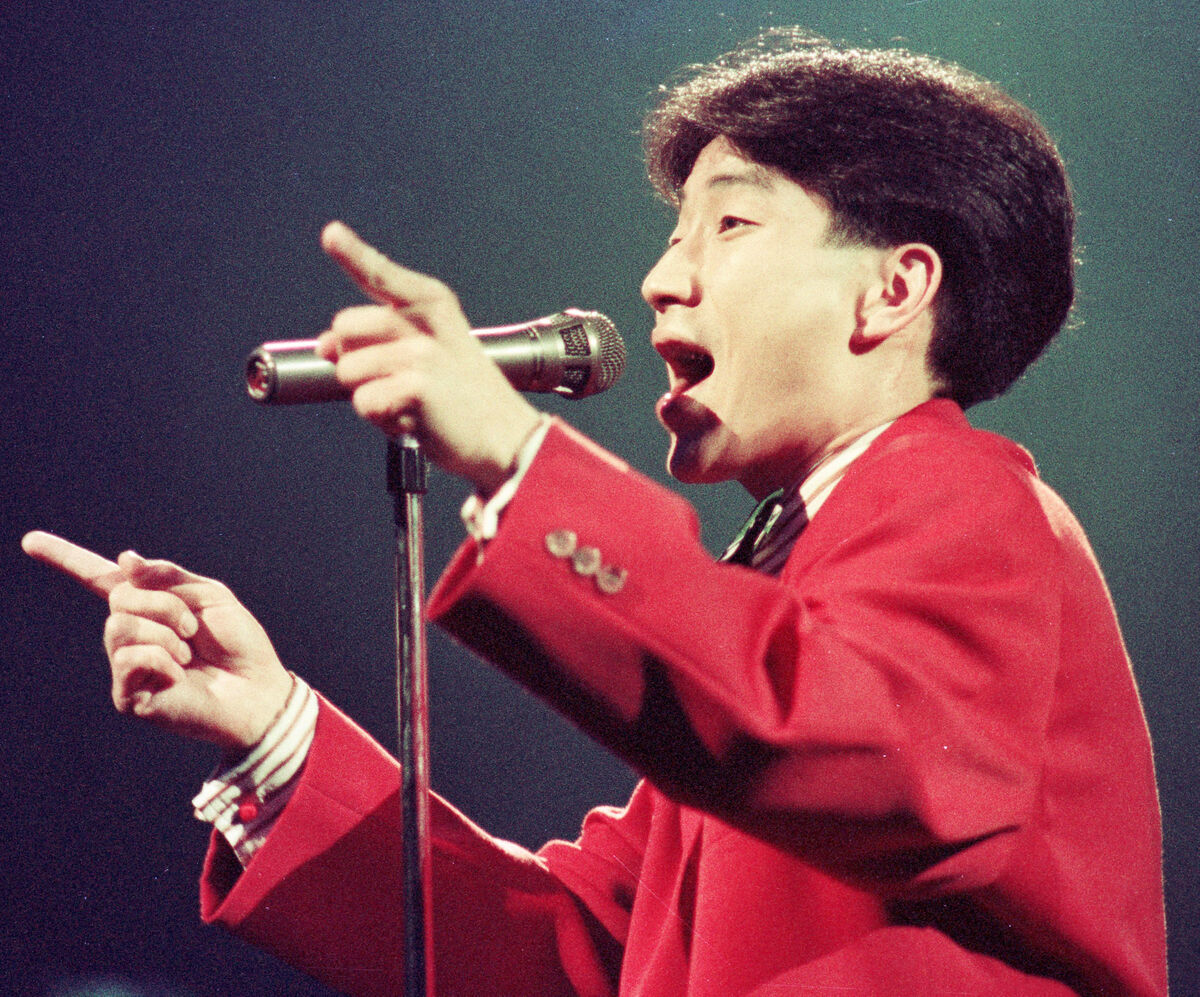
1987–2001
— To begin with, how did your debut come about?
KAN: I took part in Yamaha’s EastWest amateur band contest and Young Jump’s Sound Contest ’84, and I did okay—I won prizes in both, coming in 3rd place or so. I got like a “Merit Award” as well as a “Good Looks Award.” (laughs)
— Oh really? (laughs)
KAN: Back in those days, a lot of young sound directors at record labels were going around looking for promising musicians in hopes of discovering and developing them themselves, and they were attending all kinds of contests. That’s how I was approached by one Mr. Hirano from Polydor Records, and I went into the studio to record demos of six or so songs—some of them were programmed, and some I recorded with band members from my college days.
Then we started looking for a production company. But one of those candidates, that company said they wanted to work with a different label instead of Polydor. Hirano was all sullen, like, “I’m gonna be left out of this thing, huh…”
— No wonder. I’m sure there were some mixed feelings.
KAN: So he asked me, “What do you want to do?” I gave him some vague, half-assed answer. “Well, I guess… I guess I’d like to be in an environment where I could find some supporters of my music…” (laughs)
Ultimately, as they were already drafting the contract, Hirano spoke to someone from this company called Lightlinks Corporation, and they said, “Why don’t you work with us?” We got into a huge fight with the company we were originally supposed to sign with, and I ended up going with Lightlinks and Polydor.
Lightlinks were actually producing film scores for a movie company called Filmlink.
— So that’s how your connection to director Obayashi Nobuhiko and his film The Strange Pair (1988) came about.
KAN: There were all kinds of troubles surrounding the film so it ended up becoming an independent production, and I of all people—someone with zero film music experience—ended up doing the music. (laughs)
We recorded it at this studio that Yamaha were using to monitor their synthesizers at the time, so the studio time didn’t cost us anything. Obayashi knew nothing about me, seeing as I hadn’t even debuted at the time, so he wasn’t that particular about the score. I just made three themes and an opening song—so four rather long tracks—which he could then splice up and use in different scenes to his liking.
— At the same time, you were beginning to prepare for your debut.
KAN: Someone from Polydor asked me, “So, do you want to be in a band? Or do you want to go solo?” I said, “Solo, of course!” (laughs)
They asked me to write a song per week, so I’d bring them two just to show them my eagerness. Only the thing is, the majority of the songs I wrote back then have never been released—when you’re writing two songs a week, they’re not going to be good songs. But even before I’d debuted, they were already saying we’d release three albums. What a crazy point in time it was, right?
So I took all those “two-a-week songs” and all the ones I’d written in my amateur years, and I made simple demos of them, no lyrics or anything. Then, we just picked from those hundred or so songs.
From the start, I wasn’t even thinking of writing the lyrics myself.
— That’s pretty surprising, looking back now.
KAN: I didn’t know a thing about Japanese artists. I’d only ever been listening to Western music my whole life. The only Japanese music I knew was thanks to an ex-girlfriend of mine—I had this cassette tape with Matsutoya Yumi and Southern All Stars on it. That was the extent of my knowledge, so I said I’d leave the lyrics to someone else, and it ended up being these lyricists Hirano knew at the time.
But then I started to think, “Well, seeing as I’m going to be making my debut, I guess I should try writing some lyrics myself, even if just a little bit.” So on my first album TV no Naka ni, while I did all the compositions and arrangements, I only wrote the lyrics for three songs: “TV no Naka ni,” “Koisuru DISCOMAN,” and “TOP SECRET ~Dare ni mo Shaberu na~.”
It was also around this time that you and I first met, wasn’t it?
— It was. I remember you being very quiet—shy, even.
KAN: It was my first time being interviewed, so I’m sure I didn’t even know myself how I should be acting in those situations. Even with my album covers, it was always me thinking, “No, this isn’t really what I wanted…” (laughs) But then I wasn’t able to explain what would be to my liking either. I knew absolutely nothing at that point, so I basically just did as I was told.
In the case of the cover of TV no Naka ni, that ornament on the piano—that’s a complete ripoff of a certain foreign artist’s work. It’s just the worst, right? And all the pictures inside are terrible. (laughs)
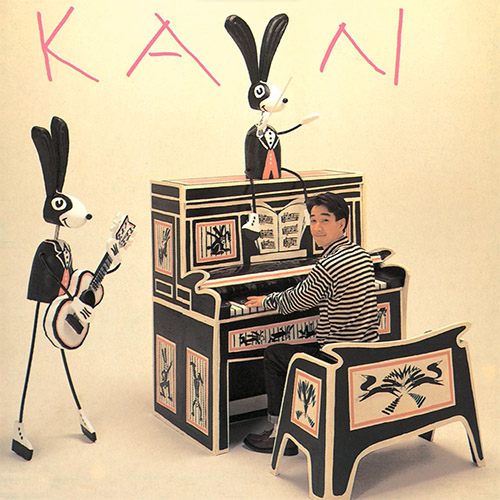
— Was it the record label’s idea to try and sell you with this “cute” sort of image?
KAN: (looking at the album cover) Cute?! This isn’t cute—it’s gross. (laughs)
Then they told me that they’d make me a fan club… And here I was, thinking fan clubs were supposed to created by fans. I wasn’t sure about the name either—“Spunky Club”—but then it’s not like I had any better suggestions. I was only thinking about writing and singing songs.
But I did ask them to make the cover of my second album NO-NO-YESMAN a tad reminiscent of “Little Stevie Wonder.”
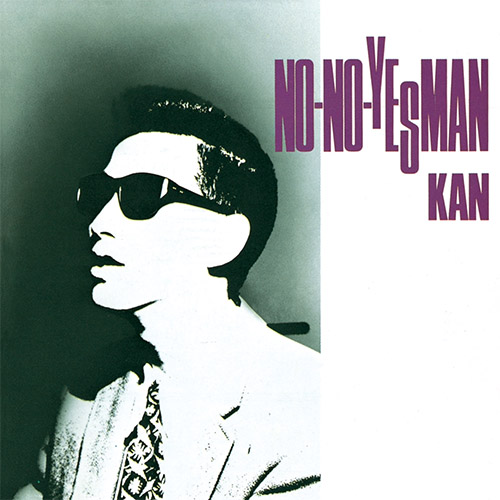
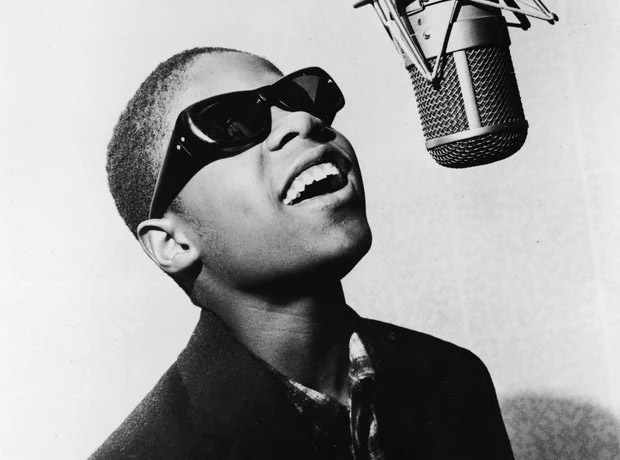
— Oh, so you like that cover?
KAN: I didn’t say I like it. (laughs) But I did give them input on how I wanted it to look.
But then with the third album, GIRL TO LOVE, someone from Polydor again had strong opinions about what it should be, and this is what it became. (laughs)
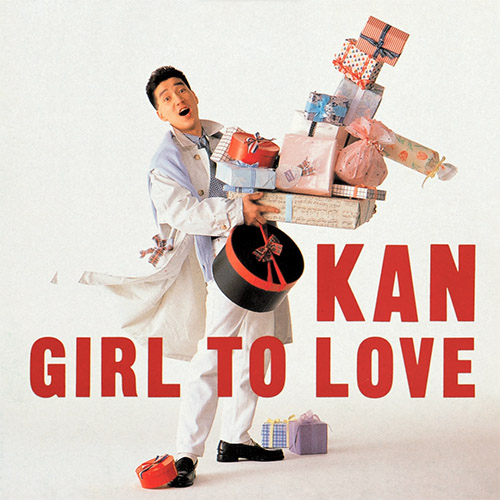
— Considering the content of that album though, I don’t dislike that cover.
KAN: But it’s just… Gross. (laughs)
KAN: The very first shows I played were at LIVE INN in Shibuya, Banana Hall in Osaka, and HeartLand in Nagoya. Oh, and I was invited to perform at the OBC Radio-sponsored event “BEAT BLAST.” That was in the summer of 1987, the year I debuted.
Also appearing was Kubota Toshinobu, and then Osawa Yoshiyuki was headlining—I played in the middle somewhere. I was watching Osawa’s show nearby, and he got Kikkawa Koji to come out as a secret guest. It was sensational—he was so, so cool. I was going, “Oh yeah, this is it.” (laughs)
That’s why my staging style is basically just a mix of Billy Joel, Michael Jackson, and Kikkawa Koji.
— You often still do those sorts of impersonations on stage. It sounds like you genuinely respect him. Were there any changes on the production side of your albums?
KAN: The arrangements. On the first album I’d done them all by myself, and I just thought, “I can’t do this.” It was too much. But I also didn’t want to leave everything up to some other person. That’s when I heard from a bassist friend of mine from my amateur years that an acquaintance of his, Matsumoto Akihiko, had recently started doing arranging work. We were the same age and everything, so I ended up working with him.
I was living in Komazawa at the time, and Matsumoto lived right nearby in Ikejiri, so we’d be constantly going to each other’s place, arguing argue over every little detail of the arrangements, down to like, “Should this part go ‘do-mi-so’ or ‘so-do-mi’?” That was on the second album. I managed to even write the lyrics for about three songs, and then I asked other lyricists to write the rest.
But then, as I was starting to play more shows, I started to feel more and more awkward about singing other people’s lyrics. I just felt uncomfortable singing these songs that had absolutely nothing to do with my own thoughts or experiences. So then I figured that it might be better if I wrote them all myself, and on the third album I went, “All right, time to write some lyrics.” Ultimately, I had to give up on two of them though. But I did write eight out of those ten songs.
— So it was around this time that you became more interested in lyrics.
KAN: That’s right.
— Their overall importance and such?
KAN: No, I wasn’t thinking about it that deeply. Not yet.
But on the third album, I just figured it’d be better if I wrote them myself. This one’s got a lot of good songs. (looking at the CD back cover…) Wait, not that many actually. (laughs) Well, it does have “Kimi wa Urusai,” “Daijoubu I’M ALL RIGHT,” and “Iezu no I LOVE YOU.” That’s not too bad.
— “Tekireiki LOVE STORY” as well.
KAN: That’s one I was already playing in my amateur years, although with different lyrics written by a friend of mine by the name of Nagashima. On the first demo of it, I’m singing, “tekirekira, tekirekira,” but Nagashima’s original lyrics actually went, “que sera sera, que sera sera.” (laughs) But I just thought, “Never mind,” and I re-wrote the lyrics myself.
— It’s a song you still always perform even today.
KAN: Even back in those days, we’d always play it near the end of the show with the band members passing solos between each other—like a guitar solo followed by a keyboard solo and so on.
— While also doing the band member introductions.
KAN: Right. Do you know the TV commercial for Tekkotsu Inryo? It’s this commercial with model Washio Isako and a bunch of women at a bathhouse doing like synchronized swimming, and one of the phrases would lead to us playing the song from that commercial. That’s how it all began.
Other times, we’d start doing folk dancing, or we’d be doing radio calisthenics… (laughs)
— The ideas just kept coming.
KAN: That’s the kind of song “Tekireiki LOVE STORY” is. (laughs)
As we got into the ’90s, I could start doing tours, and with each tour we’d always change the programme for that song. So then in 1994, when we were thinking about how to change it up for that tour, my keyboard player at the time, Shimada Youichi, said, “We should do a medley of all the songs we played on the show.” That was the first time that we did the (now live staple) “connect-all-the-songs” medley.
Shimada played in another band called GROOVY with my drummer Shimizu Jun, and they would do this thing where they played a bunch of Western songs back-to-back and then quiz the audience, “Okay, so how many songs did we just play?” I’d seen them do this live one time and I thought it was too funny. (laughs) That was in 1994. So yeah, it has basically become like a tradition now. (laughs)
Anyway, to go back to what I was saying about the lyrics… On my third album, I’d decided I would write them all, but I ended up having to give up on two songs. But on the fourth album, HAPPY TITLE ~Koufuku Senshuken~, that was the first time that I wrote both the words and music for every song.
With the arrangements… Whereas on my first album I did them all myself, and on the second and third albums I did them with Matsumoto Akihiko, the thing was that none of those three albums sold very much at all. I started thinking that maybe it was the arrangements’ fault. So on the fourth album, I got an outside producer to come in for the first time, I worked with some arrangers I’d never worked with before, I asked Matsumoto to do some, and I also did four of them myself—just to see how it would turn out.
— And how did it turn out?
KAN: I wasn’t really sure. (laughs)
— But with the few albums that you’d made thus far, were you starting to be more pleased with them overall?
KAN: Yeah, I would say so.
— Your fourth album was released in June 1989. It was also around this time that you started your FM802 radio show “MUSIC GUMBO.”
KAN: I was also doing a show called “Attack Young” on STV Radio since 1988, and then “GUMBO” the following year.
It was FM802’s launch year. I hosted a 12-hour opening special for them, and they even put “REGRETS” on their heavy rotation playlist. Although this would’ve been a time when I didn’t even know that word. “Heavy rotation? What’s that?” But apparently they were going to be playing it a lot, so I was pretty happy about that.
— This was also when you started BAD LOOKS. (Note: KAN’s comedic, early-Beatles-influenced band.)
KAN: Right. We were supposed to do two back-to-back shows in Osaka in a short period of time, so that was one of the reasons we started that band.
— Meanwhile, you were also working on your next album.
KAN: Yes. I made my fifth album, Yakyuu Senshu ga Yume Datta.
Again, I had the desire to do the arrangements myself but I just couldn’t pull it off all on my own, so I ended up working with Kobayashi Shingo. But it was on the condition that I could write all of the (instrumental) phrases myself, so I asked him to join the project with that in mind.
The reason for that condition was because Matsumoto would sometimes want to change even phrases I’d already written. While that was also a good experience in itself, the fact is that I had a certain image in mind for the songs, and I just wanted someone to help me refine those ideas into something of higher quality. That’s where Shingo came into the picture. In that sense, we had a very easy working relationship.
— After trying out lots of different approaches, you’d finally arrived at this particular style of making albums.
KAN: After that, a certain Mr. M from Polydor came in as the head of production and he was like, “We’re gonna make you a star, KAN!” (laughs) That man was very vocal about my lyrics.
— “Vocal” in what way?
KAN: Always butting in. (laughs) He was constantly going on about how he wanted to make me a hit single. So he went through a bunch of my demo tapes, and he picked out “Kenzen Anzen Kouseinen,” saying, “This is the one.” But he thought the lyrics were all wrong. “No, they need to be more like this. Rewrite it and bring it to me tomorrow.”
But there’s… There are certain things one just can’t back down on, right? So when I refused, he got so angry, screaming his head off at me. I didn’t like that. I said, “This conversation’s going nowhere. If you’ll excuse me,” and I walked out the room. My manager at the time came running after me. “Hey, come on now, wait a minute!”
That sort of thing happened several times. It feels like I ended up rewriting “Kenzen Anzen Kouseinen” pretty much only for Mr. M.
— He was likewise refusing to back down.
KAN: We even got into a huge fight over the cover art. There was another version of it, and I preferred that one, but he said no. We then released “Kanzen” as a single in May, and the album in July, I think it was.
After that, FM802 put “Ai wa Katsu” on heavy rotation even though it wasn’t a single.
— Just because they thought it was a good song.
KAN: Then the people at Polydor started talking about putting that out as a single too, and they started using it on the show Kuni-chan no Yamada Katsutenai TV (Fuji TV, 1989–1992). The single was released in September, and it started gaining traction near the end of the year.
— Did it feel like the song was suddenly becoming huge?
KAN: Not really, no. This person who was doing promotion for me suddenly called me out of the blue and invited me out to yakiniku—I had no idea what it was about, but I said, “Okay.” (laughs) So, you know how record shops will put in orders for our CDs? He was excitedly telling me the numbers of just how many orders he’d gotten in a single day.
I had no idea what all of that was going to mean for me.
— You suddenly became a very busy man.
KAN: I did, yeah. That was a tough period for me. The management was basically unable to control the situation. Even the on-site manager was just kind of there, not doing much. Of course, from Polydor’s perspective, this was finally what they’d been waiting for, right?
There were so many people who I had worked with up until that point, and suddenly we were getting flooded with calls from all these people and more for me to do TV appearances and interviews. There was no one there to act as a sort of middle man to do “traffic control,” so I was literally saying yes to everything. Polydor and my agency were both taking bookings. It was just crazy. I was even giving interviews to women’s weekly magazines. (laughs)
So that period between 1991 to ’92 or so, I really don’t have any memories from that time of anything besides recording sessions and live shows. I did kind of wonder to myself if this was really okay…
— Back in those days, every time we met for an interview, you were always so tired. I was worried about you. (laughs)
KAN: It was crazy.
— What was it that kept you going?
KAN: Well, that would’ve been the girl I liked at the time. And not just “at the time”—always. (laughs)
— I see… (laughs)
KAN: I had this one-sided crush on this girl for ages. For like eight long years.
— Wow! You were determined.
KAN: I seriously couldn’t even picture myself ever liking another girl.
— It might not be an exaggeration to say that she is what led to you writing so many great songs.
KAN: Well… Maybe. (laughs) Songwriting is something that’s done inside the mind, and most of my mind at the time was occupied with that person. So that’s what happens.
— Whenever you did interviews, I feel like they were always asking you solely about your lyrics. I didn’t really like that.
KAN: Yeah, ever since GIRL TO LOVE with like the “ano ne, unto ne“ and stuff like that. Even thinking back now, I feel like those were some funny lyrics. (laughs) Or songs like “Kimi wa Urusai.” My lyrics were the only thing they wanted to hear about.
— I think that just goes to show how “fresh” your lyrics came across to everyone. You were using words that hadn’t really been used much in lyrics before, and above all else, they were just real.
KAN: I think it’s probably because, lyrically, I wasn’t influenced by anybody. With the music, I would think, “I want to make a song that sounds like this European/American tune,” or I’d hear something and go, “This is a cool arrangement.”
But when it came to lyrics, it was only when I heard ASKA in 1991 that I first seriously listened to the words in any Japanese song. So before that point, I had no lyrical influences. Although, I do remember thinking it was cool how Kuwata Keisuke‘s lyrics sounded like they were in English even though they were actually all in Japanese.
— You don’t read a lot of books either, right? But if that’s the case, where did you get your vocabulary from?
KAN: It all comes from the sound.
So, let’s say I have the melody and rhythm, right? I just think about what words might fit on top of it all. It’s never, “I want to convey this-and-that.” There are certain words that happen to fall on top of certain sounds, and then I just think about what word comes next.
— Even “Ai wa Katsu” started with the melody.
KAN: Right. A friend of mine was struggling with this painful relationship-situation-thing… He wasn’t usually a drinker, but now he’d suddenly become one, and as we were drinking together one night, he suddenly started crying. The poor guy. (laughs)
I didn’t know what to say to him, so without even thinking, I just blurted out, “But hey, love will win!”
— To comfort him.
KAN: We then went out for drinks on a separate occasion, and again he started crying. So we left the establishment, it was the middle of night, and to cheer him up I just flashed him my butt right there out on the street while calling his name. He just silently went, “Yeah… Thanks…” (laughs)
That’s how the words “Ai wa Katsu” (“Love Will Win“) came about—totally randomly. So then I played him some of my demos on my Walkman, and he went, “Which of these is going to be “Ai wa Katsu”?” Apparently, I’d told him I was going to use that title. I was like, “Wait, I have to write a song called that?”
— While cheering him up, telling him “love will win.”
KAN: Yeah. I’d promised him I was going to write him the song. So I took that melody, one that had no words yet, and somehow I felt like that’d be the one.
— Whether it was coincidence or destiny, it sure was an interesting turn of events.
KAN: For me, I was just trying to write a song like “Uptown Girl,” so even before I had the lyrics, I already felt like I’d written a pretty good song.
But then once I’d finished writing the words, I felt like they were a bit… vague. Still, I just thought, “Ah well, it’s fine.” In hindsight, the lyrics being a bit vague probably allows for broader interpretation, which is good. It was a totally different type of lyric compared to the stuff I’d written before.
— These so-called “hang in there, do your best” songs were popular at the time. It kind of got lumped in with those types songs, didn’t it?
KAN: Yeah. People were calling it a “fighting song.”
— Did that maybe bother you a bit?
KAN: Well, it certainly was a fighting song for my tearful buddy at least. (laughs)
— In that sense, I do think this song has given encouragement to a lot of people out there.
KAN: Yeah. I’m happy about that. It’s something to be very grateful for.
— It was during this hectic time that you were working on your sixth album, Yukkuri Furo ni Tsukaritai (released May 1991).
KAN: That’s a good album. Everything outside of the album’s production was hectic, but on the album itself, I was really on a roll.
— It’s like you’d found something; discovered your own style of doing things.
KAN: Yeah. And I came to think it really was better when I was writing the lyrics myself.
— You had more confidence.
KAN: Of course. No one had even heard of me up until that point, and suddenly I was known by so many people—of course that would give someone confidence. That’s why there are so many good songs on Yukkuri. Looking back now, I can’t believe it was only a year earlier that I’d made Yakyuu Senshu. (laughs)
— “Eien” is on that album too.
KAN: That’s where it ended—the crush I’d had on that girl all those years.
— Oh?
KAN: Yep. On TOKYOMAN, she’s no longer there in the lyrics. Or if she is, then maybe it’s on “Kimi ga Inakunatta” (“You Went Away“).
— Ooh, that’s so sad. (laughs) That’s pretty straightforward.
KAN: It ended there. No, wait… Maybe it already ended with “Koibito” (from Yukkuri Ofuro ni Tsukaritai). “Propose” is obviously another song all about her, and when I wrote “Tokidoki Kumo to Hanashi wo Shiyou,” I already knew me and her was never going to happen. (laughs)
— You were writing all these songs, feeling hopeless about her?
KAN: That’s right. There was no question that it wasn’t going to work out.
— That must’ve been painful.
KAN: It was. For a long time.
But there are a lot of good songs on Yukkuri. I remember vividly making that album.
— It was around this time that you started doing nationwide tours.
KAN: I started doing those in 1990. I had all these ideas about what I wanted to do on tours like that, and Shimizu and Shimada from my band were a big help in realizing those ideas.
— It’s great that you were able to find people who were happy to go beyond being just your “backing band” and to join you in all your fun antics. Was this around the time you started doing your Machaaki bit?
KAN: Yeah, in 1991. (Note: On his first nationwide tour “Kaasan wa Wakatteitan da yo,” KAN would come out on stage dressed as someone looking like Sakai Masaaki from TBS drama Jikan desu yo.)
— That left a big impression. Up until that point, while your shows had always been humorous, the performances and your singing had always been the main focus. But suddenly, you started doing these huge stage arrangements…
KAN: Right, the live show arrangements. The people who saw us back then were calling them “stage plays.” (laughs)
— You had these sets and everything, with even the band members all doing some acting. It was sort of like the foundation for how you do your shows now.
KAN: We were doing that in 1991 and ’92, but then I reconsidered that approach in ’93.
— Why is that?
KAN: I do think that the stuff we did in 1991 and ’92 was pretty funny. But the way it worked was that we’d first decide on a title for the tour and then create the content of the show based on the title, and for the ’93 tour (“Hayaku Yoku Natte ne,” or “Get Better Soon“), it just didn’t work out so well.
Besides, I was personally not doing so great around that time. I think I was just feeling unwell mentally because of that whole (long unrequited love) thing…
— Oh, right. That difficult period for you overlapped with these years.
KAN: Things with my management were in a pretty bad state too, in terms of trust.
— All kinds of unfortunate things were happening at the same time.
KAN: That’s why there was that one time when I shaved my head.
— Ah, that too was around this time. Did you do that so as to kind of sweep away all that negative stuff from your mind?
KAN: That was part of it. But also, I’d never planned to be going on TV so much, and yet I was told that I had to because it was the company president’s orders. But that all turned out to be a lie. It was a bunch of things… When stuff like that just keeps piling up, it eventually becomes too much.
That’s why I couldn’t even properly put together my concerts, and I decided I wanted to stop doing it that way. I felt that I wanted to plan them more based around my music. So then, the next characters I came up with after that were “Steve Wanda” and “Michael Jakushou.” (laughs) I was writing songs like that for that reason.
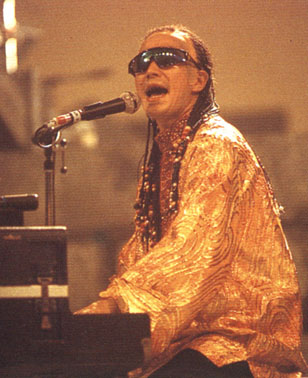
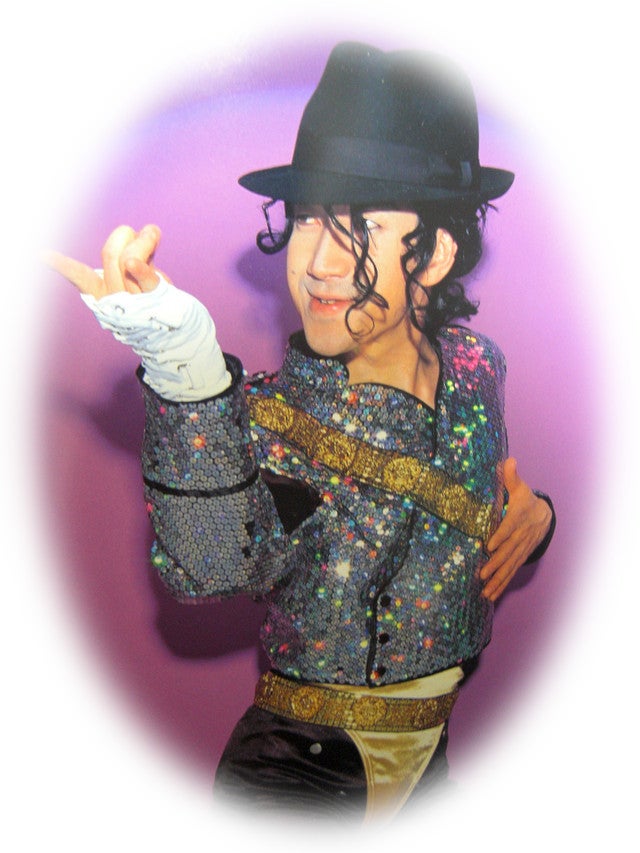
It was around this time that I also wanted to start dancing more properly. So I hired backing singers who could also dance, and in addition to band rehearsals, we started doing dance rehearsals. Yeah… It was from 1993 onwards that I started dancing. But after doing that for a couple of years, I finally realized that it wasn’t something that people wanted to see. (laughs)
— Really? I’m not so sure about that…
KAN: Yeah. I’ll leave that stuff to EXILE. (laughs)
— It sounds like there were quite a few twists and turns during these few years.
KAN: Of course there would be—I finally started thinking more deeply about things. I didn’t know anything in the beginning. Even when I felt something wasn’t right, I would always just push those thoughts aside and say, “Thank you very much.”
But little by little, I started seeing how things would come about in life, or like… If you do this, it produces that effect. You start recognizing both the good and the bad influences. So my way of thinking was gradually starting to take shape, and that was very difficult. Things that used to be just vague suspicions would become clear suspicions, and when you realize it’s something you can’t fix… That’s a very unpleasant feeling.
But it goes both ways—there were things I couldn’t do before that I was now able to express, and that’s a lot of fun. There were instances of that too, of course. Your environment changes, your age changes… I was just turning 30 around this time.
— Your seventh album TOKYOMAN came a year and nine months after your previous one.
KAN: Yeah. It’s like, “Hey, what happened?” Up until that point I’d released six albums in four years, and suddenly I just realized that pace was no longer doable, mentally or otherwise.
— Understandably so. Was it maybe that up until that point you’d always had that “subject” to write about, and now that she was gone it also meant that your motivation was gone?
KAN: Probably, yeah. Poor me. (laughs)
But I put a lot of time into TOKYOMAN, and this one also has a bunch of good songs. “Kujaku“—that’s a song I wrote just to have something to dance to live, and… Looking through the tracklist like this, I’m going, “Ahh, I see. I remember now what was happening at the time.”
— It’s something only you would know. “Album” really is the right word for it.
KAN: Absolutely. (looking through the list of songs) Mm-mmh, yeah… Ah, that’s right… Oh yeah, that was all a bit complicated. Fu fu fu. I see, I see…!
— Stop reminiscing all by yourself. (laughs)
KAN: One key thing for me was hearing ASKA’s “Hajimari wa Itsumo Ame” in 1991. That song really had an impact on me. I heard it on this Panasonic stereo commercial, and just for those 15 seconds, I remember thinking, “What is this song?” I was then given the single by a director at FM802.
— What was it that you liked about it especially?
KAN: It’s really just that I was so mentally fragile around that time.
— It resonated with you.
KAN: It really did. Poor me. (laughs)
After that, I began listening to both his material as well as CHAGE&ASKA, and gradually I started listening more properly to other Japanese music too. Ah, although I did use to listen to TULIP back in sixth grade. That was the one exception. But once I started middle school and got into The Beatles, it was always Western music only—until finally, 16 years later in 1991, I discovered ASKA.
I suppose another factor was me making more and more musician friends—they’d always be sending me new releases that they’d worked on. Now that I was constantly thinking about my own work, I was always curious to hear what other people were making as well. Makihara Noriyuki, Mr.Children… I was listening to more and more Japanese artists.
— Speaking of Makihara Noriyuki, do you feel any sense of rivalry towards him considering the things you have in common? You’re both of the same generation, you’re both solo artists, you both play the piano…
KAN: Not in the least. Since the very beginning I never thought I had a chance at winning against Makihara. His lyrics, compositions, vocals, arrangements… Everything is of such high quality, and he just keeps putting out amazing works.
So yes, me starting to listen to Japanese music—that really was a big change.
— Were you influenced by those aforementioned artists?
KAN: I wrote “Moon” with the intention of making something ASKA-esque. I got ASKA himself to sing it at a show I did in 2010.
— That’s great. Next up was your eighth album, Yowai Otoko no Katai Ishi.
KAN: That was made in 1992 and released in ’93, and that along with my next album Shinonome (’94)… Those were made during what was another difficult period for me.
— Now that you mention it, I kind of got the impression that you were a bit tense during this time.
KAN: Tense? (laughs) Yeah… maybe I was.
At any rate, from the label’s point of view, it was apparently a big problem how there had been a two-year break between TOKYOMAN and the previous album. As a result, Yowai Otoko and Shinonome came out in fairly quick succession, so in my mind, they’re basically a double album. With any of my other songs I can recall which song is on which album, but with the songs from this period I can only remember that it’s from either one of those two albums. That’s how close together they were made.
This was also the period in my life when I was drinking the most. (laughs)
— When did you get back on your feet?
KAN: (while looking at the CD of 1996 album MAN) Probably around this time? This isn’t a particularly heavy album, this one.
— And it just somehow happened naturally?
KAN: I think so. And then I met my wife in 1997.
— She came in as a performer for your live shows.
KAN: Right. Then I was running on pure marriage power after that. (laughs)
— You were having a lot of fun.
KAN: There’s so much life in my albums from that time. (laughs) I mean, just look at “Oxanne” or “Dora Dora Drive Daisakusen” (from 1998 album TIGERSONGWRITER).
— I’m glad you were able to bounce back.
KAN: Then in the summer of 1998, I visited Russia for the first time.
Billy Joel had been to perform concerts in Moscow and St. Petersburg in 1987. He released a live album of that visit, and ever since then I’d been so curious about this place called the Soviet Union. But then the Soviet Union collapsed, and I was seeing all this footage of Lenin statues being torn down—I didn’t really understand what it all meant, but I remember thinking it seemed very rude. Then I gradually came to know more, and I started wanting to visit Russia myself. But the cost of travel back then was so expensive. Although, wait… Actually, I think I might’ve just used miles. (laughs)
Visiting Moscow for the first time was so nice. I really liked it—it was like, “So this is Russia!” The song “Kurenai no Uta” (from 1999 album KREMLINMAN) is a song that was inspired by Russia.
— You also did a club tour in 1998.
KAN: Yes. The concert hall tour we did in 1992 had the highest number of performances, but then the audience numbers started to drop. By 1997, we were down to just 13 dates, and in 1998, I decided to cut it down to just five band members and try to hit as many places as we could. Our opening act was Bon Marché. (Note: KAN’s humorous “high visual kei” band—”high” because their ages were high.)
At first we were doing them as all-standing shows, but when we did that, it meant that people would be lining up early, and once they’d secured their spots, they couldn’t move anywhere until the show started, right? I felt like that was something I shouldn’t be doing, and so we switched to seated shows in 1999, I think it was. Or wait… Maybe I’m misremembering…
— What were those shows like?
KAN: We couldn’t do any stage production beyond the actual performance—it had to be built solely around the five of us playing. But that in itself pushed me in many ways to get creative, so even that was a good experience. Oh, although we were still using sequencing in certain songs.
But, it was… I was beginning to have doubts. Like, “Is it really okay to keep going like this?”
— Meaning, your musical career as a whole?
KAN: Yeah. “Marriage power” had helped me push through TIGERSONGWRITER and KREMLINMAN a year later in 1999, but now they were telling me that if I didn’t release an album a year, they would even cut back on my touring schedule. Even now, there was still this expectation that I had to release a new album every year. I didn’t feel like I could keep going at that pace.
Something that really made me think that I was not in a good place was… You know how when you’re doing radio and you’ll get sampler CDs from the guests who come on your show? Well, suddenly I just didn’t feel like listening to them in the least. I was doing what I was doing because I liked doing it, and yet, there were all these CDs that I hadn’t heard yet, and it didn’t make me feel anything. I thought, “Okay, this is definitely not normal.”
So then, I was a bit… I kind of started to feel like I wanted to take a break. I think this was around the year 2000. If I was to keep going at this pace, I felt like I wouldn’t be able to keep doing music for very much longer. It just wasn’t good for me as a musician, I thought.
— Was getting married a factor as well?
KAN: I wonder…? Well, for starters, after I met my wife, I was no longer going out drinking in the middle of the night at least. Up until that point, I was constantly going out for drinks with female friends, all smiles and stuff, and that stopped. Marriage comes with all kinds of changes, of course.
So perhaps it was that all these doubts which had previously had no reason to come out… were now coming out. (laughs)
— It seems that way. With your life environment changing in such a distinct way, it’s no wonder it might affect your mental state. Still, where on earth did the idea to move to Paris come from?
KAN: I just felt like going somewhere completely different. Quite simply, I had an admiration for Paris. While I was also really into Russia—having just been there not long before—realistically speaking, I felt that actually living there would’ve been difficult. Meanwhile, I’d traveled to Paris many times before.
But the fact that the company actually said OK to me going, that’s the amazing thing. And it’s all thanks to Tsunku—really, it’s because of his efforts in convincing them that I was able to take the time off. I’m not kidding. Ultimately, the company basically said, “All right, why don’t you just go and take it easy for a while?”
— Did you have a fixed length of stay in mind?
KAN: No. But after two years had passed, when I told them I wanted to stay for maybe one more year, they angrily said, “Enough is enough!” I thought, “Yeah, fair enough…” (laughs)
— Before that, though, you released Gleam & Squeeze in 2001.
KAN: By then it was already decided that I was going to France, so for me, I was just in this mindset of, “Once I get this out of the way, I’ll finally get to go!” There are a few tracks on it that I feel could’ve been better…
— There are?
KAN: (whispering) Some of the songs aren’t great… (laughs) Like, the lyrics are a bit slapped together. It’s not terrific.
— Why did it come to that?
KAN: Because I just wanted to go to Paris. (laughs)
— Your mind was already over there.
KAN: But then again, “Tokyo Nettai SQUEEZE” or “Saru to Inu no Salsa“—those are really great songs. Even Sakurai Kazutoshi from Mr.Children was giving his praise, saying, “When I first started listening to it, I just assumed something funny was about to begin… But by the time it finished, I was deeply moved.”
