This is the second part of a comprehensive, career-spanning interview with KAN. It comes from a book entitled KAN in the BOOK which was published in 2020.
Text: Morita Kyoko
English translation: Henkka
KAN: Website, Twitter, YouTube
Note: You can buy KAN’s physical releases on CDJapan.
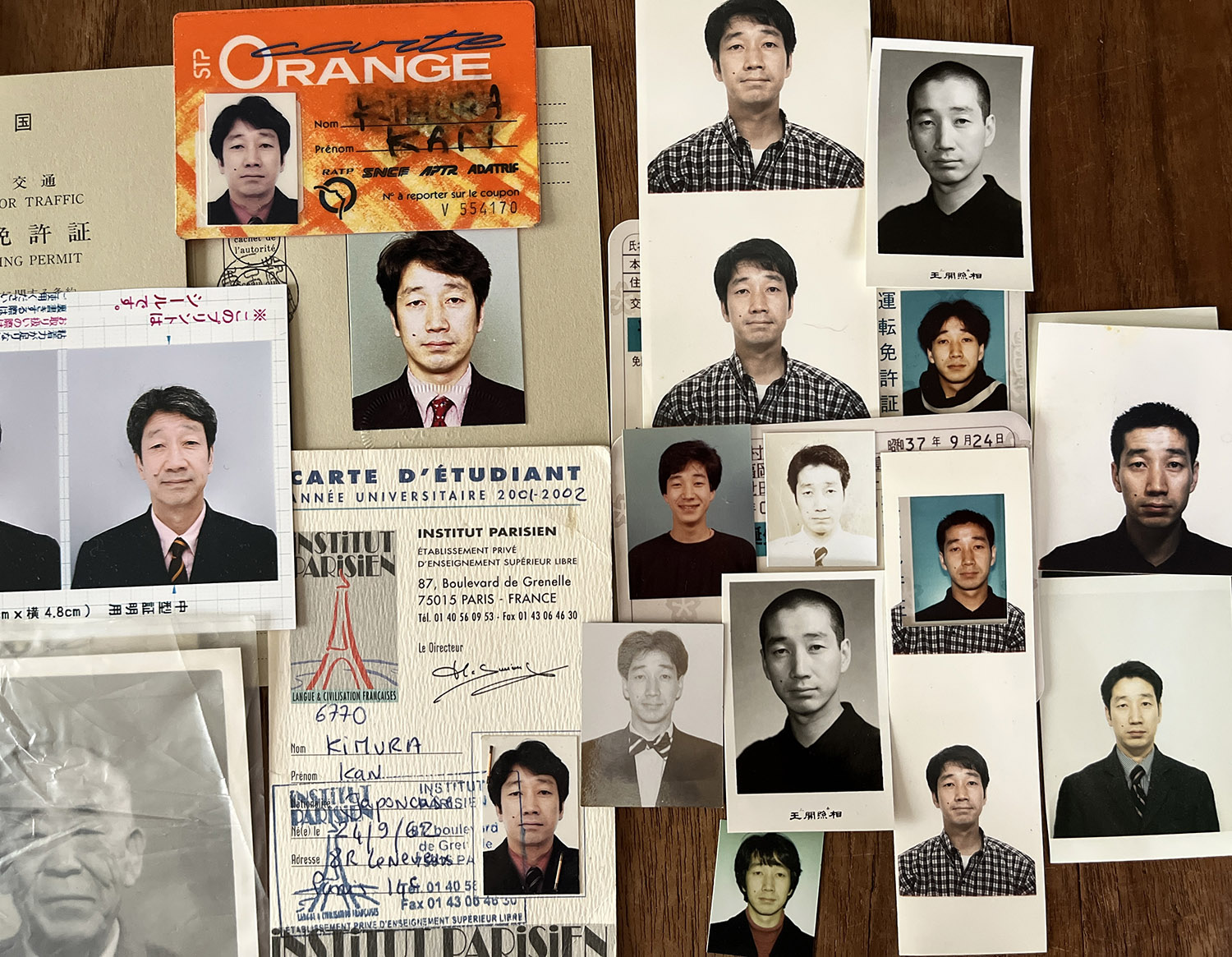
2002–2004
— I’d like to ask you about your life in Paris.
KAN: I think it was around 1994 that I first started traveling to all sorts of different countries. Little by little, I began to feel like I wanted to try living abroad. And so, at the end of February 2002, I moved to France.
I started out by going to language school. In those early stages there were a few Japanese students, a Brazilian, a Nigerian, a Filipino, a Korean—our class of around ten people.
Japanese people are diligent when it comes to studying, but we tend to not really speak up, right? The teacher would ask the class a question and the students from all the other countries would be quick to respond, but of course all their answers would be wrong. Finally, they’d ask one of us Japanese, and we’d give the correct answer. In the beginning, that is.
But then, as time went on, the people from alphabet-based countries would start to get the hang of it. Someone from like Italy would go, “Oh, I see. So that’s how French works.” Then they would start improving quickly. That’s when the Japanese learners would start to struggle, because it becomes so complex. After three or four months, I couldn’t even keep up anymore. Getting back to my apartment, I’d have to spend three or four hours just reviewing the day’s material and preparing for the following day’s lesson. I was really having a hard time.
Soon enough, I’d be thinking to myself, “Shouldn’t I just be taking piano lessons instead?” (laughs)
— Doing some course correction.
KAN: It’s not like I was going to be working in France anyway.
— But you did have some speaking ability at that point, right?
KAN: Well, simple stuff, yeah, but it had become punishingly difficult. So I quit language school. (laughs) Meanwhile, my wife was only becoming more and more fluent. Language learning really does come down to one’s aptitude.
So then I thought I might start going to music school instead. My wife had this pianist friend, Yumi, who was also living in Paris, so we went to have dinner together. As we were trying to catch a taxi on the way back, the three of us just loitering about, this white guy who was out walking his dog approached us and asked us what we were doing. We told him we couldn’t find a taxi, so he went out of his way to help us find one.
Just as I was thinking to myself, “What a great guy,” he was actually exchanging contact information with Yumi. Before I knew it, the two had started dating. (laughs)
— Huh?! That’s like something out of a TV drama!
KAN: So that American guy—his name’s Jimmy—he was a photographer and DJ, and he was already a big Japan fan, being very interested in all things Japanese. So when he saw some Japanese people having trouble out on the street, that’s why he came up to help us. Even the dog he was walking at the time was named Sumo. (laughs)
So I was telling him about how I wanted to get into music school, and later I would wind up enrolling mid-course at this school called École Normale. Yumi had previously been going there herself, and so we were supposed to go talk to them together. But upon hearing that, her boyfriend Jimmy insisted that there was no way they’d say yes if it was just the two of us, and he offered to tag along.
Once we got there, Yumi was talking to the receptionist, explaining to them in French how I was looking to enroll mid-course, but they told her it was impossible. Suddenly, Jimmy just blew up, yelling at the receptionist in English, demanding to speak to the school principal. And somehow, we actually got to meet with the principal himself.
Jimmy—knowing how French people aren’t the best English-speakers—was talking to him in all English, going, “He’s the most famous musician in all of Japan, and he specifically chose this school! Why are you refusing to let him enroll?!” The principal then said, “Okay, play us something.” My heart racing, I played him a Bach invention or something, and he went, “When do you want to start?” Without a moment’s delay, Jimmy replied, “Tomorrow.” I was going, “T-t-tomorrow…?!” (laughs)
The principal then phoned this teacher by the name of Marc André on the spot, and I was given the OK.
— Wow. So were it not for Jimmy…
KAN: I wouldn’t have been able to enroll mid-course. I would’ve had to wait until the next term.
— Were they one-on-one lessons?
KAN: The lessons themselves were private lessons, but there were also a number of other required credits in addition to the lessons. For those, it would be about 10 to 20 people from the piano department as well as other departments, all gathered in one classroom for our instruction.
— In French?
KAN: Yeah. I already knew all the music theory—if anything, it felt like I was there to take French lessons, learning how to say all those terms in French.
Before my private lessons, there would always be this French guy called Steve in the classroom. This Tamura Masakazu-looking guy…
— How cool. (laughs)
KAN: So every time I went in, Steve would be there taking his lesson—I’d always get to watch the last ten minutes or so. And around every other time, he’d be having an argument with the teacher. (laughs) I assume they were arguing about his playing or expression, and it was always… (imitating French) “◎△※$%&…,” and he’d slam his score shut, they’d shake hands, and he’d leave. (laughs) Then it’d be my turn. The teacher, looking all fed-up, would notice me and say, “Okay, let’s begin,” and we’d do the lesson. After me, it would be this Chinese girl, Wen-chan.
But in the two years I was going there, there were three or four times when the teacher just never showed up. So one day when I walked in, I found Steve in there all by himself. I phoned the teacher, and he was still at home—he said he would head out right away. (laughs) So we had to wait around for an hour or so. As we were waiting, Wen-chan showed up. She and Steve had heard from the teacher something about me being a working musician in Japan, so she asked me what exactly I did back home. Naturally, there was a piano there, so I played them little bits and pieces of my stuff.
What with me having a bunch of original songs, no matter the home country of the person who’s asking, I should have been able to just proudly showcase the kind of music I usually do. But the fact that I couldn’t do that, it left such a bad taste in my mouth…
— When you say you played them bits and pieces, was that without singing?
KAN: No, I’m pretty sure I did sing something too. At least a chorus or so.
— So you were, what—you were embarrassed?
KAN: Well, it’s… For 10-odd years prior to that, I had been a professional musician in Japan, and I thought it was just so uncool of me how I couldn’t even fearlessly demonstrate to them what I was all about.
So the first thing I thought was, once I got back to Japan, I’d have to start doing piano-and-vocal performances.
— You not being able to demonstrate what you could do—was it due to lack of confidence?
KAN: I guess so, yeah. Had I the courage, then surely I would’ve been able to perform something on the spot, even if it was in Japanese. So I strongly felt that I had to at least become able to perform all by myself.
— So that’s what led to your “Hikigatari Battari” piano-and-vocal tour series—and it was all thanks to your teacher being late.
KAN: Right. And it was thanks to Jimmy that I managed to get into the school.
— Surely you could never have even imagined these developments back when you’d first just arrived in France.
KAN: Yeah. To think that I’d start doing those tours just because the teacher never showed up…
— It must’ve felt like something you had to start working on right away.
KAN: Yep. I was going, “This is not good.” (laughs)
— By enrolling at that school, did you make any new discoveries with regards to the piano as an instrument?
KAN: Yeah. When it comes to rock and pop music, you can play whatever you want to play exactly how you like to play it, and that’s okay. But with classical, you’ve got the sheet music which you need to play exactly as-is with zero mistakes—and that’s the bare minimum you must do.
Everyone plays the same sheet music, and then you’re just judged in terms of how you express yourself through your playing. Being able to play this or that song with dramatic flair or whatever—that is how a classical musician’s true ability is determined. It is extremely challenging. For me, being able to play even a short song with zero mistakes is something I would already consider a success. But when you’re a classical musician, that’s only the beginning.
It was really very difficult, and it made me think how glad I was to be doing rock and pop instead. (laughs) Because I get to just do whatever I want, and if I like it, then that is the correct answer. It also made me painfully aware of just how much I’d been leaning on routine up until that point, and it made me more humble about performing in general.
Also, something that made me recognize again my Japanese-ness is… So, when you’re attending school, your thinking is that you just want the teacher to teach you something, right? Well, it turns out that that might actually be a very Asian—especially Japanese—way of thinking. The reason I say that is because with most of the Western students, their motivation was… It felt like they were coming in with a specific list of all the pieces they wanted to become able to play.
One time I was asked what I wanted to play, and I just said, “I don’t know… What would you recommend?” So the teacher went, “Well, how about some Debussy?” Just because Debussy’s old house was right around the corner. (laughs)
— Quite an environment to be taking lessons!
KAN: The house Debussy used to live in really was right there, nearby the school. And downstairs they had a café, so I would often go there to have a beer after my lessons.
— How wonderful. (laughs) How often were you taking classes?
KAN: Lessons would be twice a week, but there’d also be other classes maybe three times a week. That’s how I spent those two years.
— What would you be doing outside of school?
KAN: I was busy doing absolutely nothing. I’d bought a computer which I took there with me, so I learned Photoshop and started making my own photoshopped images. (laughs)
— Around this time, I was doing this magazine called LuckyRaccoon which featured your “Paris Column” serialisation, and sometimes when we were emailing back and forth, you’d send me these quizzes. It would be like a picture of ten or so friends of yours at a home party, and you’d ask me to guess what country each person was from. (laughs)
KAN: Yeah. I was sending those quizzes out to a bunch of my acquaintances, and then I’d announce the results online. I probably did that like three times.
— Checking everyone’s replies and ranking them and everything…
KAN: Like I said, I had nothing to do. (laughs)
— Were you writing songs at the time?
KAN: The company told me that if I was really going to France, I’d have to write them a song a month—they said they’d have one of the girls under the organization sing them. I did send them a few songs initially, but listening back to what I’d written, it was… Ehh… So I just sort of did a fade-out on the whole “sending them songs” thing.
And the rest of the time, I was cooking. I was even doing that serialisation of my recipes in LuckyRaccoon. In any case, I had nothing but time on my hands, so I was cooking a lot. There were some ramen restaurants over there, but they were no good. When I say they weren’t good, what I mean is… This isn’t something that’s limited to just ramen, but apparently, in order to protect the domestic industries in France, they have these systems in place—including regulations on taxes and like how many foreign staff members foreign-owned businesses can have—which make it difficult for business owners who have come in from overseas to make big profits over there.
When I asked a Japanese friend of mine who lives in New York, for example, they said that when a new Japanese food place opens in New York, if the Japanese people who live there don’t approve of it, they’ll be out of business before long. There is fierce competition, and if the local Japanese people say that the food is good, then even the non-Japanese customers will start flooding in. That’s why Japanese food in New York is great, and why in France it’s not.
And that’s why in many cases when a foreigner opens a new business in France, they’re doing so not because they want to get rich or whatever, but because they love Paris and they want to live and work there. When you understand that, you start to appreciate even the taste of their ramen. (laughs) So what with all that, people would be sending me things like instant ramen and nori from Japan, and in order to be able to enjoy it more, I started making my own char siu and stuff. I gradually got better and better at it—I even gave some of my homemade char siu as a birthday present to a Japanese friend.
— Ooh. I think I might be happy to receive that. (laughs)
KAN: They were delighted. Yeah… I was cooking a lot.
— It sounds like a carefree life.
KAN: Apparently, French people are usually very frugal—they’ll be saving money constantly, and then they’ll spend it all on this incredible, luxurious two-week summer vacation. Most of the students I met at school had no money, so we’d mostly gather at my place. But when I was with Japanese friends who were working over there, we’d go to restaurants, always talking about where we should go next, exchanging information on where one might go under such-and-such a budget. That was fun.
What would often happen though is that you’d have some restaurant in mind that sounded promising, but then they’d receive a Michelin star and suddenly it’d be impossible to get a reservation, and it’d be a lot more expensive. I’d think, “Ahh, what a shame…”
KAN: The apartment building I lived in was occupied almost entirely by the landlord’s family. Out of the 10-something units, only three of them were not inhabited by his relatives. The landlord’s nephew, a student, lived on his own right below us, and he was constantly throwing these fêtes—or festivals—but really they were just house parties where people drank and blasted music.
But the chic thing about France is how at the first-floor entrance, instead of apologizing for the noise, he’d instead put up a note that said, “It’s a fête tonight. A glass of champagne awaits you.” That’s their way of saying, you know, “We apologize for any possible noise.” Although everyone would still be thinking, “Dammit with this guy…” (laughs)
— Even if you’re saying the same thing, it matters how you say it. I bet that’s something you can see everywhere in France. Don’t they also have lots of those mobile amusement parks all over the city? Those merry-go-rounds are so cute.
KAN: Yeah, although some are smaller than others of course. Sometimes you’d even see just a lone merry-go-round and nothing else.
— That is so lovely.
KAN: I truly did love Paris. It allowed me the time to slooowly think through a lot of things.
— I bet it’s completely different compared to having a lot of free time in a place like, say, Tokyo.
KAN: Totally different. Having free time on your hands in Tokyo only makes you anxious.
— Yes, you become impatient. Paris really must have been the ideal environment for you.
KAN: This girl who was in the same class as me at the language school had a Japanese boyfriend, and he had originally come there because he wanted to become a garçon—waiter—at a café in Paris. Of course, he’d already been doing the same job back in Japan, but when he first came to Paris he couldn’t find a job at all, and he often came to eat at our place.
But today, he works as a legitimate garçon at Café de Flore, a historic café in Paris that was once frequented by all sorts of writers, painters, and other notable figures. Back when I was living there, they’d only just finally started treating him as a substitute waiter, meaning they might or they might not call him to come in once a week. Several years later, he’s now become the first non-French regular employee at Flore. I think it’s pretty amazing—he moved to a foreign country, decided he wanted to get this job, and he’s actually doing it.
— That really is amazing.
KAN: I myself came back though. (laughs)
— With the company telling you “enough is enough.” (laughs) Have you been back to Paris since then?
KAN: Twice, I think. I brought my mother along in 2008 and in April 2018, although she then passed away in October. I’m so glad I got to take her there.
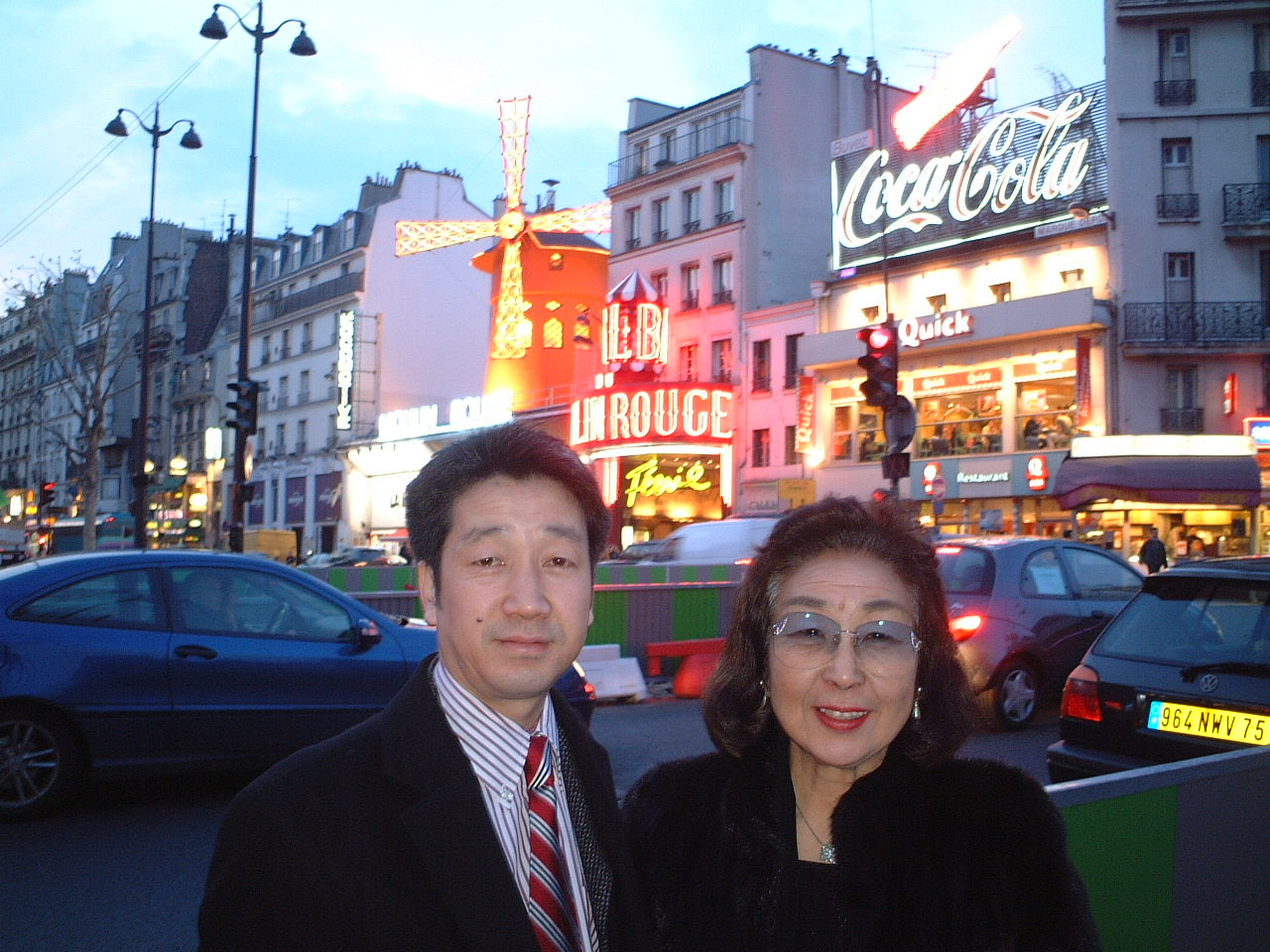
It felt a bit strange how, even though we were just there for travel, I could use the local buses and stuff with no problem since I’d lived there before. That felt funny to me. But revisiting a café I often used to go to when I was living nearby, it’d been renovated and the people had all changed. So that was a bit of a shame. Still, Paris really is a wonderful city.
— Did you have trouble with anything while living there?
KAN: Sure, there were some things, but you get used to it fast. For instance, it’d be common for packages to not arrive when you were expecting them, but since I couldn’t speak the language enough to sort it out, I’d just go, “Oh well, I guess I’ll wait a bit longer…”
— That becomes the norm?
KAN: You get used to it. Before I moved there, I’d often hear people talking about how the French are so mean and how they refuse to speak to you in English.
But that’s really a misunderstanding on the part of Japanese people for thinking all foreigners speak English. They speak French in France. It’s like if a French person suddenly started talking to you—a Japanese person—in English. You’d think, “Why’s this guy speaking to me in English?” (laughs) Although obviously the young people in urban areas nowadays think it’s pretty much essential to be able to speak English.
— I see. The more I hear you talk about it, the more it sounds like you really led a fulfilling life over there.
KAN: It was a long, long trip. The longer I stayed, the more I started to feel like a foreigner.
— Meaning, like you were Japanese?
KAN: Right. I was even eating way more Japanese food over there than I do in Japan. Living in Tokyo, you’ll sometimes notice you’ve only eaten Japanese food once in the past week. When you live in Paris, your body starts to demand more Japanese food.
— You start craving those flavors?
KAN: I think so. That’s why I was cooking a lot more, and I’d be making things like shogayaki and having it with champagne. (laughs)
— How stylish. (laughs) Would you be going to the theater and such?
KAN: Oh yeah, it was constant classical music, ballet, opera… Although I wasn’t a big opera fan. (laughs) But ballet, I was starting to enjoy more and more. I love it. And then I’d be going to classical music concerts too. In terms of rock and pop music, I saw Paul Weller at a club—the same one where some years later almost a hundred people died in a terrorist attack. It’s probably around the size of the Zepp venues in Japan.
Also, just before I came back, I saw Paul McCartney at this soccer stadium. When the intro to “Jet” kicked in and he walked on stage, I remember thinking, “Ahhh, I’m so glad I’m in rock and pop…”
— You then returned in 2004, and that was in…?
KAN: July. “I want to stay longer…” “Enough is enough!” “Okay, fair enough…” (laughs)
And so, it was agreed that once school finished in July, I would return to Japan.
