This is the third and final part of a comprehensive, career-spanning interview with KAN. It comes from a book entitled KAN in the BOOK which was published in 2020.
Please note that whereas the first two parts of this interview are full, 1:1 translations, this part omits certain sections that go into heavy, almost esoteric detail about KAN’s past live events. However, to make up for it, it includes bonus questions throughout the latter half of the article, covering his final three studio albums in much greater detail than what is in the book. These bonus questions are taken from entertainment news site Natalie’s interviews with KAN, and I have taken the liberty of slightly editing them at times to maintain the flow of the conversation.
Text: Morita Kyoko & Natalie (2010, 2011, 2016, 2020)
English translation: Henkka
KAN: Website, Twitter, YouTube
Note: You can buy KAN’s physical releases on CDJapan.
2005–2020
— Your two-and-a-half-year stay in Paris had come to an end.
KAN: The first thing I had to do once I came back was to make an official website.
When I went to France, I had dissolved Kita-Aoyama Image Development, my so-called fanclub—though I didn’t call it that myself—and so I took the opportunity to move away from paper newsletters and do it all online instead. I decided to call it Kita-Aoyama Image Redevelopment. (laughs)
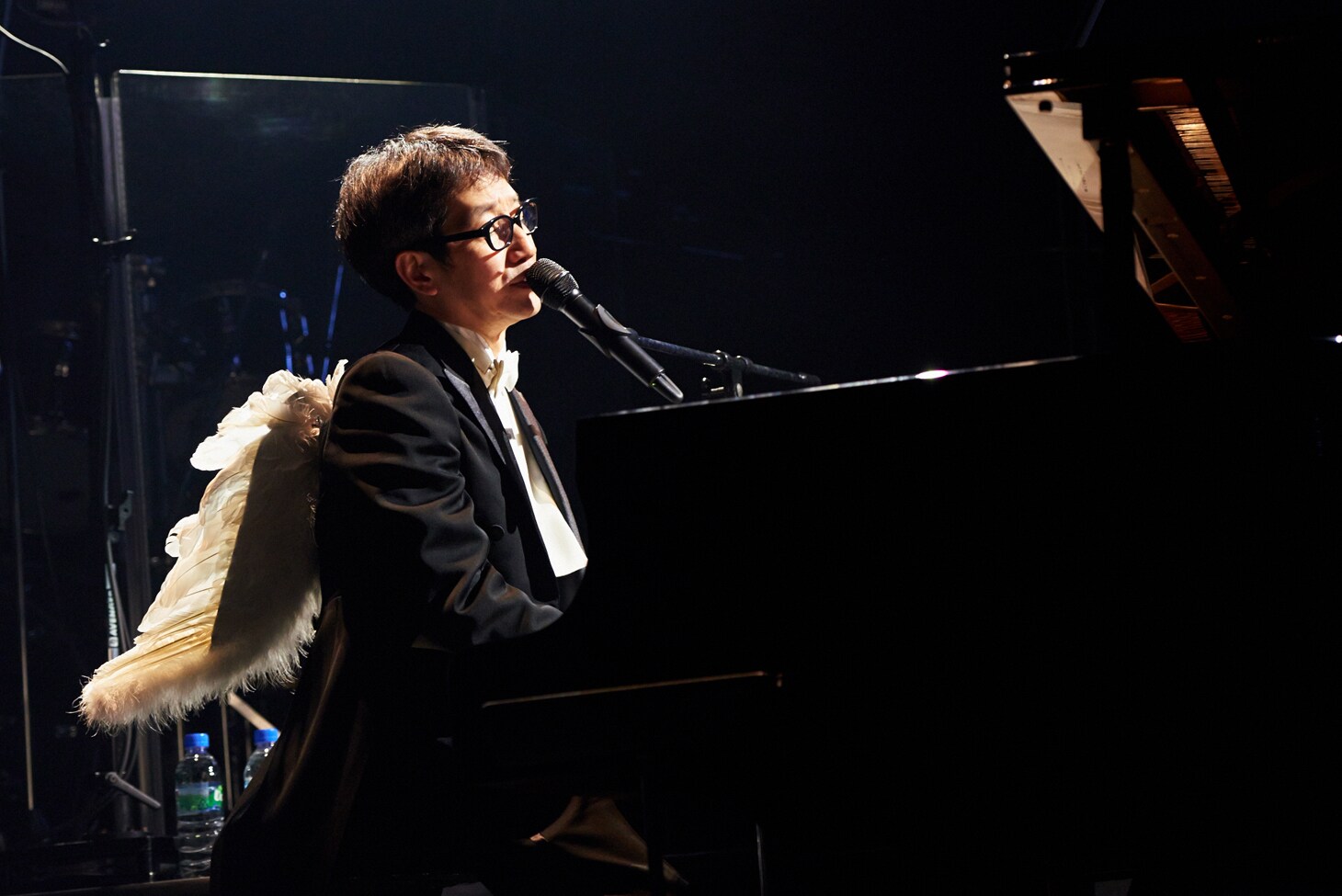
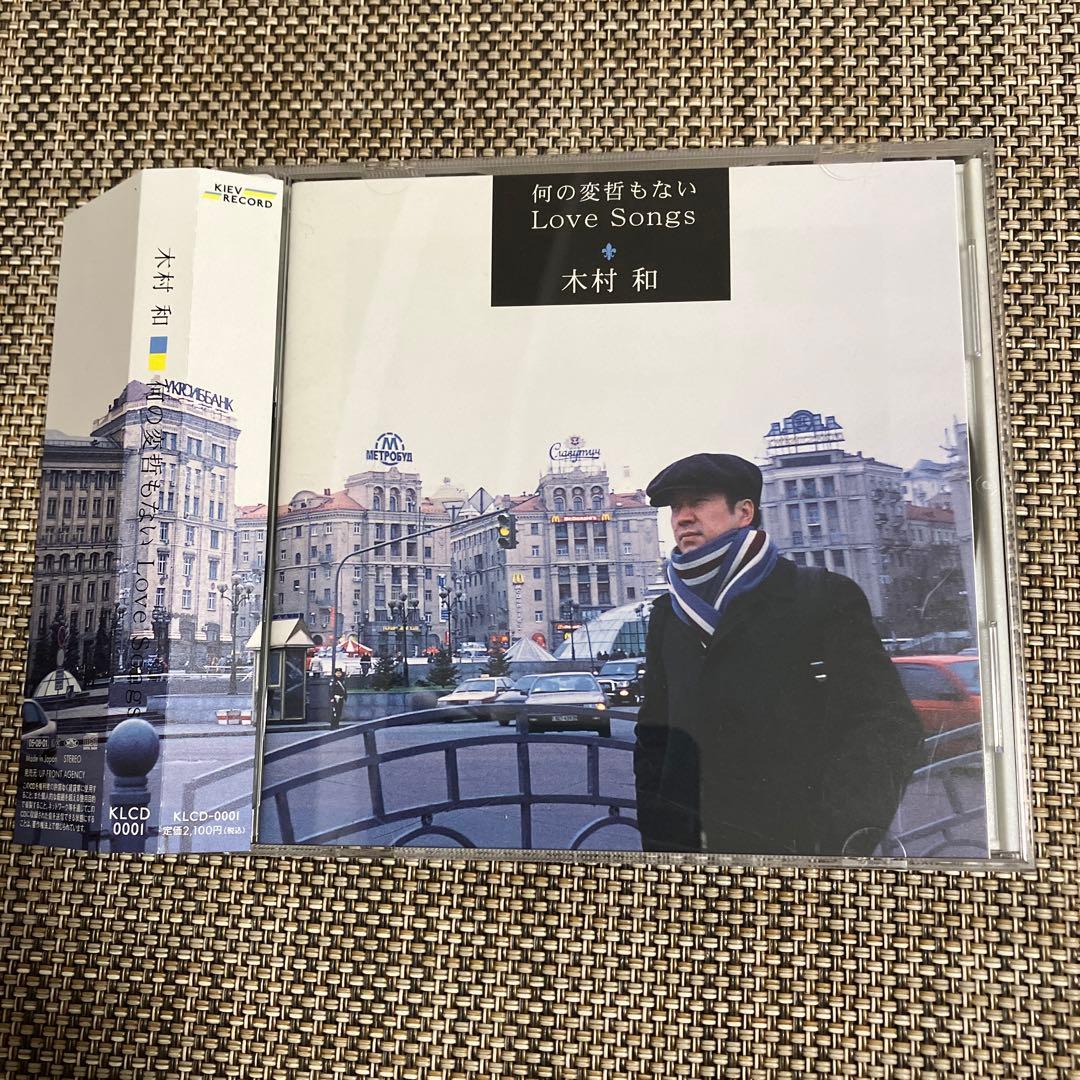
At the same time, because I was determined to start doing piano-and-vocal performances going forward, I made an album of me singing to my own accompaniment. The album, called Nan no Hentetsu mo Nai Love Songs, was only sold through my website.
— And that was not as “KAN” but specifically under the name “Kimura Kan.”
KAN: Well, it was limited edition and everything… The fact that I made a distinction between that and “KAN,” I’m sure I had some reason for doing so, but it couldn’t have been anything too substantial seeing as I can’t even remember now what that reason was. (laughs)
But it did feature two new songs: “Nan no Hentetsu mo Nai Love Song” and “Yukikaze.”
— Those are good songs.
KAN: They are, yes. The album cover and booklet pictures were all taken in Kyiv, Ukraine, using a tripod and timer. (laughs)
— It was released in August 2005, but you actually played your first piano-and-vocal shows before that, right?
KAN: Right. The first one was on March 11 at Sapporo KRAPS HALL, followed by two days at Tokyo MANDALA and then Osaka Banana Hall. And let me tell you, those were some awful shows—in terms of both my singing and my playing. I was so nervous, even all my stage banter was boring. A friend of mine who came to one of those shows even told me, “I got a stomachache just watching you up there.”
So to me, it felt like I had to keep doing it until I could actually pull it off properly. From the beginning, I intended to make “Hikigatari Battari” into a series, and I wanted to only use prime numbers when naming each tour.
Also, from the very beginning, I’d always be practising on stage when the doors opened. I felt like if I had to wait backstage all by myself and then suddenly go up there, feeling all nervous for the first song, it just wouldn’t work. So I thought about how I might best be able to go on stage with a clear mind and—after really thinking about it long and hard—I concluded that I should just be there the whole time, from the moment the doors open. (laughs)
— The first crowds who saw that must’ve been surprised!
KAN: In the beginning, yeah. Nowadays, if it’s someone who’s been to a previous show, they already know what to expect—it’s just par for the course for them. But the first-time goers are always surprised. For them, it’s like… No matter how you look at it, that’s literally the guy you’re there to see up on stage, and yet everyone in the audience is just chatting amongst themselves, not minding him at all. I’m sure it must be unsettling. (laughs)
Also, that year I was invited by Stardust Revue to perform at four of their events. These were summer outdoor events, separate from their regular tours, and I guess they just thought, “Hey, seeing as KAN’s coming back, we should bring him along.”
— So then you would be alternating between full-band shows and piano-and-vocal performances.
KAN: Compared to full-band shows, the thing about the piano-and-vocal performances is that because it’s just you and the piano, you always end up playing mostly the quieter songs. I thought that was a bit of a problem. So now, every time I’m doing those shows, I’m trying my best to include more uptempo songs, and then I just try to talk my way through it. (laughs)
I didn’t use to do “Ai wa Katsu” in the beginning—not until around 2008. When it was just me alone, I could go to more rural places that we couldn’t visit with the full band, and sometimes I’d be playing in towns I hadn’t played in for 20 years. Obviously there would thus be people coming to see me for the first time in quite a while, and of course they’d be looking forward to hearing “Ai wa Katsu.” I figured they’d be disappointed if I didn’t play it. So I wanted to play it for their sake, but for some reason when I tried it, I just wasn’t feeling it. And so I just didn’t play it.
— I see.
KAN: But then I heard a rumor that Angela Aki was doing her own piano-and-vocal cover of “Ai wa Katsu.” So in 2008, when I appeared as guest for Hirai Ken at a “J-WAVE” event, Angela was also performing, and it was just incredible seeing how she captivated everyone at Yoyogi National Stadium all by herself. When I saw that, it’s like it changed my thinking a bit.
The reason I could never seem to play “Ai wa Katsu,” no matter how I tried to arrange it, was because it’s got such a punchy, percussive feel to it. So I gave up, thinking there was no use trying to force the impossible. But then I thought that maybe I was missing the point of what piano-and-vocal performances are actually supposed to be—that maybe it’s more about the human element. I was thinking about it all wrong in feeling that I had to recreate exactly what I was hearing in my head.
Yeah… So that really changed my way of thinking in many ways. People wanted to hear the song, so I thought, “Why don’t I just play it?” And so I did. I’ve been doing it at the piano-and-vocal shows since 2009.
— Angela’s influence on you is pretty remarkable.
KAN: Were it not for her, I wouldn’t be who I am today.
— Listening to you now, it’s kind of surprising just how open you are to outside influence.
KAN: But only if it’s Kikkawa Koji or Angela Aki. (laughs)
— You started alternating between band tours and piano-and-vocal tours, and that was starting in 2006.
KAN: My band had five members at the time, so when I started doing the piano-and-vocal performances, it suddenly felt like I could do anything with that many members, and we stopped using sequenced backing tracks altogether. In order to recreate what you hear on the CDs, we’d sometimes have to use sequencers or hard disk players to cover for certain parts that we couldn’t do with only five members.
We stopped doing that, and instead we spent a lot of time thinking about which sounds in the arrangements were unneeded and which ones were absolutely vital, and we came up with ways to play the songs completely live. But during the full-band shows, there are certain songs where I can’t just be sitting around playing the piano, and so as a result of us stopping the use of backing tracks, it shifted most of the resulting burden to keyboardist Yashiro Tsunehiko. (laughs) But then Yashiro said, “I can’t do backing vocals, so in return I consider it my duty as part of the team to become able to play all these parts by myself.”
So me starting to do the piano-and-vocal was what led me to stop using backing tracks. That was a big change.
— It affected even the band performances.
KAN: Right. When I started doing the piano-and-vocal performances, it made it easier for me to appear at different events too. Within the music industry at the time, the record labels were losing their influence, barriers between artists were starting to come down, and there were suddenly a lot more events happening. It was around this time that I started making more and more appearances like that, which then led me to connecting with other musicians a lot more.
I’d been doing my column in LuckyRaccoon since 2003, and so we decided to do an event for the magazine in 2006. Since you told me you wanted to see me do something with Sakurai Kazutoshi (Mr.Children), the two of us went to a yakitori place for a meeting over drinks. Sakurai really liked my song “Sekai de Ichiban Suki na Hito,” so he said he wanted to sing it all by himself. I’m not a big fan of dividing up vocals either, so I said I would sing some Mr.Children too—we’d both sing each other’s songs. It was decided right then and there.
— How was the experience of performing together?
KAN: Sakurai is just on a whole other level in terms of his stance and sense of responsibility towards music. Even just the iron-tight hold he has on his singing… It’s not just that he has a good voice or that he’s a good singer—it’s something else. I think it’s pretty amazing.
When I heard him singing “Sekai de Ichiban Suki na Hito,” I thought, “Oh, so that’s how you’re supposed to sing that song.” (laughs)
— He really does sing every song as if it were his own.
KAN: The way it felt to me was that when Sakurai sings “Sekai de Ichiban Suki na Hito,” he’s literally thinking about his sekai de ichiban suki na hito—”the person I love the most in the whole world.” Meanwhile, when I’m singing it, I’m just thinking about the pitch. Like, “If I let myself get distracted by that F-sharp, the B ends up going flat.” That kind of thing. So it’s no wonder people wouldn’t be moved when I sing it. (laughs) At least back then, that is.
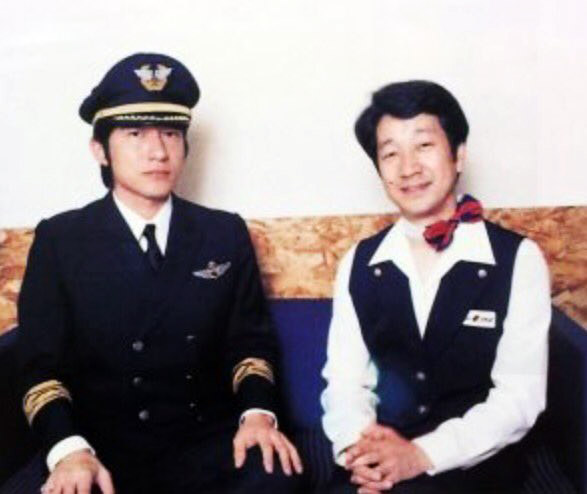
— This was also your legendary Pilot & Stewardess performance.
KAN: You told us to give a name for our unit, and because there were other bands like JET-KI and plane on the lineup, I said, “If we’re going along with the aviation theme, then how about Pilot & Stewardess?” (laughs) Sakurai went, “Hey, that’s good!”
But then I said, “Hold on now. If we call ourselves that, we’re gonna have to wear the outfits too.” Because you can’t be in a unit called “Pilot & Stewardess” without dressing the part. So then, looking all smug, Sakurai commented, “Okay, but I think my chest is a little broad for me to be the stewardess…” (laughs)
— Going back a bit, in 2006, you released Harukanaru Mawarimichi no Mukou de. It was your first original album in five years.
KAN: Yes. “Oshiete Okure” and the title track are two songs I’d already written before going to Paris.
Do you remember when we had that discussion with Sakurai and you asked me which lyric of mine had taken the longest to write? When I told you it took me nine years to write “Oshiete Okure,” Sakurai just burst out laughing. “Nani ga dou natte kou nacchatta no” (“how did everything get so messed up?“)—it takes nine years to write that. “Fundari kettari acchi muite hoi” (“when it rains, it pours“)—what, are you saying it’s weird for that to take someone nine years? (laughs)
— Did it have different lyrics before?
KAN: No, for the longest time it just didn’t have any lyrics at all. And with the song “Harukanaru Mawarimichi no Mukou de,” I’d already recorded the instrumental before but I just never had lyrics for it.
— What’s your favorite song on the album?
KAN: I don’t know which one is my favorite, but “Kirigirisu” is the kind of song I would have a hard time writing again even if I tried.
— That is an amazing song. The ideas in the lyrics are great too. Parts of it are a bit tricky, but then in a way, it’s almost kind of the opposite too. Meanwhile, “Sekai de Ichiban Suki na Hito” is a classic love song. It’s another great one.
KAN: My agency has a lot of young female artists, and so they asked me—although not just me—to write them a bunch of songs without me even knowing who was going to end up singing what. This was especially after I’d just gotten back from Paris.
So, I started writing that song with the intention of making something not overly complicated, but as I was working on it, I decided it was one that I wanted to sing myself.
— The lyrics are great too. Did you have any special thoughts particularly in regards to making this album?
KAN: Over the years, I’ve come to think more and more that I only ever want to put out good songs, and I think this album reflects that.
“Endless,” for instance—no one in the world except me or Hamada Shogo could’ve written a song like that. (laughs) I’ve never even met him, but I felt that I had to get his permission to release the song. So I sent him a demo tape along with a letter saying it was going to include his name in the lyrics, and he replied right away saying he was perfectly fine with it. Talk about being generous.
Sakurai scolded me for it though. “You can’t release this!” (laughs)
— Sakurai is himself a big Hamada fan.
KAN: Yes. According to him, his Hamada impression is better than mine. (laughs)
— How much do you care about what people think of you?
KAN: Which part? I mean, events and albums are two totally separate things. With albums, you can see the general reception to it when you look at the sales numbers, right? Of course I care about that. Of course I want my albums to sell, and I want as many people as possible to listen to my music.
But events are a completely separate thing. All that matters to me is that I play well. Who cares what I’m wearing? (laughs)
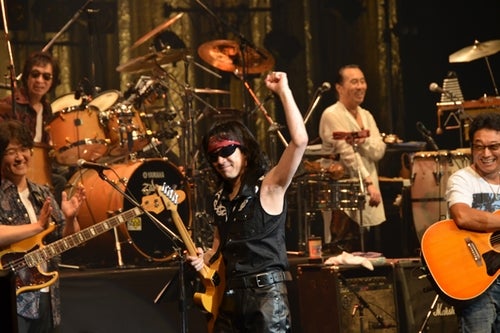
— Speaking of which, you also wore different costumes to “ap bank fes” every year.
KAN: For the first one (in 2007), I came out in American football gear. Even that was shocking enough for the audience back then. (laughs)

— Oh, looking back… That’s right.
KAN: After American football, I did bagpipes (2008), police officer (2010), school uniform (2011), and armor and helmet (2012).

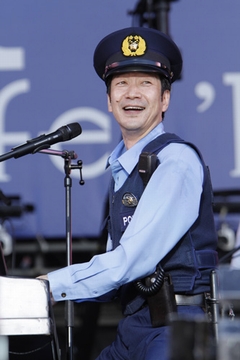
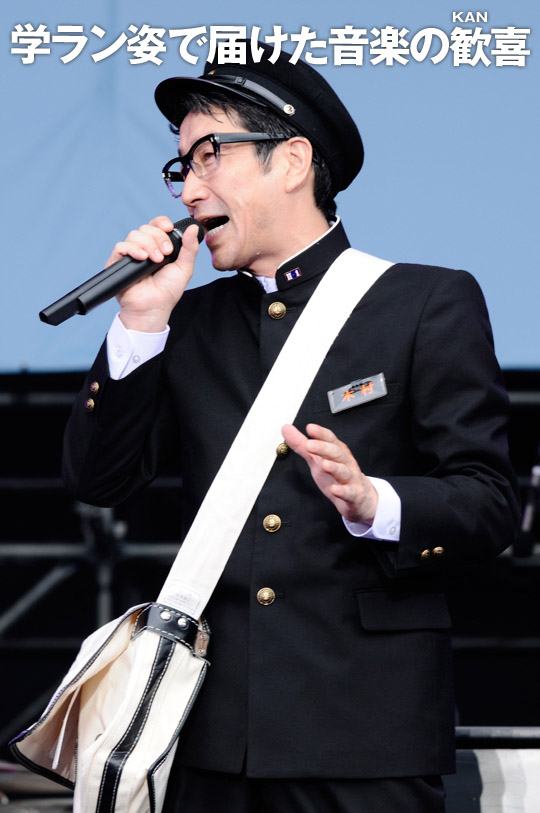
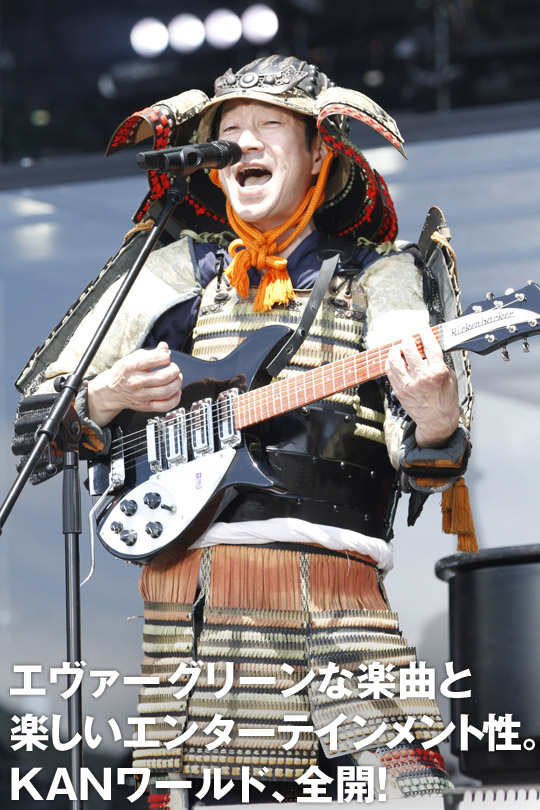
— On a side note… Come to think of it, it kind of seems like you don’t really perform with female artists that often.
KAN: That’s, well… That’s kind of a tricky one to explain… (laughs)
— Why is that?
KAN: I mean, there are of course certain artists that I really like. aiko is great, I wouldn’t be who I am today were it not for Angela Aki, and Mitamura Chiharu is incredibly talented as well.
But I guess what it is is that I end up getting too conscious of it…
— Of them being women?
KAN: Or, like, I don’t want any of them to dislike me. (laughs)
I recently played for the first time with Mitamura Chiharu at this “STV” event, and after we’d gone through everything in the meeting, I asked if there was anything else, and she revealed that she could also play the violin. I said, “Ooh, you’ve gone and said it now…!” (laughs)
So she then ended up having to play violin on four songs, and as she was going to play such an important role in the band, I felt that she shouldn’t be the only woman there, so I asked Araki Yuko to play drums. We’d spoken before about wanting to work together, so I figured it was a good opportunity.
— You’re considerate even about those kinds of things.
KAN: But anyway, playing events with all sorts of different people is a very big part of what I do now.
It has made me think about things I never used to think about before, like how to structure the event as a whole and so on, and whenever I’m watching the other musicians I’m playing with, I’m always so impressed. Some of them can read music and some of them can’t, but even the ones who can’t will have their own ways of learning the material, and it’s just amazing to see all these genuine professionals at work.
— And these various connections you’ve made have influenced your own work as well.
KAN: Everyone is different in terms of their age and their experiences, so they all think differently. But I just think it’s great how I now have so many more opportunities to play with all kinds of people.
And Stardust Revue have played a big role in that. I have of course done the “Kaze no Humming” event with them, but also projects involving people like Sugiyama Kiyotaka and Baba Toshihide, and they’ve all been great.
— Since when have you been associated with Stardust Revue?
KAN: Since 1988.
The management company I was with at the time went bankrupt, and what is now called Up-Front took over the entire operation, including all the staff, and Stardust Revue were also signed with them at the time. Although they later went independent in 2000.
— You’re particularly close with Nemoto Kaname, right?
KAN: Yeah. He formed the band with people he’d been with since middle and high school, and they’ve been together for 38 years since their debut. It takes a certain kind of character to pull that off; like a certain bigness of heart or something.
Even in concert, he just sweeps everything away with his voice. Just that overwhelming power of his voice that makes audiences want to come back again and again—that’s all Kaname’s personality, I feel. That’s what’s so amazing about him. He’s very professional about performing. They play with all sorts of different people at their live events, and in constantly performing songs of people with a totally different musical approach from theirs, I feel like he’s always trying to raise the quality of his own band.
— What kind of a person is he to you on a personal level?
KAN: He’s always the same person no matter if it’s on stage or on radio or wherever. That’s just who he is. I’ve already decided that Kaname is going to deliver the eulogy at my funeral. (laughs)
— Let’s talk some more about your albums. In 2010, you released Kanchigai mo Hanahadashii Watashi no Jinsei. It’s another good album.
KAN: Well, ultimately you shouldn’t release an album unless you genuinely thought it was good.
— Yes. They’re all great songs. I love “Peanuts.”
KAN: That’s such a sad one. (laughs)
— The first track on the album, “REGIKOSTAR ~Regikostar no Shigeki~,” is something that’s bound to catch listeners off-guard. (laughs) You can clearly hear the Perfume and Nakata Yasutaka influence. (Natalie)
KAN: That’s only because I’m a huge fan.
For instance, I might think, “I want this song to have that Billy Joel feel,” or, “I want this to have a similar vibe to that one Beatles tune,” and then I’ll try writing something in that vein. That’s what I’ve always been doing. “REGIKOSTAR ~Regikostar no Shigeki~” is just a recent example of the same thing.
— While it has that electro sound that’s prevalent in today’s club music, what struck me about it were the intricately crafted melodies and chord progressions which are so unique to you—someone who’s been writing pop music for so many years. The lyrics also give the impression that you really thought about how the words themselves sound. (N)
KAN: I didn’t feel like I was doing anything particularly new with the song itself. Were it not for the sound and vocal processing, it wouldn’t be that much different from any other song of mine. At most, people might think, “Wow, he sure wrote a pretty cute song here.” (laughs)
But when it came to writing like the little melodic turns and stuff, there I was consciously thinking, “If this was a Perfume song, it’d go like this“—with things like the hook in the beginning, or the section with a melody consisting only of quarter notes. Or how the same melody constantly repeats in the chorus, but the chord progression still keeps it moving. Just the sheer range of Nakata’s melodic ideas is incredible.
— Still, I think it’s a very “KAN-like” move of you to open the album with this track specifically. (N)
KAN: I did that because I’m taking it seriously. Had I put it as like the sixth or seventh track, people would listen to it and just think, “Okay, he threw in some random weird song.” I really didn’t want anyone to think that. So for me, I felt that my only choice was to put it as the opening track.
— The songs are all so different from one another—the album’s just filled with so much variety. On the one hand you’ve got “REGIKOSTAR ~Regikostar no Shigeki~,” but then you’ve also got something like “Shogaku 3nensei.” It’s very ambitious.
KAN: I do think “Shogaku 3nensei” is another pretty terrific song. Even Kobayashi Takeshi went, “You wrote all that on your own? That’s amazing!” I finally got his acknowledgment. (laughs)
It also has the song I wrote with ASKA, “Yoteidoori ni Guuzen ni.” It couldn’t be more different, the way the two of us write songs. I write songs in my head, but ASKA, he just sits at the piano as he records himself playing and singing, then he listens back to it and goes, “Hey, I liked that one bit I did there,” and he listens to it again. It’s basically just him haphazardly recording whatever might come out of him at any given time. I would then just take all that stuff and piece it together.
Well, I’m sure he has various songwriting methods. But at least with this song, all the stuff around the middle was written like that.
— So you both worked on the composition? (N)
KAN: Yes. First, I wrote two melody motifs, ASKA wrote the continuation to one of them, and then I wrote the continuation of that. We repeated that correspondance maybe two times, and then I asked ASKA to write another, completely separate thing.
I did the structure and arrangement, and then we just built everything on top. It took about two months for the song to take shape, and then we wrote the lyrics after that. Before we did though, we had a deliberate conversation about what we ought to be singing about.
— Had the two of you ever worked together this closely before? (N)
KAN: We’d go and see each other’s shows and we’d go on each other’s radio shows as guests, but this was the first time we’d really sat down and talked for extended periods of time.
— As two artists speaking to one another? (N)
KAN: I didn’t think of us as fellow artists—it simply felt like I was speaking with ASKA. Of course, we talked about what we wanted to sing about in this song, but he also told me about how he used to do kendo in high school and things like that. We both felt that we had to understand each other. Otherwise, you can’t really write lyrics with someone.
So we spent a lot of time doing that, and then I made this tentative draft for the lyrics based on those discussions. “Something like this maybe?” Using that as the base, we then worked on it together after that.
— Having written this song with him, what are your thoughts about ASKA now as a person? (N)
KAN: He really is just something else. The way he expresses himself through his words in his work is often so unique, it’s almost to the point of being philosophical.
With both the melody and the lyrics, I wanted to make this song so that it wouldn’t feel out of place even if he were to sing it as one of his own, solo songs. Seeing as I was collaborating with the man, I approached it as if I had myself become ASKA. (laughs)
— This album also includes “Yokereba Issho ni.”
KAN: Yes. I wanted to write a song like Tortoise Matsumoto (Ulfuls)—something really simple but also with impact. I wanted to make something where the same melody just keeps repeating over and over again, but then it ended up becoming super long. (laughs) I do think it’s another good song.
I did get a lot of pushback on the album title though—Kanchigai mo Hanahadashii Watashi no Jinsei (My Life of Extreme Misunderstandings). Even Kaname went, “What the hell’s with this title?!” (laughs) When I went out drinking with Ohashi Takuya (Sukima Switch), he said, “All the songs are so good. It’s such a great album. So I’m just gonna say it: the title sucks.”
It doesn’t really have a deep meaning or anything. It’s just something I came up with.
— I see. It’s true that it is a bit difficult to memorize…
KAN: Don’t memorize it if you don’t want to. (laughs)
— Understood. (laughs)
KAN: Spoken like a proper authoritarian…
— But in that respect, I thought 6×9=53 (released February 2016) to be a very well-crafted album title.
KAN: I’m not sure there are many people who would agree…
— Likewise with the tour title at that time: “Rock Gojiyuu ni (6×9=52)“. Did you have both titles in mind from the start?
KAN: Nope. They just popped into my head. “Yeah, this works.”
— You collaborated with a lot of different musicians on this album.
KAN: That too just came about naturally.
I’d always had this vague idea about collaborating with TRICERATOPS, I knew from before that I wanted to get Kaname to play guitar on it, and I just happened to think of Baba Toshihide as I was working on “Rock’n’Roll ni Hodasarete.” It was a series of those kinds of things.
— “Listen to the Music” is a very warm, “KAN-esque” pop song. At the same time, the lyrics have this almost Zen-like air to them, with questions like, “What even is rock? What is pop?” (N)
KAN: Most of the time, lyrics for me are something that come later. Usually there’s a song first, then I put words with sounds that fit on top, and the song just ends up being about what it is about.
This time was no different. I did have the opening phrase in mind: “listen to the music, donna toki” (“when do you listen to music?“). Especially the “donna toki” part came to me as a sound—together with the music—so I felt that I shouldn’t try to force myself to change it. So then I just started writing while thinking, “Okay, so when does one listen to music…?”
— I assume it’s a different approach from the singer-songwriter types who always start with a message. (N)
KAN: Of course, with some songs, I’ll have something I want to say when I start writing it.
But I don’t assume that listeners are necessarily going to interpret my songs the same way I do. Ten people will have ten different interpretations, with some of them being something I could never have come up with myself. And that’s fine. I think it’s more fun when there’s a variety of interpretations.
— On “Listen to the Music,” it’s like you’re singing about just that. (N)
KAN: The way people used to be passionate about listening to records back when we were in middle or high school, I don’t think that’s even really a thing anymore.
Even speaking for myself, I definitely feel like I place much less value on a single song or album these days—I mean, compared to the passion with which I used to listen to music in the past. There was the enjoyment you got from being intensely focused on just listening to music, but also there were other times when some piece of music could just hit you out of nowhere and deeply move you.
I don’t mean to say it’s because we’re now in the streaming era. Besides, even now, there are still times in life when you’ll just randomly stumble upon a song and it ends up having a major impact on your life. Anyway, this song is just loosely going back and forth over those kinds of thoughts.
— There’s humor in how the line “fukeru wakya nai sax no solo musebinakase feel so good” (“while I can’t actually play it, busting out a sax solo feels so good“) is then immediately followed by a real sax solo. I also find it lovely how this song where you sing about people’s relationship with music fits so neatly in just three and a half minutes. (N)
KAN: On the radio, they’ll often cut the songs just as the solo’s about to begin, right? I hate that. By me including that lyric, they now have to play the solo too. (laughs)
I don’t mean to criticize radio, by the way—AM radio especially is mainly centered around talking, so I know it can’t be helped. But let’s say I’m in the taxi and a song I like comes on. I always find myself thinking, “It was just about to get to that cool solo…!”
— I feel like one of your defining traits is actually how you’re simultaneously both kind of obsessive but also mainstream pop-oriented in your sensibility towards music. How do those two things coexist within you? (N)
KAN: When I think of the word “pop,” I think of Paul McCartney. Even Billy Joel—who I love—is someone who loves The Beatles.
It all has to start with a solid melody. When it comes to lyrics though, I don’t really think mine are very pop. If you’re able to sing the chorus at the top of your voice, looking all cool, and you’re singing about things that feel universally relatable to everyone… If you can do that, I feel like that makes you pop.
— Sakurai Kazutoshi (Mr. Children) wrote the lyrics for “Ansoku.”
KAN: I’d been struggling with the lyrics for a long time, and I thought, “I bet Sakurai could write good lyrics for this one.” I emailed him and he asked to hear the song, and just three days later he’d already finished writing the lyrics. He’s so good it’s annoying. (laughs)
He told me that for him, writing lyrics is much like fishing—you just cast the line and wait. And the better the song, the easier it is to catch something. That’s why he was able to finish this lyric so quickly, he said.
— That is so cool…
KAN: Hearing him say that somehow really lifted a weight off my shoulders, and afterwards I was able to write “Neteru Aida no Love Song.” So that song too is all thanks to Sakurai. (laughs)
That really is a great lyric though. “Ansoku,” I mean. There was this person who had for many years designed my album covers and that sort of thing, and they had been in an out of the hospital for a long time until they passed away the year before last. To me, the lyrics read like they’d been written by them—this person who had come to terms with death. I was reading them and just going, “Wow…”
— But Sakurai of course wrote the lyrics without any knowledge of all that.
KAN: Right. He was just saying, “The lyrics maybe came out a bit ‘elderly,’ but I just wanted to hear the present-day you sing them.”
— It’s an album with a lot of drama behind it.
KAN: Hey, it’s still my brand-spanking new album (as of February 2020).
— To look at another lyric, “Mune no Tanima” (“Cleavage“) also really leaves an impression. When I first saw the title, in my mind I interpreted it more as like “hole in the chest” and assumed it was going to be about something more sentimental, like an “emotional void” or something. So then actually hearing the song… I was shocked. (N)
KAN: This is a theme I’d felt I needed to sing about for the longest time. Finally, I was able to do that.
— It’s true that you have consistently released songs with related themes, like “Marui Oshiri ga Yurusenai” (“I Can’t Forgive Your Round Butt“), “Natsu wa Ninoude Hatsujoki” (“Summer Is Upper-Arm Mating Season“), and “Hizamakura ~Ureshii Korya Ii Yawarakai~” (“Lap Pillow ~So Happy, So Good, So Soft~“). (N)
KAN: After all, the interest in women’s bodies—boobs and butts and so on—is something very fundamental; something that comes even before romance.
— A moment ago you were talking about how you were struggling to write the lyrics for “Ansoku.” Do the words come to you more easily with these kinds of themes? (N)
KAN: Obviously everyone loves boobs, but if I was to write a song just about our love of boobs, that probably wouldn’t be very interesting.
Even when you know they’re outside of your age range, your eyes will still instinctively drift toward a woman’s chest… And you just think to yourself, “Why do we men have to be like this?” I felt like I had to take the lyrics to that extreme.
— That’s reflected in the lyric “osoraku kanojo over 55” (“she’s probably over 55“). (N)
KAN: I wanted to write about the whole thing properly—right down to that feeling of the resulting self-loathing.
— Regardless of whether you have a new album out or not, you have always continued to tour regularly.
KAN: Yes. The piano-and-vocal tours, full-band tours, and recently also the string quartet tours.
I first did the latter in 2012 when I was invited to perform at the Playhouse in Tokyo Opera City for a concert organized by The Asahi Shimbun. It’s usually not the kind of venue where you’d be likely to see pop acts perform, so I thought, “Hey, I should do a string quartet.” For that performance, I had four string players plus an oboist, and seeing as I’d gone through the trouble of writing the sheet music and everything, we then performed the same program in Osaka as well.
Scoring for a quartet is very, very difficult. Up until that point, I’d only written string arrangements that would accompany the band, and there you can change the number of personnel depending on what the song needs. But then the question is: how do you make it all work with just four people; with a quartet? It takes an enormous amount of mental effort, and it’s totally different from the string arrangements I’d done before that point. So then because I’d had so much fun doing the string quartets in 2012, I felt that one day I had to make it into a fully realized project.
The first tour was in 2017, and it was preceded by my string quartet self-cover album la RINASCENTE.
— In order to make that fully realized project, did you have to “hit the books” again, so to say?
KAN: I taught myself. Ultimately, it’s just about creating harmonies—anyone can do it as long as they have the motivation and the musical sense.
— Surely it’s not that simple…
KAN: In principle, it’s the same as when you’re writing out the vocal harmonies in a band.
— Sure, in principle. (laughs) But because you also need to consider the characteristics and the tone of each instrument, doesn’t that make it more complicated than arranging harmonies for the human voice?
KAN: It does. You can of course read about the range of each instrument in books, or you can just look it up instantly online. But how it all actually blends together—that’s something you can only get to know through experience. You can run simulations to an extent using synthesizers, but there are certain things you just can’t know until you hear real people actually playing the parts.
For example, something like whether the violinist should change bow direction or not. I’ll have them play it both ways, and then say, “I like the first one better.”
— So that part of the process is also exciting for you.
KAN: It is. I enjoy bringing songs to completion that way.
— You’ve seemingly spent the past several years in a constant cycle of touring—finishing one tour and then immediately starting to prepare for the next one. Which part of the process is the most fun for you?
KAN: The most fun is the performance itself. Everything that comes before the first day of the tour is difficult. The rehearsals can be fun, but you don’t have the time to actually enjoy it. And it’s not like there’s an audience there anyway.
— But then why do you keep doing it if you find it that difficult?
KAN: Don’t get me wrong, it’s still a piece of cake compared to making albums.
— In terms of how physically demanding it is?
KAN: Not physically, no. Full-band performances, vocal-and-piano performances, string quartet performances—I’m doing different things with each one.
— Is that so?
KAN: With the string quartet shows, I’m having fun inside my mind; with the full-band shows, I’m having fun with my whole body. I really found myself thinking that again on this last band tour.
Take French cuisine, for instance. I used to live in France, so I can look at a French menu and I’ll have a rough idea of what everything is going to taste like, and over time, I’ll start to have a better idea of what is actually to my taste. Right? It’s kind of like my brain is enjoying is enjoying the flavors. That’s what it feels like when I’m doing the string quartets.
But when I’m going all-out with a full band, it feels like I’m scarfing down a huge bowl of katsudon when starving—like every part of me is shouting, “This tastes so good!” That kind of enjoyment versus the enjoyment I get from French cuisine, they’re completely different.
— What about the piano-and-vocal shows?
KAN: Those are just an exercise in discipline. (laughs)
Of course, I’ve gotten used to doing them now. But compared to full-band shows, there’s never a feeling of, “That was a fun show.” Not with the piano-and-vocal performances. It’s just all about how meticulous I can be in my playing, and how funny I can be with the pink cards. (Note: A talk segment where pink cards are handed out to audience members before the performance, and KAN must then try to speak about the topics written on these cards.)
— So each is rewarding in its own way. In taking these different approaches to live performance, has it affected your songwriting in any way?
KAN: One thing that’s changed from the way I used to write is that I no longer make the demo before I can envision the lyrics.
Before, regardless of what the lyrics were going to be, the minute I had a song I would immediately arrange it and record a demo. But now, I need to know what each song is going to be about first—I won’t record a demo before I know what the lyrics and the entire structure are going to be. Because once you make a demo, it becomes fixed in your head. And the lyrics can actually change the whole structure of the song.
Take a song like “Blog! Blog! Blog!,” for instance. I couldn’t have made that song before I had the lyrical structure completely worked out first. The way it suddenly crashes midway, the key shifts downward, then it gradually picks back up… The whole construction and the arrangement follow the lyrics exactly.
— The music develops alongside the story.
KAN: I don’t think the way I write melodies or my fundamental approach to songwriting has changed all that much. It’s just a matter of my age and the length of my career—I simply can’t write as many songs as I used to. (laughs) Maybe I need to really start disciplining myself to write more songs.
On the other hand, I’ve gotten faster at doing string arrangements just because it’s something I’ve been doing a lot as of late. I might’ve found my own particular way of doing it. At the same time though, I’ve developed certain habits and patterns, so I have to be mindful about pushing myself to try different things.
— One thing that hasn’t changed is that you still seem to mostly write love songs.
KAN: Yeah. It’s like, “What’s this guy thinking about all day long?” (laughs)
Take politics, for instance—since I never spend any time whatsoever thinking about politics, that’s something I could hardly write about. Well, I guess I have a bit of an anti-American sentiment, but that’s about it. That shows up in my lyrics now and then.
In “Au Revoir Paris,” there’s a line that goes: “keizaiteki rijun wo saizen to suru mono wa / sore wo nakushita toki ni / sono seikaku sae ushinau darou” (“if one values material gain over all else / when they lose their fortune / they lose their entire character“). It’s such a sad thing—the so-called American-style worship of money that has permeated even Japan.
Also, “RED FLAG (Ippan Douro Sokudo Chouka)” with the line “chitsujo mo nakya moral mo nai / okane ga subete no ruleless” (“no order, no morals / the only rule is money“). Things are always moving faster than the law can keep up with, and then the lawmakers have to somehow try and figure out how to regulate things after the fact… And at the end of the day, whoever gets the money moving first wins. “Americanization in the name of ‘freedom.’” Bleh. (laughs)
But those are just about the only political lyrics I’ve ever written.
— And if you were to write about something other than love…?
KAN: Mmm. I’d like to write a song Yosuke@HOME. (Note: A singer-songwriter with whom KAN developed a friendship beginning around 2008. He passed away in June 2019 at the age of 37.)
— I see. I’d definitely like to hear that. What kind of a song do you think it’ll be?
KAN: Well, it needs to be interesting. And no one wants to hear something too gloomy… It’d be boring if it ended up sounding like just another one of those tributes to someone who’s died. So I’ll have to give it some thought. I’m sure it’ll come to me when the time is right.
…But, knowing me, that’s probably going to take a while. (laughs)
— It sounds like your mind is constantly running at full speed, whether it’s thinking about live performances or about songwriting.
KAN: I mean, who knows how many more years I’ll be able to keep doing this. After all, there’s no telling when you’re going to die.
— That’s true—for all of us.
KAN: I want to keep doing all of the things that cross my mind, and my thinking now is that I don’t have to do the things I don’t feel like doing anymore.
— Do you ever think about the near future and what lies ahead?
KAN: Not really, because again, realistically I just don’t know how long I’ll be able to keep doing what I’m doing right now. Besides, I need to make sure to drink a lot while the stuff still tastes good to me. (laughs)
— You don’t think about cutting back for your health?
KAN: I mean, would it make a difference?
— Would you like to live a long life?
KAN: If I can live a long life and enjoy it, then sure. But I don’t think in terms of a “life plan” anymore. I know what I’m doing a year from now, but beyond that, I’m not even thinking five years ahead. I just want to keep doing more and more of the things I want to do while I can still do them.
I would like to do a concert with a full orchestra, and I’d like to compose at least one symphony. Then I can become a conductor. (pretending to hold a conductor’s baton) I’ll raise my arm like this, and I’ll have it rigged so that when I do, my pants will fall down. (laughs)
— But of course…
KAN: For now, though, I’m just going to make my next album. As quickly as possible. I hope. (laughs)

Ten Months Later…
— 23sai is your first album in four years and nine months. (N)
KAN: It’s hard to make an album when you get to be this age. Still, compared to my last album, I got this one done quite a bit faster. (laughs)
After my debut, I was working at a pace of three albums in two years. But the mood in the music industry is different now than it was back then, and also it’s just not as easy for me to write new material. With every new song I release, the bar I set for myself just gets a little bit higher and higher…
— However, this long-awaited new album really is great. Your concept for the album was “ten songs, ten genres, no fade-outs.” Was it your intention from the get-go to make an album with the songs all being different genres? (N)
KAN: That’s not just this album—it’s something I’ve always been conscious of. Because for me, it’s just more fun to put all kinds of different types of songs on my albums. When you’re doing pop music, you’re free to write songs “in the style of” just about anything.
And since it’s me doing everything by myself—the lyrics, the music, the arrangements—I have to cast my net pretty wide or otherwise everything starts to feel a bit confined. Sure, for some artists, sticking to just one tried-and-true style is what gives them their identity. But for me, I like doing all kinds of different things.
That’s my identity—“a bit of this; a bit of that.”
— I feel like that’s something you have in common with your musical roots, considering the works of artists like Billy Joel and The Beatles. (N)
KAN: Right. Both made albums that were completely different from the next.
But me calling this a “non-fadeout album,” that’s just something that happened by coincidence. (laughs) For instance, the song “Pop Music” which was released ahead of the album, had I released it 20 years ago, I bet I would’ve just had it fade out on a repeat of the chorus. But for some reason, I ended up not doing that here. So then once I noticed the entire album had turned out that way, I went, “Wait, none of the songs fade out! Hooray!” (laughs)
I’m not sure when it happened exactly, but gradually I’ve started to think more about the actual endings to my songs as I’m writing them.
— You’ve said that the title track “23sai” is based on your personal experiences. What was your life like at the age of 23? You were in your fifth year of university at the time, right? (N)
KAN: Yes. In 1985, I was 23 years old and a fifth year college student.
My university, Hosei University, was still feeling the aftereffects of the student movement, and they were thus in what was called a “lockout.” The school buildings were sealed off with steel plates so no one could get in or out, and those activists would be constantly roaming about outside the school gates. As a result, our exams were cancelled, and we had to write all these reports instead. Our assignments would be posted on those steel plates, and everyone had to mail in their reports to earn their credits.
At the time, I was just busy constantly playing in bands and working part-time jobs. I hardly ever went to university and I had almost no friends there. But of the few friends I did have, one of them was someone I could always rely on—he was even writing lyrics for the amateur band I was in at the time, and furthermore he would tell me exactly how to write those reports so that I could get my credits.
The one subject I was taking that happened to be outside of his area of expertise was French… And so, of course, I failed French and had to repeat a year. (laughs)
— So even back in college you were already studying French. (N)
KAN: I was taking it as my second foreign language. Honestly, the only reason I took it then was because I thought it seemed cool. (laughs)
— What kind of part-time jobs were you doing? (N)
KAN: First I worked at a country-and-western bar, then at a pub in Harajuku, and then at a disco. At one time, I was also working a second part-time job at an Italian restaurant in Ginza. I was very interested in cooking, so there was a time when I was even seriously considering becoming a chef.
— You’ve said that the music playing in the discos at the time became one of the foundations of your music. (N)
KAN: Looking back, I’d say that’s true. Music-wise, some time after starting university, I was in this band that I fronted, but none of us really gave much thought to the actual arrangements. We just sort of played whatever felt right.
Then, when that band broke up, I had this friend who played in a fusion band at Aoyama Gakuin University, and he asked me to join them. Once I did, I quickly noticed how people in fusion bands will be constantly talking about the arrangements. “Wouldn’t it be better if the bass went more like this?” “In that case, why don’t we make the keyboard part like this?” (laughs)
I had a hard time getting used to it at first. But gradually, I found myself really enjoying it when I was thinking about those sorts of things.
— The experience gave you a new perspective. (N)
KAN: That was also just around the time I bought a QX7 sequencer, along with an RX11 drum machine and a DX7 synthesizer that I still use today. I was still paying off the loan on my CP80 electric grand piano, and yet I spent over ¥400,000 on those three pieces of gear.
Between me starting to use that kind of sequencing equipment and joining a fusion band, I gradually began thinking more and more in terms of arrangement. And right around the time I was starting to create all my musical phrases from scratch by myself, I was working part-time at the disco where I would spend six hours every day listening to the latest Western pop music at full blast.
At the time, British new wave and New Romantic—music that was just beginning to embrace digital technology—was all the rage, so I found myself listening to every song I heard from that perspective.
— As in, from the perspective of how you might apply those kinds of ideas in your own songwriting and arranging? (N)
KAN: Yes. Things like which kind of phrase came where, which kind of instrument was used where… You could say that that’s where my approach to arranging—my “roots” when it comes to that sort of thing—comes from.
Also, when I’m composing a song, I usually don’t write out the whole thing on sheet paper. Instead, I think of it as like this “grid.” For example, I might imagine one measure as 16 squares laid out horizontally on the grid, with the pitch running along the vertical axis, and then I just think about which notes to put in which square. This method has its roots in how I used to do it in my student days.
Songs on this album like “Pop Music” and “Memotokirenagirl” were written that way, as were past songs like “Sakura Night Fever” and “REGIKOSTAR ~Regikostar no Shigeki~.”
— I see. Has the way you listen to music changed between now and then? (N)
KAN: Yes, I think it has. When I was 23, the owner of the pub would give me records he no longer wanted, and I would go around rental shops looking for records with songs recommended to me by the DJs at the disco so I could borrow them and record them onto cassette tapes for later listening.
Even just buying one record was a big expense for me back then, so I would really treasure all the songs I had and listen to them constantly. That music is something that’s still deeply ingrained in me today.
— More specifically, who were you listening to at the time? (N)
KAN: It was definitely a lot of The Beatles, Billy Joel, and Stevie Wonder.
As for stuff I discovered through the disco and the pub, I had at least one or two records by artists like Howard Jones, Duran Duran, Culture Club, Wham!, and ABC. Oh, and I was listening The Style Council a lot—I even went to see them live. Aside from that, I made it a point to check out every artist who had a hit in Japan in the ’80s.
— I see. You can hear a lot of those influences on this title track. With such a meticulously crafted, groovy arrangement and a beautifully winding melody, it’s such a pleasure to listen to. (N)
KAN: Thank you. This is a song that I had been working on non-stop in my head since 2018. I spent about two years thinking about it constantly, and then I was finally able to record it in May.
I was deliberately trying to make the overall sound similar to all the Stevie Wonder records I was listening to back then, and even the backing vocals were arranged to sound as if in the image of the three backing singers in Stevie’s live band. With that said, at the end of the day it’s still pop songs that I’m writing, so I’d be perfectly content if it made even just a handful of listeners go, “Hey, wait a minute. That sounds like Stevie!” (laughs)
— I was also surprised to see you dancing again for the first time in a while in the music video of “Pop Music.” What made you go the dancing route with this one? (N)
KAN: When we were thinking about making a music video for the song, I just had the thought, “I need to dance this one myself.” (laughs) Before we shot it, I had a choreography made and I took dance lessons to practice it. It’d been about 20 years since I last danced this seriously, but I actually used to love doing it—I used to dance all the time back in the ’90s. So I was very glad I got to do it again.
I will say though that when you have a bunch of twentysomething dancers who are used to doing it every day, and you drop this 57-year-old guy who hasn’t danced for over 20 years into their midst… It does make for a pretty funny sight. (laughs)
— You even got a laugh out of it yourself. (N)
KAN: Yes. (laughs) But the quality of my dancing aside, what matters is that I enjoy doing it. Besides, I bet there aren’t a lot of artists my age out there who are still as proactive about dancing. It’s probably just me and like Okamura Yasuyuki.
— I’d also like to ask about “Extra.” The lyrics from a female perspective felt very fresh to me—it’s actually your first lyric like that, right? (N)
KAN: It is. I went out for drinks to this karaoke snack bar with Hirai Ken and Hara Motohiro, and there was this woman there who was singing such a sad song… As I was watching her, I thought to myself, “I want to write a song that women would want to sing at karaoke too.” That’s what inspired this song.
But ultimately, it’s still 100% a song about me. I changed the words for “you” and “I“—”kimi” became “anata” and “boku” became “watashi“—but really I’m just singing from my perspective all the same. I simply can not write about things that are entirely fictional.
— The lyric video was also lovely. (N)
KAN: With this song, rather than making an actual music video, I felt it would be more effective to just have the listeners focus on the lyrics. If you want to convey the world of a song through a music video, you have to treat it almost as seriously as if you were making an actual movie. So with “Extra,” I just decided that this was the best approach.
— Meanwhile, the opening song “Ru-Ru-Ru” features members from your touring band. (N)
KAN: Yes. With regards to that song, I had Sugawara Ryuhei play guitar when we did the basic rhythm track, but then later I ended up playing all the guitars myself. Bear in mind, as a guitarist, I’m about on the level of your random middle school kid from the countryside. (laughs) But because it’s such a Beatles-esque song, I wanted it to have that certain “feel.”
— What do you mean by “feel” in this instance? (N)
KAN: The thing about The Beatles and their music is that, for me, it isn’t about technical ability. It’s not enough to just be a great player. If you’re not someone who loves The Beatles, if you’re not someone who can say, “I can sing every song they ever did,” then you can never sound like them. Not really.
All the little nuances in George Harrison‘s playing are what make them sound like The Beatles. But then it’s also all the little nuances in John Lennon‘s rhythm guitar parts, too. You can detect those little quirks from George and John even in the smallest of moments, and as someone who was obsessively covering The Beatles’ songs since I was in middle school, those things are all part of my musical DNA.
For someone who doesn’t have that background, it would be a very difficult thing to recreate. And so, I just figured I should play all the parts myself.
— By the way, how do you listen to music these days? (N)
KAN: I actually haven’t been listening to all that much music lately… (laughs) Compared to how much I used to listen to records, I don’t listen to anywhere near as many CDs.
But, having been active for so many years and having gotten to meet so many fellow artists, perhaps I already hear quite enough new music even just listening to all the new releases that they put out. I’m actually genuinely curious to hear what kind of music they make.
— Specifically, maybe new releases from artists such as TRICERATOPS and Hara Motohiro—who appear on this album—and other friends of yours such as Mr.Children and aiko? (N)
KAN: Right, exactly. aiko for one really is amazing…
With that said, I actually do still buy quite a lot of CDs. I try to make it a point of buying all the albums with the songs that I play on the radio, and I always buy every new release from Kyary Pamyu Pamyu and Perfume, just because I sincerely like their music.
— Your fondness for those two over the past few years really hasn’t wavered. I’d also just like to say that as a fan, I’m always curious to hear your pick for your annual “Album of the Year.” (N)
KAN: Hahaha. (laughs) Those picks are completely subjective, but before I knew it, I’d been doing it for over ten years. It’s nice to know that some people actually enjoy it. (laughs) Seeing as the year’s almost over, I suppose I ought to announce this year’s pick sometime soon. Please do look forward to it.
KAN’s Album of the Year Picks
2004–2022
(source)2004 Songs About Jane / Maroon 5
2005 A Time To Love / Stevie Wonder
2006 Morph The Cat / Donald Fagen
2007 It Won’t Be Soon Before Long / Maroon 5
2008 Impossible to choose; too many great releases. (Perfume, Mr.Children, Hirai Ken, etc.)
2009 ⊿ (Triangle) / Perfume
2010 Documentary / Hata Motohiro
2011 JPN / Perfume
2012 Scramble / ASKA
2013 NEW / Paul McCartney
2014 ONE MIND / Ulfuls
2015 Ao no Koukei / Hata Motohiro
2016 amore / JOHN.B & the DONUTS
2017 THE WHITE ALBUM / Satomitsu & The Toilets & Kitto Itsuka Kieteshimau / Mitamura Chiharu
2018 Chikyuu Tokyo Boku no Heya / Wada Sho
2019 Ibitsu Datte Dakishimete / Mitamura Chiharu
2020 ALBUM. / Wada Sho
2021 Anata ni Naritakatta / Hirai Ken
2022 Tanoshii Oshigoto Aikoukai / Ulfuls
Henkka: While we do not know what his more recent picks would have been, I want to mention that just days before his passing on November 12, 2023, KAN’s last tweet was in celebration of the release of “Now And Then.” How fitting for a man so infatuated with The Beatles for all his life to be able to witness the release of the group’s final song just before it was his time to go.
Here’s to hoping KAN is up there somewhere jamming with John and George. ❤️
