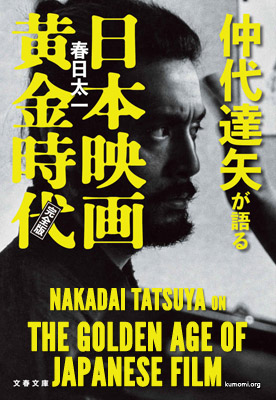
Nakadai Tatsuya on the Golden Age of Japanese Film: Prologue

The Birth of Actor Nakadai Tatsuya

Nakadai Tatsuya has taken on a great number of completely different roles in his career as an actor. Many of those roles have had something about them that is entirely out of the norm; something that feels eccentric. Explaining his preference for choosing roles like that, there was one word which Nakadai uttered several times over the course of our interviews: “insecurity.”

Before getting into the main subject at hand I wanted to ask about the background behind that insecurity, delving deep into the origins of the actor, Nakadai Tatsuya.

Continue reading

Nakadai Tatsuya on the Golden Age of Japanese Film: Introduction

Introduction

“Actor.”

In recent years, there have been fewer and fewer performers deserving of that title and the weight which it carries.

What will happen to Japanese film and theater if things go on as-is? I must not be the only one with concerns such as this. It is especially because we now find ourselves in such a predicament that my wish is for more people to know the spirit of the actor, Nakadai Tatsuya. It was with these thoughts that I first set about researching and writing this book.

Continue reading

Lamp “Soyokaze Apartment 201” interviews & liner notes (2003)

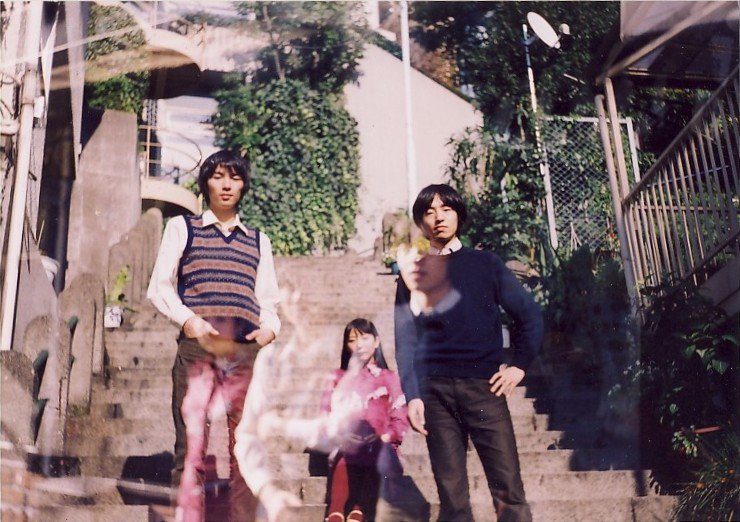
The birth of a legendary Japanese band. This is where it all began: Lamp’s first release, 2003’s Soyokaze Apartment 201. I have translated below two interviews pertaining to the album, as well as Someya Taiyo’s liner notes for all of the tracks.

The first interview was originally published on WebVANDA.

Original interview & text: Uchi Takahide (original interview)
English translation: Henkka
Lamp online: website, label, blog, Facebook, Twitter, Spotify, YouTube, SoundCloud, Instagram

You can buy Lamp’s music directly from the band, both physically and digitally, on Bandcamp.

This group of three men and women known as Lamp debuted in April 2003. Whenever I listen to their young, lively sound, I’m always brought back to the season of the blazing sun…

In this interview, we talked to the band about their origins and about the making of this album.

Continue reading

Lamp “Koibito e” interviews & liner notes (2004)

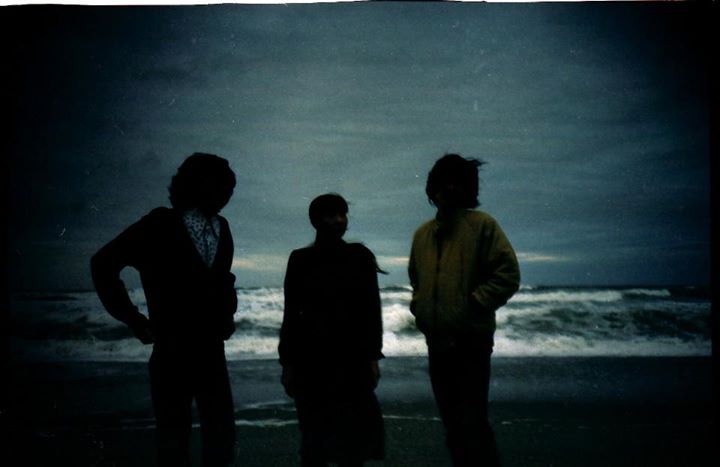
Less than a year after their debut, Soyokaze Apartment 201, Lamp came out with Koibito e, their amazing second album. Below you will find two interviews pertaining to the release along with Someya Taiyo’s track-by-track liner notes for all of the songs on it. Enjoy!

Original text & interview: OOPS!
English translation: Henkka
Lamp online: website, label, blog, Facebook, Twitter, Spotify, YouTube, SoundCloud, Instagram

You can buy Lamp’s music directly from the band, both physically and digitally, on Bandcamp.

229895_511860228825685_682864385_n

Updating the Concept of “Pure Ubiquitous Pop”

These three youngsters by the names of Someya Taiyo (guitar), Nagai Yusuke (vocals, bass, etc), and Sakakibara Kaori (vocals, accordion, flute) formed Lamp in 2000. They debuted in 2003 with their album Soyokaze Apartment 201 that demonstrated how well they understand city pop, bossa nova, and AOR — all of the “pleasant sounds.”

Not only is their sophomore effort way up there in terms of its degree of perfection, the group have also demonstrated here their will and resolve to “update” pop music as a whole. Above all, they are capable of analyzing themselves very objectively. At the risk of exaggeration, the author of this article feels that this band is an answer to the so-called “sampling era” of the 90s.

This is the pop music of a new era.

Continue reading

Minuano “Chou ni Naru Yume wo Mita” interviews (2019)

Minuano is the solo project of Ogata Takero, who you may know as a frequent collaborator of Lamp. On their Facebook page, they are musically described as Brazilian Popular Music, city pop, soft rock, and crossover. Minuano’s third album — their best one to date, if I may say so — was released in August 2019. Like the first two albums, it features Lamp’s Sakakibara Kaori on vocals.

Below, you will find two translations related to Chou ni Naru Yume wo Mita (English title: Butterfly Dream). First, here is an interview with Mr. Ogata originally posted on WebVANDA.

Original interview & text: Uchi Takahide (Japanese text)
English translation: Henkka
Minuano/Ogata Takero on the web: Facebook, Twitter, blog, YouTube, SoundCloud

You can buy Minuano’s music, both physically and digitally, on Bandcamp.
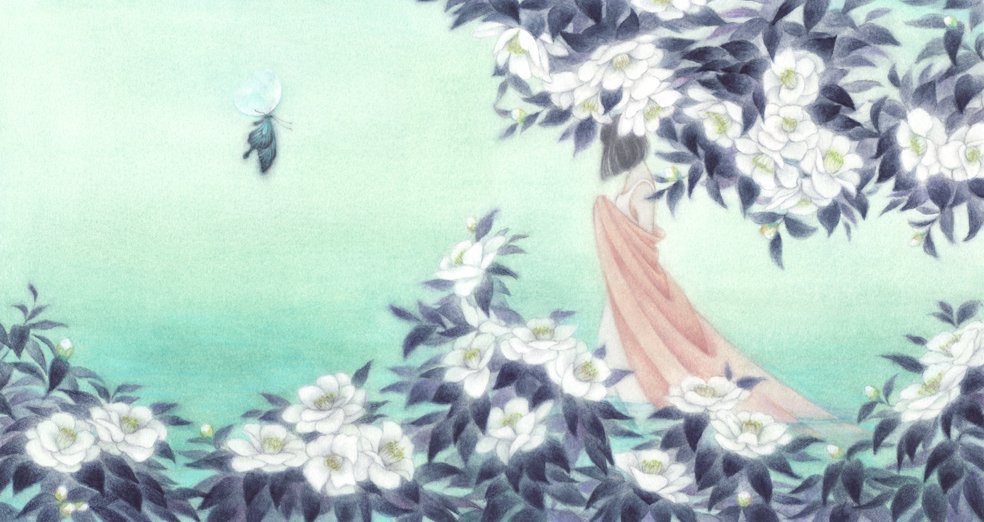
Nine years after their second album, 2010’s Aru Haru no Koibito, Minuano — solo unit of percussionist Ogata Takero — is releasing its third album, Chou ni Naru Yume wo Mita, on August 11th.

Their first album, Love Logic (2009), as well as Aru Haru no Koibito were both works incorporating the essence of 70s/80s Brazilian music and jazz, and yet sublimating it into pop. But on this release, Ogata’s personality and imagination have reached new heights as the album goes on to achieve a kind of conceptual whole. Featuring vocalist Sakakibara Kaori of Lamp — who released their eighth album, Kanojo no Tokei, last year — ardent fans have surely been waiting impatiently for this album.

Their approach towards creating pop music that has echoes of Brazilian music and is yet simultaneously genre-less is something that bears similarities to GUIRO, whose latest release, A MEZZANINE, received a nationwide release last month. The incorporation of so many different musical elements ensures that the listener never gets bored of them. Now, nine years after their previous release, I present to you an interview with Mr. Ogata.

Continue reading